THE ADVENTURE COLLECTIVE® · Independent discovery and booking for outdoor travel

Walk into a naturally formed labyrinth of blue ice on Falljökull, an outlet of Vatnajökull. This family-friendly guided hike combines safe glacier travel with photogenic crevasses and ice walls—perfect for first-time glacier explorers.
Walk into a naturally formed labyrinth of blue ice on Falljökull, an outlet of Vatnajökull. This family-friendly guided hike combines safe glacier travel with photogenic crevasses and ice walls—perfect for first-time glacier explorers.
You clip into your crampons before the glacier itself has decided whether it will be a mirror or a maze. The group crosses a gravel spit, the air tasting faintly of mineral and snowmelt, and then the blue begins — not the pale white of distant ice but deep, concentrated panes of lamp-like color that throw back shapes and shadows.
Verified experiences and guided adventures in the surrounding area.
Operated by Arctic Adventures · Skaftafell, Southeast Region
You clip into your crampons before the glacier itself has decided whether it will be a mirror or a maze. The group crosses a gravel spit, the air tasting faintly of mineral and snowmelt, and then the blue begins — not the pale white of distant ice but deep, concentrated panes of lamp-like color that throw back shapes and shadows.
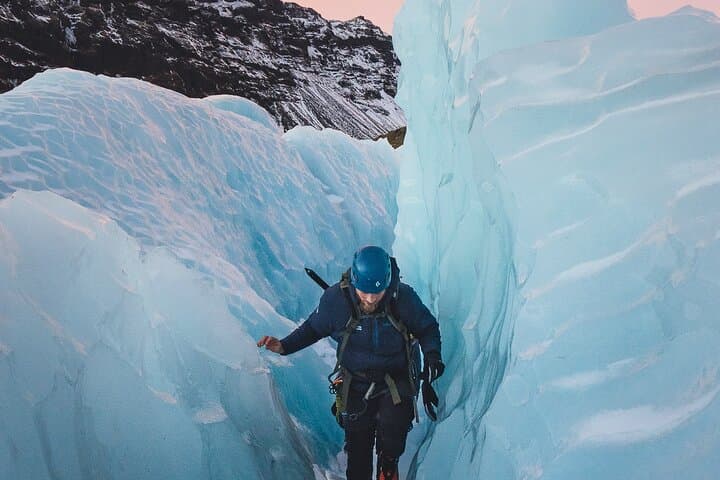
This guided walk follows the tongue of Falljökull, an outlet of Vatnajökull — Europe’s largest ice mass — and it feels like stepping into the glacier’s inner geometry. Walls fold into narrow corridors, seracs lean like frozen towers, and crevasses yaw with an almost polite menace, daring you to see how close you’ll get. Guides route the group across safe ice, pausing at windows of brilliant turquoise that form where dense ice squeezes out air and filters light.
Vatnajökull’s story is geological as much as human. Layer upon layer of snowfall compacted over millennia forms the ice field, which flows under gravity and feeds outlet glaciers like Falljökull. The park’s landscape has shaped local livelihoods—weaving into fishing, sheep farming and the lore of sagas that mark tracks across these plains.
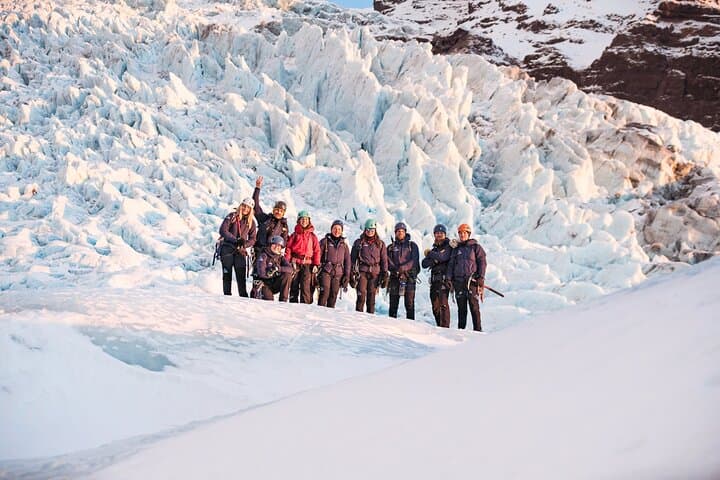
Practical details matter here as much as wonder. The tour departs from the Arctic Adventures booking hut in Skaftafell; from there you’ll drive about 11 km to the glacier tongue and walk roughly 4 km with around 200–250 meters of elevation gain. All safety equipment—crampons, helmet, harness and ice axe—is supplied, and certified guides lead groups of no more than a dozen. The operator requires sturdy hiking boots with ankle support; rentals are available for a fee.
Seasonality is straightforward: the route is offered year-round, though snow conditions and daylight shift the mood. Guides alter the line of travel with crevasse patterns and weather; if bad weather is forecast, trips are canceled for safety. The hike is rated easy and family-friendly, but it is on uneven ice and requires sure-footedness.
For photographers, the saturated blues are richest under low light and on overcast days when direct sun doesn’t blow highlights. Bring a compact tripod and protect your batteries from the cold.
If you want an up-close, managed encounter with Iceland’s moving ice, this tour balances accessibility with genuine alpine terrain. It’s less about pushing technical limits and more about letting the glacier show its formed surfaces, channels and hidden hollows—safely, respectfully, and with a guide who knows which cracks to avoid and which views to savor.
easy.
4–5 hours.
Suitable for most fitness levels; participants should be comfortable walking on uneven and icy terrain and able to handle a moderate elevation gain.
Yes—tours are family-friendly, but children must be able to walk ~4 km on uneven terrain; guides make safety decisions based on conditions.
Provided glacier crampons fit EU sizes 35–50; if your shoe size falls outside this range you cannot join without suitable alternative arrangements.
The tour meets at the Arctic Adventures Booking Hut in Skaftafell National Park; there is paid parking at the Skaftafell lot—arrive 10–15 minutes early.
Yes, but pack it securely; a compact tripod is easiest to manage on ice and in group movements.
Trips may be canceled for safety; the operator offers full refunds if canceled at least 24 hours in advance or due to poor weather.
No prior glacier experience is required—guides teach basic crampon and ice-axe techniques before setting out.
Vatnajökull has continuously shaped southeast Iceland’s landscape; outlet glaciers like Falljökull advance and retreat on timescales recorded in local farming histories.
Trips run in Vatnajökull National Park and follow strict leave-no-trace practices; guided routes minimize crevasse disturbance and protect fragile proglacial zones.
Arctic Adventures operates guided outdoor trips and adventures with an emphasis on safety, stewardship, and memorable experiences.
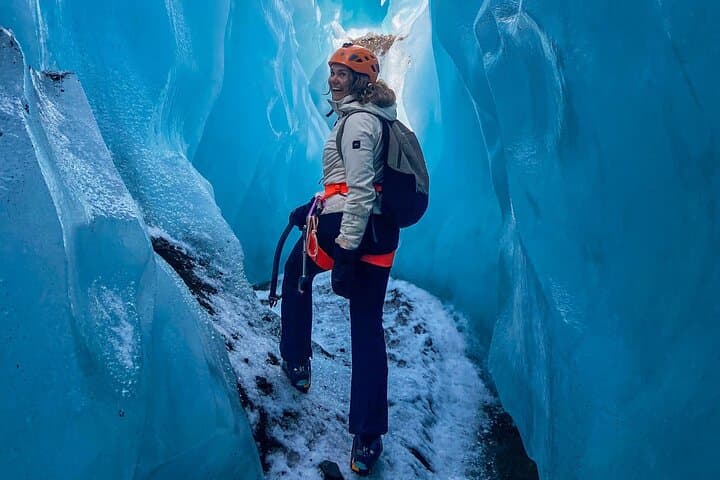
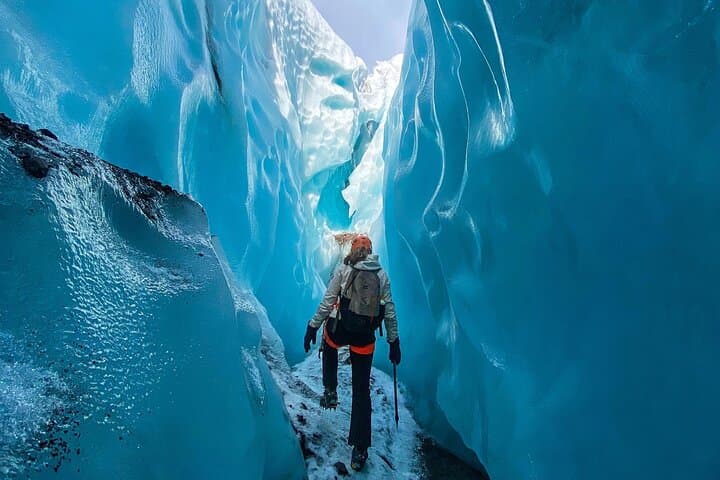
You clip into your crampons before the glacier itself has decided whether it will be a mirror or a maze. The group crosses a gravel spit, the air tasting faintly of mineral and snowmelt, and then the blue begins — not the pale white of distant ice but deep, concentrated panes of lamp-like color that throw back shapes and shadows.
You clip into your crampons before the glacier itself has decided whether it will be a mirror or a maze. The group crosses a gravel spit, the air tasting faintly of mineral and snowmelt, and then the blue begins — not the pale white of distant ice but deep, concentrated panes of lamp-like color that throw back shapes and shadows.
This guided walk follows the tongue of Falljökull, an outlet of Vatnajökull — Europe’s largest ice mass — and it feels like stepping into the glacier’s inner geometry. Walls fold into narrow corridors, seracs lean like frozen towers, and crevasses yaw with an almost polite menace, daring you to see how close you’ll get. Guides route the group across safe ice, pausing at windows of brilliant turquoise that form where dense ice squeezes out air and filters light.
Vatnajökull’s story is geological as much as human. Layer upon layer of snowfall compacted over millennia forms the ice field, which flows under gravity and feeds outlet glaciers like Falljökull. The park’s landscape has shaped local livelihoods—weaving into fishing, sheep farming and the lore of sagas that mark tracks across these plains.
Practical details matter here as much as wonder. The tour departs from the Arctic Adventures booking hut in Skaftafell; from there you’ll drive about 11 km to the glacier tongue and walk roughly 4 km with around 200–250 meters of elevation gain. All safety equipment—crampons, helmet, harness and ice axe—is supplied, and certified guides lead groups of no more than a dozen. The operator requires sturdy hiking boots with ankle support; rentals are available for a fee.
Seasonality is straightforward: the route is offered year-round, though snow conditions and daylight shift the mood. Guides alter the line of travel with crevasse patterns and weather; if bad weather is forecast, trips are canceled for safety. The hike is rated easy and family-friendly, but it is on uneven ice and requires sure-footedness.
For photographers, the saturated blues are richest under low light and on overcast days when direct sun doesn’t blow highlights. Bring a compact tripod and protect your batteries from the cold.
If you want an up-close, managed encounter with Iceland’s moving ice, this tour balances accessibility with genuine alpine terrain. It’s less about pushing technical limits and more about letting the glacier show its formed surfaces, channels and hidden hollows—safely, respectfully, and with a guide who knows which cracks to avoid and which views to savor.