THE ADVENTURE COLLECTIVE® · Independent discovery and booking for outdoor travel

Experience Mount Ijen’s surreal blue flames on an overnight trek from Ubud. This long travel day combines a ferry crossing and a steep pre-dawn hike to a highly acidic crater lake and active sulfur vents.
Experience Mount Ijen’s surreal blue flames on an overnight trek from Ubud. This long travel day combines a ferry crossing and a steep pre-dawn hike to a highly acidic crater lake and active sulfur vents.
The van pulls away from Ubud under a violet sky and the highway dissolves into island darkness — a slow, steady push toward Java by ferry, then a final climb to the Ijen rim.
Verified experiences and guided adventures in the surrounding area.
Operated by Bali Volcano Tour · Banyuwangi, East Java
The van pulls away from Ubud under a violet sky and the highway dissolves into island darkness — a slow, steady push toward Java by ferry, then a final climb to the Ijen rim.
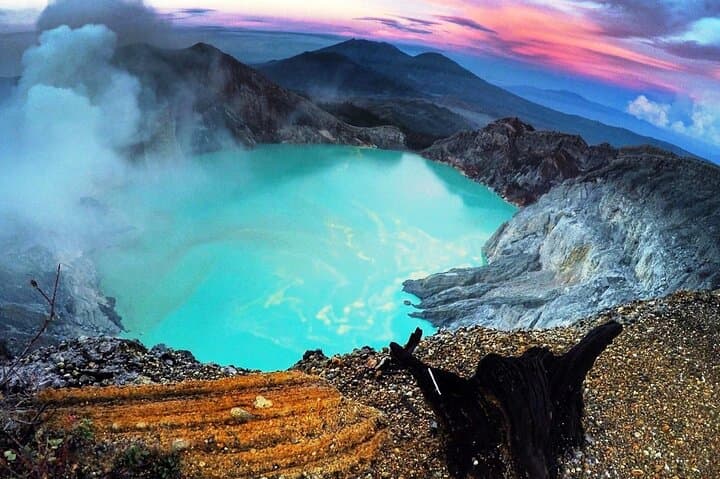
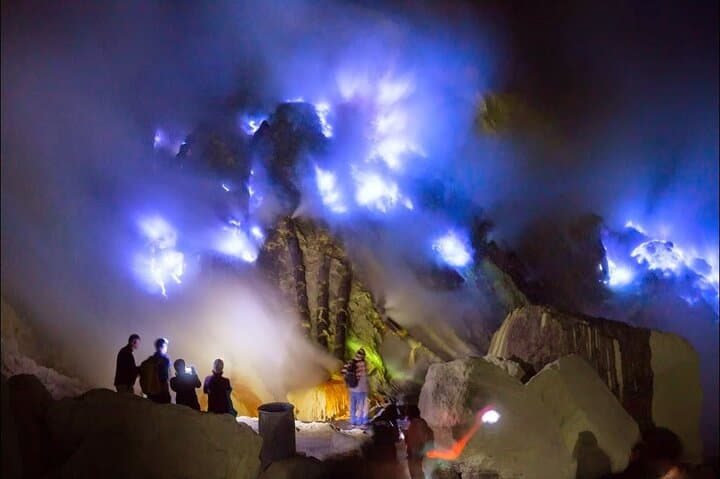
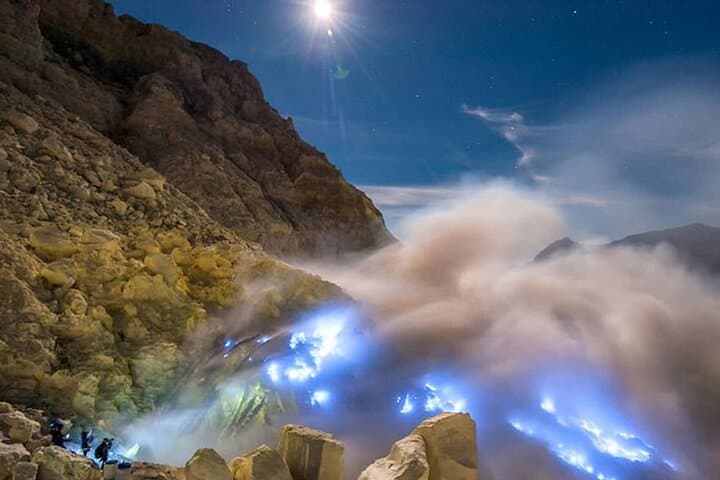
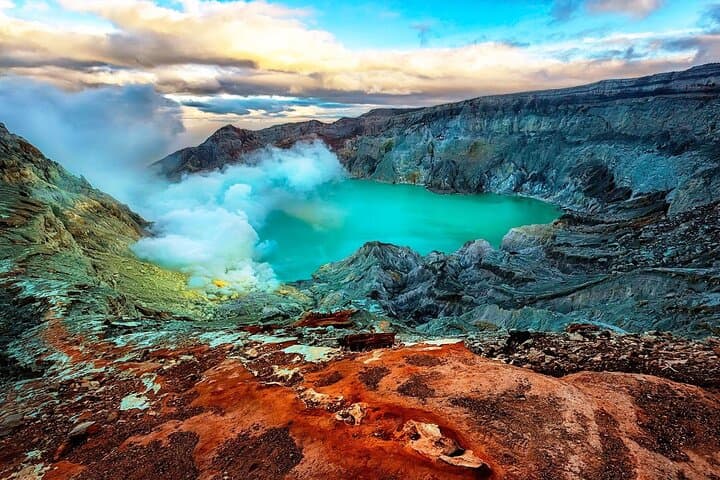
At the crater rim, the world narrows to footfalls and the beam of a headlamp. Walkers ascend a maintained trail through montane forest, citrus-scented vegetation giving way to volcanic scree. Below, the crater lake churns with impossible acidity (pH ≈0.5) and the blue flames — combustion of sulfuric gases — flare at the lake’s edge like a stubborn, otherworldly ember.
Geology here is immediate: a nested caldera fed by high-temperature fumaroles and active sulfur deposits, with a maximum water depth near 200 m and surface temperatures around 40°C. The human story is close too — generations of miners haul sulfur in baskets along steep ramps, a culturally significant but hazardous livelihood.
Practical guidance is simple and essential. Expect a long travel day from Bali with early starts and a steep, uneven final ascent of roughly 1–1.5 hours from the Paltuding trailhead to the rim. Gas emissions are real; guides provide masks, but sensitive visitors should bring their own high-filtration mask. Sturdy trekking shoes, layered warm clothing for pre-dawn cold, and a bright headlamp are non-negotiable. Hydrate before you go and carry snacks; cellular coverage is spotty.
Respect the miners’ work, stay on marked paths, and time your visit in the dry season (May–Oct) to reduce ferry and trail disruptions. The blue fire won’t wait long — when the gases burn, the crater commands full attention.
moderate.
12–16 hours.
Suitable for those with regular aerobic activity; able to hike for 1–2 hours uphill on uneven terrain and manage steep steps.
The final ascent from Paltuding to the rim is typically 1–1.5 hours depending on pace and fitness; allow extra time for stops and miner activity.
Guides lead visitors to safe viewing points; the blue flames are near toxic gases and unstable ground, so follow your guide and wear a mask.
Yes — sulfur miners often work along the ramps below the rim; observe respectfully and avoid interfering with their paths or equipment.
Children and those with asthma or heart conditions should consult a doctor first; sulfur fumes and the long travel day can pose risks.
Ijen is a nested caldera in East Java with active fumaroles; organized sulfur extraction has been part of the local economy for over a century.
The acidic lake and sulfur mining create environmental stress; stick to trails, avoid litter, and support operators who minimize disturbance.
Bali Volcano Tour operates guided outdoor trips and adventures with an emphasis on safety, stewardship, and memorable experiences.
The van pulls away from Ubud under a violet sky and the highway dissolves into island darkness — a slow, steady push toward Java by ferry, then a final climb to the Ijen rim.
The van pulls away from Ubud under a violet sky and the highway dissolves into island darkness — a slow, steady push toward Java by ferry, then a final climb to the Ijen rim.
At the crater rim, the world narrows to footfalls and the beam of a headlamp. Walkers ascend a maintained trail through montane forest, citrus-scented vegetation giving way to volcanic scree. Below, the crater lake churns with impossible acidity (pH ≈0.5) and the blue flames — combustion of sulfuric gases — flare at the lake’s edge like a stubborn, otherworldly ember.
Geology here is immediate: a nested caldera fed by high-temperature fumaroles and active sulfur deposits, with a maximum water depth near 200 m and surface temperatures around 40°C. The human story is close too — generations of miners haul sulfur in baskets along steep ramps, a culturally significant but hazardous livelihood.
Practical guidance is simple and essential. Expect a long travel day from Bali with early starts and a steep, uneven final ascent of roughly 1–1.5 hours from the Paltuding trailhead to the rim. Gas emissions are real; guides provide masks, but sensitive visitors should bring their own high-filtration mask. Sturdy trekking shoes, layered warm clothing for pre-dawn cold, and a bright headlamp are non-negotiable. Hydrate before you go and carry snacks; cellular coverage is spotty.
Respect the miners’ work, stay on marked paths, and time your visit in the dry season (May–Oct) to reduce ferry and trail disruptions. The blue fire won’t wait long — when the gases burn, the crater commands full attention.