THE ADVENTURE COLLECTIVE® · Independent discovery and booking for outdoor travel

Stand at a spring whose color stops you in your tracks. This half-day visit to the Blue Eye (Syri i Kaltër) pairs a scenic drive from Sarandë with a short walk to a startling karst pool—perfect for travelers who want a compact nature experience with geological and cultural context.
Stand at a spring whose color stops you in your tracks. This half-day visit to the Blue Eye (Syri i Kaltër) pairs a scenic drive from Sarandë with a short walk to a startling karst pool—perfect for travelers who want a compact nature experience with geological and cultural context.
You arrive on a narrow mountain road where limestone walls give way to a sudden, impossible blue—a circular pool so clear the spring seems to float above the forest floor. The surface trembles with dozens of tiny upwellings; cold water pours from depth and dares you to peer over the lip.
Verified experiences and guided adventures in the surrounding area.
Operated by My Tour in Albania · Muzinë, Vlorë County
You arrive on a narrow mountain road where limestone walls give way to a sudden, impossible blue—a circular pool so clear the spring seems to float above the forest floor. The surface trembles with dozens of tiny upwellings; cold water pours from depth and dares you to peer over the lip.
The Blue Eye (Syri i Kaltër) is a karst spring formed where groundwater exits a deep limestone tunnel. Locals attach folklore to the site; stories call it a place of lovers, of vanished villages and of a spring so deep its bottom is unknowable. Geologically, the vivid color comes from light scattering in the oxygen-rich, mineral-clear water and the steep calcareous basin around it.
Culturally, the site sits within a rural southern Albanian landscape: small villages, stone terraces and shepherd tracks. The half-day trip from Sarandë emphasizes the drive as much as the destination—winding through olive groves and scrub, with viewpoints that reveal the Ionian sea on clear days.
On arrival expect a short walk on uneven paths and wooden boardwalks, interpretive signs and a small visitor area. Swimming is not always permitted; water is very cold year-round. Practical essentials: bring a windproof layer, sturdy shoes for wet rock, and enough water for the short hike; schedule visits early or late in summer to avoid crowds and heat. The route is readily accessible for visitors with moderate fitness, and local guides provide context on geology and legend. The Blue Eye rewards curiosity: stand quietly, watch the flow, and let the spring’s hush recalibrate your pace.
moderate.
2–3 hours.
Basic to moderate fitness; short sections of uneven walking and steps required
The primary walk is short—typically 10–20 minutes on an uneven path and boardwalk from the parking area to the viewpoint.
Swimming is often not recommended or allowed because the water is extremely cold and protected; check current site rules before planning to enter the water.
Families and older visitors can usually reach the main viewpoint, but expect some narrow or stepped sections—bring assistance if mobility is limited.
Yes—half-day guided tours and transfers from Sarandë are common and typically include entrance fees and local guide commentary.
The site has been a local landmark for generations; its striking appearance and deep spring inspired regional folklore and attracted travelers since the early 20th century.
The spring’s ecosystem is sensitive to pollution and erosion; visitors are asked to stay on paths, avoid litter, and respect restrictions to protect water clarity and aquatic life.
My Tour in Albania operates guided outdoor trips and adventures with an emphasis on safety, stewardship, and memorable experiences.
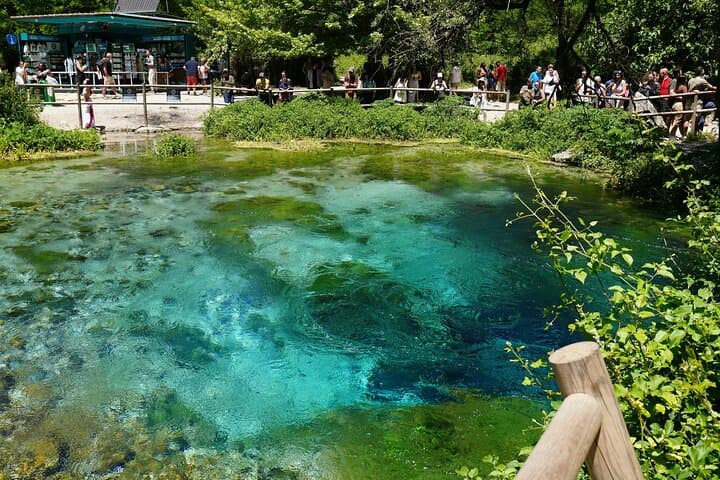
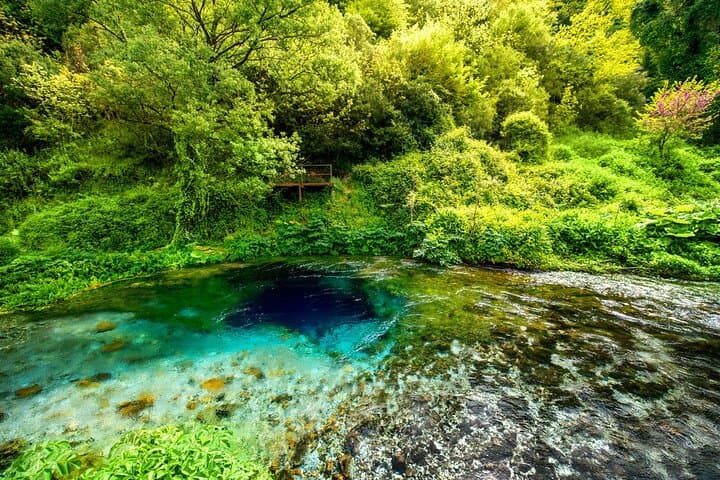
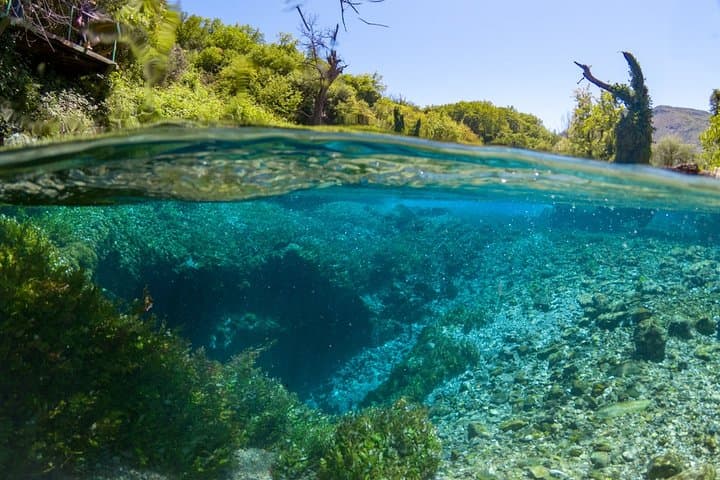
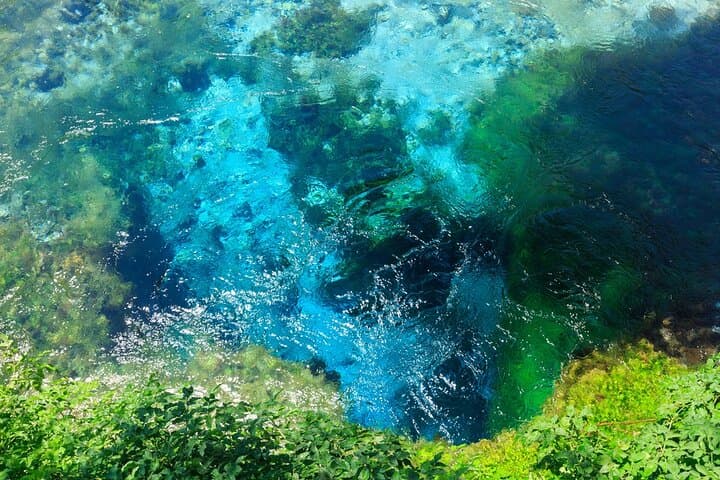
You arrive on a narrow mountain road where limestone walls give way to a sudden, impossible blue—a circular pool so clear the spring seems to float above the forest floor. The surface trembles with dozens of tiny upwellings; cold water pours from depth and dares you to peer over the lip.
You arrive on a narrow mountain road where limestone walls give way to a sudden, impossible blue—a circular pool so clear the spring seems to float above the forest floor. The surface trembles with dozens of tiny upwellings; cold water pours from depth and dares you to peer over the lip.
The Blue Eye (Syri i Kaltër) is a karst spring formed where groundwater exits a deep limestone tunnel. Locals attach folklore to the site; stories call it a place of lovers, of vanished villages and of a spring so deep its bottom is unknowable. Geologically, the vivid color comes from light scattering in the oxygen-rich, mineral-clear water and the steep calcareous basin around it.
Culturally, the site sits within a rural southern Albanian landscape: small villages, stone terraces and shepherd tracks. The half-day trip from Sarandë emphasizes the drive as much as the destination—winding through olive groves and scrub, with viewpoints that reveal the Ionian sea on clear days.
On arrival expect a short walk on uneven paths and wooden boardwalks, interpretive signs and a small visitor area. Swimming is not always permitted; water is very cold year-round. Practical essentials: bring a windproof layer, sturdy shoes for wet rock, and enough water for the short hike; schedule visits early or late in summer to avoid crowds and heat. The route is readily accessible for visitors with moderate fitness, and local guides provide context on geology and legend. The Blue Eye rewards curiosity: stand quietly, watch the flow, and let the spring’s hush recalibrate your pace.