THE ADVENTURE COLLECTIVE® · Independent discovery and booking for outdoor travel

Take a 3–4 hour private tour from Sarandë to Lekuresi Castle, the 11th-century Monastery of St. Nicholas in Mesopotam, and the vivid Blue Eye spring. Combine panoramic coastal views, Byzantine fragments and a karst pool famous for its deep, cobalt water.
Take a 3–4 hour private tour from Sarandë to Lekuresi Castle, the 11th-century Monastery of St. Nicholas in Mesopotam, and the vivid Blue Eye spring. Combine panoramic coastal views, Byzantine fragments and a karst pool famous for its deep, cobalt water.
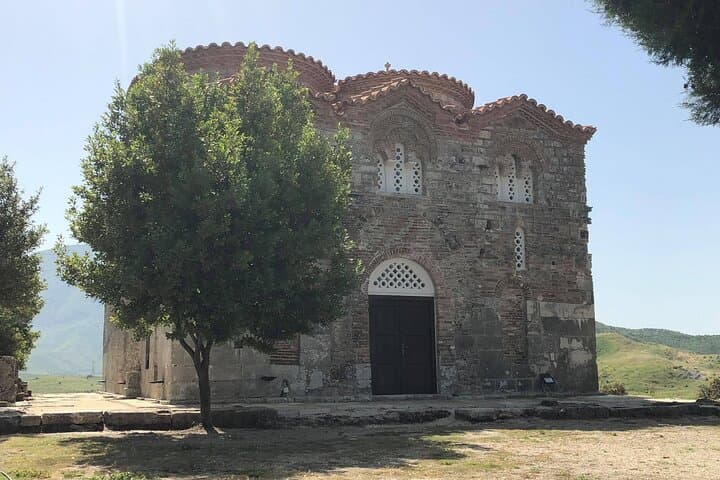
A cool wind from the Ionian lifts the salt and dust as the road climbs above Sarandë; from Lekuresi Castle the town spreads below like a folded map and the sea holds a hard, blue light. You begin with that high vantage—stone ramparts and a sweep of coastline—before descending into olive-scrub countryside toward the quiet village of Mesopotam and the small, time-worn church of St. Nicholas.
Verified experiences and guided adventures in the surrounding area.
Operated by Atlas Tours · Sarandë, Vlorë County
A cool wind from the Ionian lifts the salt and dust as the road climbs above Sarandë; from Lekuresi Castle the town spreads below like a folded map and the sea holds a hard, blue light. You begin with that high vantage—stone ramparts and a sweep of coastline—before descending into olive-scrub countryside toward the quiet village of Mesopotam and the small, time-worn church of St. Nicholas.
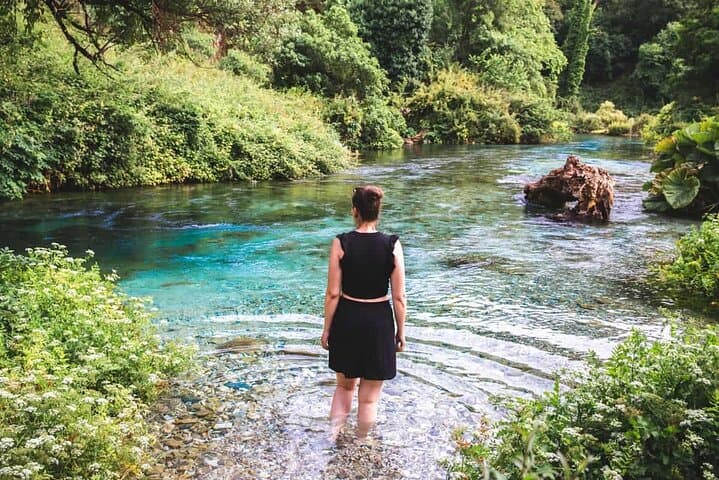
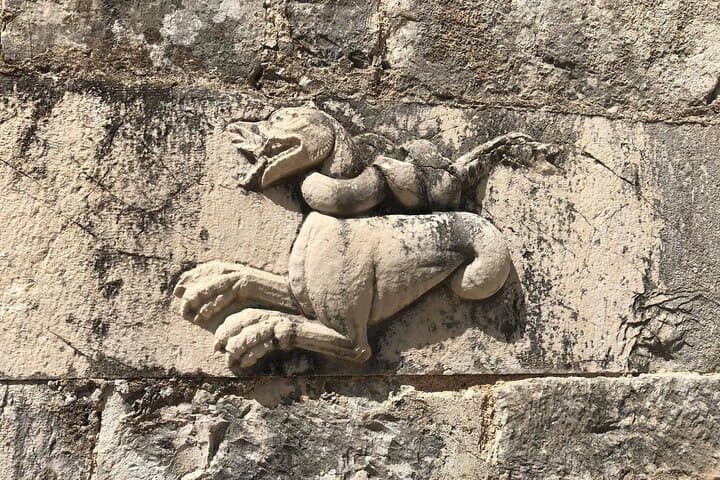
The monastery at Mesopotam traces its current fabric to the 11th century and preserves fragments of Byzantine fresco and reused stone blocks whose carved beasts hint at earlier, pre-Christian stonemasonry. Geologically, the Blue Eye (Syri i Kaltër) is a karst spring where groundwater surfaces in a pool of striking cobalt; the spring vaults suddenly into depth, with underwater caverns reported by divers and a source that feeds a stream threading down toward the plain.
Local culture here is practical and patient—families tend olive groves, and the route between castle, monastery and spring passes through small hamlets where traditional masonry and low roofs persist.
Practical guidance: the tour runs about 3–4 hours, typically from Sarandë with air-conditioned transport and park entry included. Trails at each site are short but uneven—sturdy shoes and a light jacket for coastal winds make the visit easier. Bring water, sun protection and a camera with polarizing filter for the spring’s glare. Respect posted rules at the Blue Eye: it’s a protected site, so observe barriers and avoid trampling banks. Times are best early or late in the day to avoid peak heat and crowds and to catch the light on the castle view.
easy.
3–4 hours.
Suitable for most fitness levels; involves short walks and some stairs but no prolonged hiking
Yes — park entrance and transport to the Blue Eye are included in the tour price as noted in the itinerary.
Swimming is sometimes restricted to protect the spring and its banks; follow park signage and your guide’s instructions.
The tour is described as easy and suitable for varied fitness levels, but there are steps and uneven surfaces—travelers with mobility concerns should check in advance.
Basic facilities are available near main sites and small cafes or stalls in villages; bring snacks and water for comfort.
The Monastery of St. Nicholas at Mesopotam preserves 11th-century Byzantine elements built atop earlier masonry; reused carved blocks hint at a longer sequence of local craftsmanship.
The Blue Eye sits within a protected site—visitors are urged to stay on paths, avoid swimming when prohibited, and carry out any litter to limit impacts on the spring and downstream habitats.
Atlas Tours operates guided outdoor trips and adventures with an emphasis on safety, stewardship, and memorable experiences.
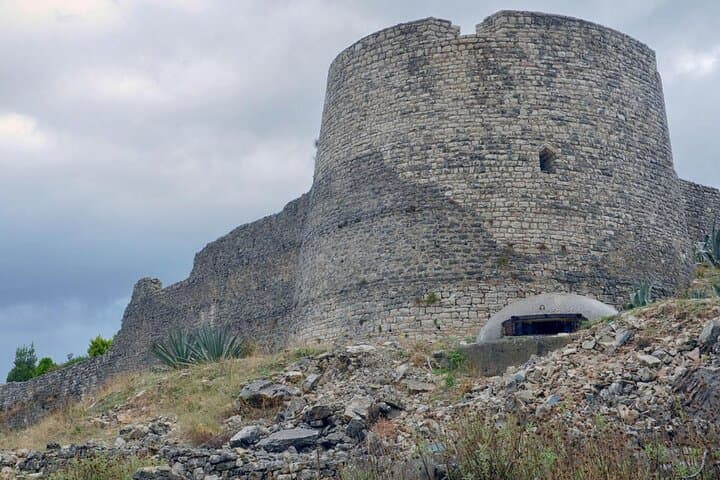
A cool wind from the Ionian lifts the salt and dust as the road climbs above Sarandë; from Lekuresi Castle the town spreads below like a folded map and the sea holds a hard, blue light. You begin with that high vantage—stone ramparts and a sweep of coastline—before descending into olive-scrub countryside toward the quiet village of Mesopotam and the small, time-worn church of St. Nicholas.
A cool wind from the Ionian lifts the salt and dust as the road climbs above Sarandë; from Lekuresi Castle the town spreads below like a folded map and the sea holds a hard, blue light. You begin with that high vantage—stone ramparts and a sweep of coastline—before descending into olive-scrub countryside toward the quiet village of Mesopotam and the small, time-worn church of St. Nicholas.
The monastery at Mesopotam traces its current fabric to the 11th century and preserves fragments of Byzantine fresco and reused stone blocks whose carved beasts hint at earlier, pre-Christian stonemasonry. Geologically, the Blue Eye (Syri i Kaltër) is a karst spring where groundwater surfaces in a pool of striking cobalt; the spring vaults suddenly into depth, with underwater caverns reported by divers and a source that feeds a stream threading down toward the plain.
Local culture here is practical and patient—families tend olive groves, and the route between castle, monastery and spring passes through small hamlets where traditional masonry and low roofs persist.
Practical guidance: the tour runs about 3–4 hours, typically from Sarandë with air-conditioned transport and park entry included. Trails at each site are short but uneven—sturdy shoes and a light jacket for coastal winds make the visit easier. Bring water, sun protection and a camera with polarizing filter for the spring’s glare. Respect posted rules at the Blue Eye: it’s a protected site, so observe barriers and avoid trampling banks. Times are best early or late in the day to avoid peak heat and crowds and to catch the light on the castle view.