THE ADVENTURE COLLECTIVE® · Independent discovery and booking for outdoor travel

Explore Albania’s Blue Eye spring and the hilltop Fortress of Lekuresi on a compact half-day tour from Sarandë. Expect crystal karst water, historic ramparts, panoramic coastal views, and practical tips for timing, footwear, and photography.
Explore Albania’s Blue Eye spring and the hilltop Fortress of Lekuresi on a compact half-day tour from Sarandë. Expect crystal karst water, historic ramparts, panoramic coastal views, and practical tips for timing, footwear, and photography.
A short drive out of Sarandë drops you into a landscape where limestone cliffs breathe and water appears as if from the mountain itself. At the Blue Eye spring the pool’s depth pulls the eye — a perfectly oval aperture in rock that pushes a clear torrent into a shaded gorge, trees leaning close as if to listen. Later, the stone ramparts of Lekuresi rise on a windswept hill, offering a broad-view panorama over Sarandë’s bay and the islands toward Corfu.
Verified experiences and guided adventures in the surrounding area.
Operated by Tea Tours · Sarandë, Vlorë County
A short drive out of Sarandë drops you into a landscape where limestone cliffs breathe and water appears as if from the mountain itself. At the Blue Eye spring the pool’s depth pulls the eye — a perfectly oval aperture in rock that pushes a clear torrent into a shaded gorge, trees leaning close as if to listen. Later, the stone ramparts of Lekuresi rise on a windswept hill, offering a broad-view panorama over Sarandë’s bay and the islands toward Corfu.
Geologically the Blue Eye is a karst spring fed from Mali i Gjërë; its depth (recorded to tens of meters) and constant flow mark it as a classic karst resurgence. Lekuresi’s ruined fortress dates to Ottoman-era conflicts in the 16th century and occupies a strategic vantage that has watched trade routes and coastal raids for centuries. Local life around both sites still ties to olive groves, small-scale farming, and a growing season for citrus that scents the air in spring.
Practical guidance: expect short, mostly flat walking with some uneven stone near the spring and loose gravel at the fortress. Wear sturdy shoes, bring layered sun protection, and carry water — services are limited at both stops. The Blue Eye is a protected Natural Monument; stay on paths and avoid swimming where signage prohibits it. For photography, go early or late for softer light and fewer visitors. If you have mobility constraints, the fortress hill involves steep stretches; the Blue Eye approach can be slippery after rain. This half-day loop fits into a relaxed morning or afternoon from Sarandë and pairs well with a visit to nearby Butrint for a full-day cultural circuit.
easy.
3 hours.
Suitable for most fitness levels; able-bodied walkers should manage short uneven sections and a moderate hill climb.
This is a roughly 3‑hour tour with short walks at each site—firm but uneven surfaces at the Blue Eye and a moderate uphill walk to Lekuresi fortress.
Swimming is generally not recommended or permitted in protected areas of the spring; follow on-site signage and guide instructions to protect the karst source.
Entry fees are listed as included in the tour; some small local charges or optional purchases may require cash.
Yes—paths are manageable for children but supervise near the spring and fortress edges; stroller access may be limited on rougher sections.
Lekuresi sits on a 16th‑century Ottoman-era strategic site overlooking routes to Corfu and Butrint; the region has layered Greek, Roman and Ottoman influences.
The Blue Eye is designated a Natural Monument—stay on marked trails, avoid disturbing vegetation, and pack out waste to protect karst water quality.
Tea Tours operates guided outdoor trips and adventures with an emphasis on safety, stewardship, and memorable experiences.
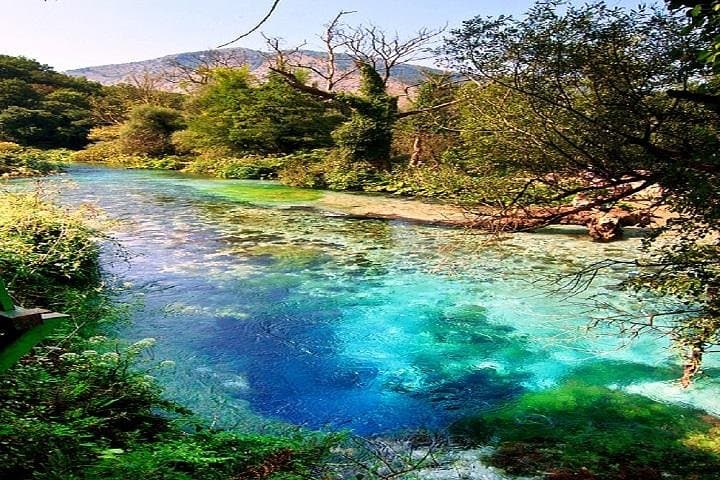
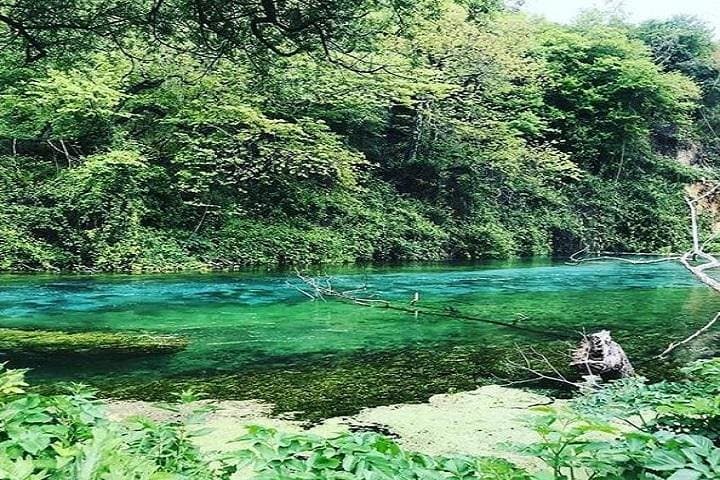
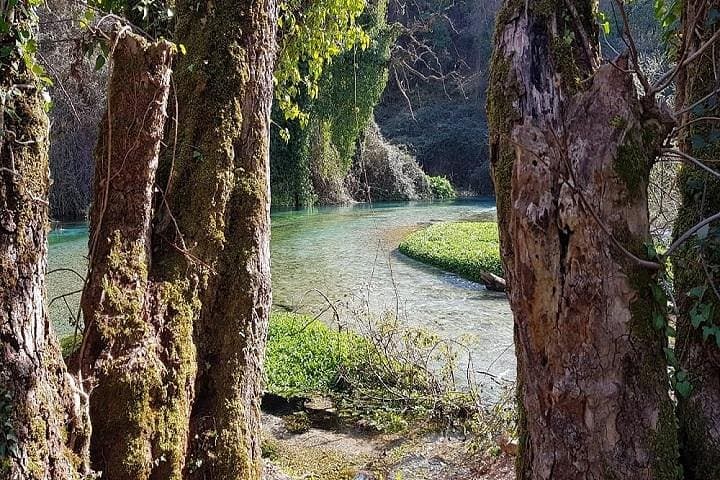
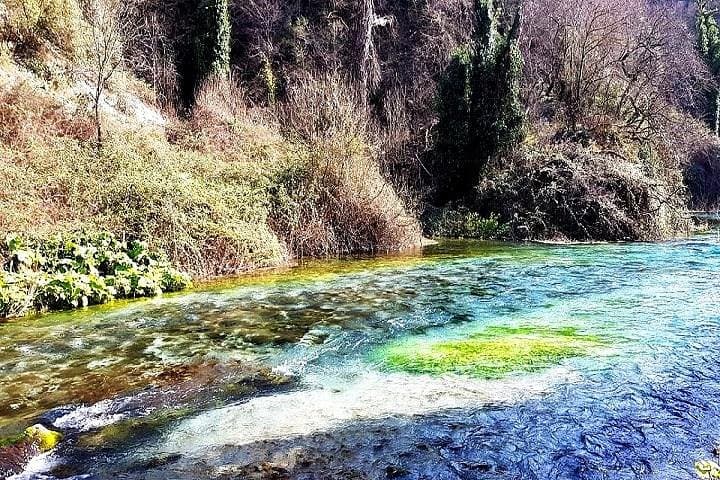
A short drive out of Sarandë drops you into a landscape where limestone cliffs breathe and water appears as if from the mountain itself. At the Blue Eye spring the pool’s depth pulls the eye — a perfectly oval aperture in rock that pushes a clear torrent into a shaded gorge, trees leaning close as if to listen. Later, the stone ramparts of Lekuresi rise on a windswept hill, offering a broad-view panorama over Sarandë’s bay and the islands toward Corfu.
A short drive out of Sarandë drops you into a landscape where limestone cliffs breathe and water appears as if from the mountain itself. At the Blue Eye spring the pool’s depth pulls the eye — a perfectly oval aperture in rock that pushes a clear torrent into a shaded gorge, trees leaning close as if to listen. Later, the stone ramparts of Lekuresi rise on a windswept hill, offering a broad-view panorama over Sarandë’s bay and the islands toward Corfu.
Geologically the Blue Eye is a karst spring fed from Mali i Gjërë; its depth (recorded to tens of meters) and constant flow mark it as a classic karst resurgence. Lekuresi’s ruined fortress dates to Ottoman-era conflicts in the 16th century and occupies a strategic vantage that has watched trade routes and coastal raids for centuries. Local life around both sites still ties to olive groves, small-scale farming, and a growing season for citrus that scents the air in spring.
Practical guidance: expect short, mostly flat walking with some uneven stone near the spring and loose gravel at the fortress. Wear sturdy shoes, bring layered sun protection, and carry water — services are limited at both stops. The Blue Eye is a protected Natural Monument; stay on paths and avoid swimming where signage prohibits it. For photography, go early or late for softer light and fewer visitors. If you have mobility constraints, the fortress hill involves steep stretches; the Blue Eye approach can be slippery after rain. This half-day loop fits into a relaxed morning or afternoon from Sarandë and pairs well with a visit to nearby Butrint for a full-day cultural circuit.