THE ADVENTURE COLLECTIVE® · Independent discovery and booking for outdoor travel

A compact, scenic half-day trip from Saranda that pairs the surreal Blue Eye karst spring with panoramic views from Lekuresi Castle. Expect short walks, dramatic watercolour, and easy logistics for family visitors.
A compact, scenic half-day trip from Saranda that pairs the surreal Blue Eye karst spring with panoramic views from Lekuresi Castle. Expect short walks, dramatic watercolour, and easy logistics for family visitors.
You arrive on a narrow mountain road and the air shifts — cooler, wetter, alive with the hiss of unseen water. The Blue Eye opens before you like an impossible pool carved into the rock: a deep, oval spring whose surface brightens from turquoise to near-black where the depth begins. Sunlight threads through sycamores and palms, and the spring seems to dare you to get closer.
Verified experiences and guided adventures in the surrounding area.
Operated by Leka Tours & Car Rentals · Saranda, Vlorë County
You arrive on a narrow mountain road and the air shifts — cooler, wetter, alive with the hiss of unseen water. The Blue Eye opens before you like an impossible pool carved into the rock: a deep, oval spring whose surface brightens from turquoise to near-black where the depth begins. Sunlight threads through sycamores and palms, and the spring seems to dare you to get closer.
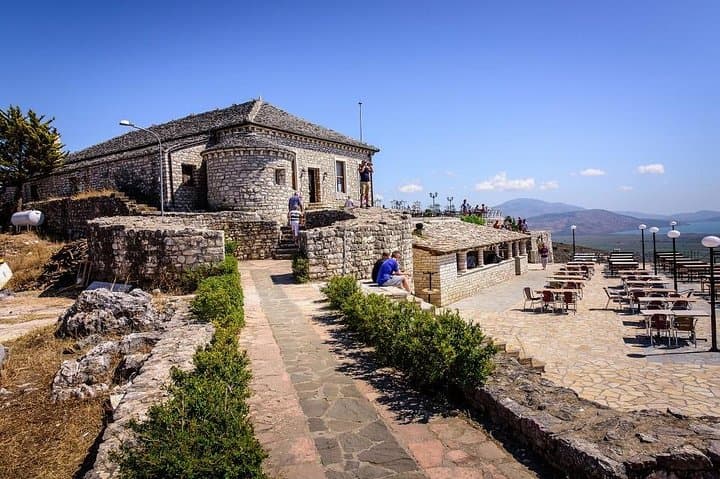
Geology here is direct: karst limestone feeding a powerful artesian spring from Mali i Gjërë, historically prized by local communities and protected as a natural monument. The site’s dense vegetation — oak, plane, and subtropical understory — reflects microclimates more often associated with lower latitudes, while nearby Lekuresi Castle perches above Saranda, a medieval ruin converted into a panoramic terrace that traces Ottoman and Venetian echoes in local stonework.
Practical guidance: this is a half-day excursion (roughly 3–4 hours including transit from Saranda). Expect short, uneven walking paths, some steps, and muddy patches after rain; no technical gear is required, but sturdy shoes and a light rain shell matter. Bring water, a modest camera, and avoid swimming — currents are unpredictable and depths exceed recreational limits.
Timing makes a difference: visit early morning for calm water reflections and fewer crowds, or late afternoon for warm light over the Ksamil islands from Lekuresi. Respect posted signs and stick to paths — conservation efforts keep both spring and surrounding forest healthy. For families, the site is accessible but supervise children near the water’s edge.
easy.
3–4 hours.
Suitable for most fitness levels; involves short uphill walks and uneven ground for 15–30 minutes
The drive is about 25–35 minutes each way depending on traffic and the exact pick-up point in Saranda.
Swimming is generally discouraged due to unknown depth, strong currents, and conservation rules; follow onsite signage and guide instructions.
Yes — the castle is free to roam on foot, with a terrace restaurant occupying part of the ruins; expect uneven surfaces and some steep approaches.
Facilities are basic: a small visitor area and limited stalls; plan accordingly for water, sunscreen, and footwear.
Lekuresi’s stone walls reflect Ottoman-era fortifications and later local reuse; the Blue Eye has been a regional landmark and freshwater source for centuries.
The Blue Eye is protected as a natural monument; stick to paths, avoid litter, and respect restrictions to reduce human impact on the spring and surrounding forest.
Leka Tours & Car Rentals operates guided outdoor trips and adventures with an emphasis on safety, stewardship, and memorable experiences.
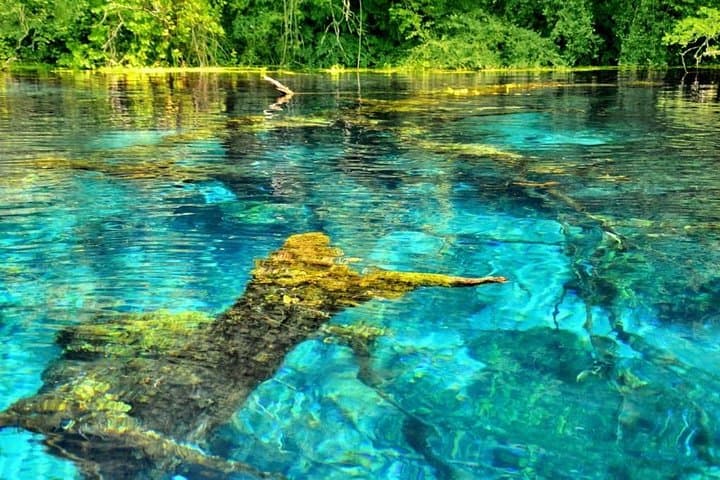
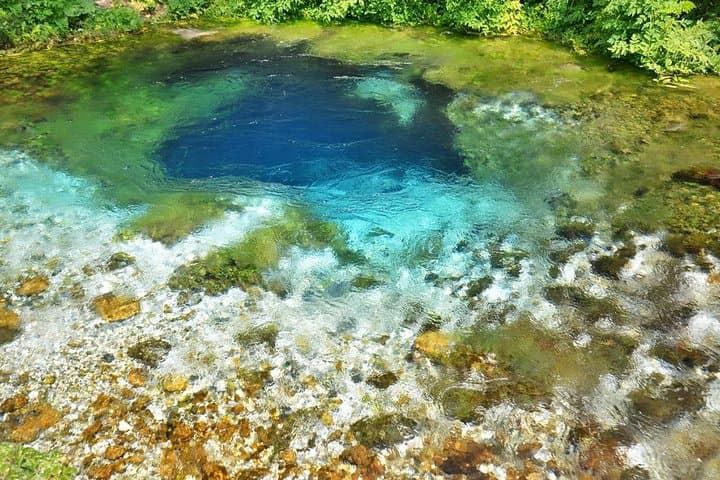
You arrive on a narrow mountain road and the air shifts — cooler, wetter, alive with the hiss of unseen water. The Blue Eye opens before you like an impossible pool carved into the rock: a deep, oval spring whose surface brightens from turquoise to near-black where the depth begins. Sunlight threads through sycamores and palms, and the spring seems to dare you to get closer.
You arrive on a narrow mountain road and the air shifts — cooler, wetter, alive with the hiss of unseen water. The Blue Eye opens before you like an impossible pool carved into the rock: a deep, oval spring whose surface brightens from turquoise to near-black where the depth begins. Sunlight threads through sycamores and palms, and the spring seems to dare you to get closer.
Geology here is direct: karst limestone feeding a powerful artesian spring from Mali i Gjërë, historically prized by local communities and protected as a natural monument. The site’s dense vegetation — oak, plane, and subtropical understory — reflects microclimates more often associated with lower latitudes, while nearby Lekuresi Castle perches above Saranda, a medieval ruin converted into a panoramic terrace that traces Ottoman and Venetian echoes in local stonework.
Practical guidance: this is a half-day excursion (roughly 3–4 hours including transit from Saranda). Expect short, uneven walking paths, some steps, and muddy patches after rain; no technical gear is required, but sturdy shoes and a light rain shell matter. Bring water, a modest camera, and avoid swimming — currents are unpredictable and depths exceed recreational limits.
Timing makes a difference: visit early morning for calm water reflections and fewer crowds, or late afternoon for warm light over the Ksamil islands from Lekuresi. Respect posted signs and stick to paths — conservation efforts keep both spring and surrounding forest healthy. For families, the site is accessible but supervise children near the water’s edge.