THE ADVENTURE COLLECTIVE® · Independent discovery and booking for outdoor travel

Visit the Blue Eye spring’s startling turquoise pool then climb to Lekursi Castle for a sweeping Ionian sunset. This half-day tour from Sarande combines short walks, geology and hilltop views with practical, traveler-friendly logistics.
Visit the Blue Eye spring’s startling turquoise pool then climb to Lekursi Castle for a sweeping Ionian sunset. This half-day tour from Sarande combines short walks, geology and hilltop views with practical, traveler-friendly logistics.
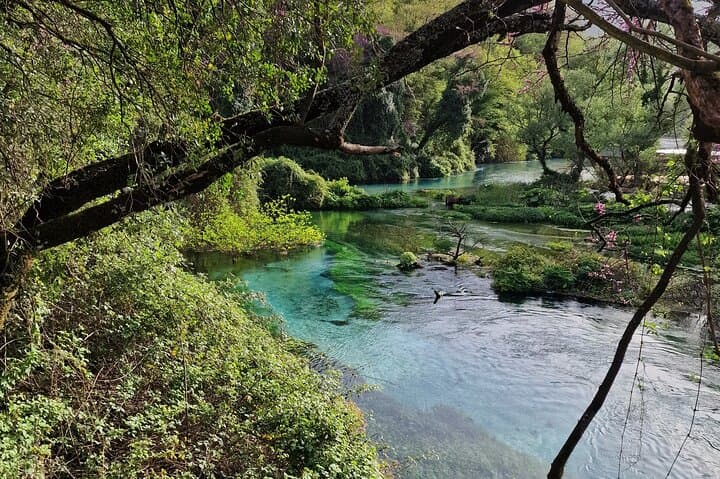
A narrow track through low oak and olive scrubs widens as the van climbs away from Sarande, the sea shrinking behind you. By the time the group spills onto the Blue Eye parking area, the spring has already announced itself—the water a sudden, impossible turquoise, as if the ground has opened and painted a pool. The river dares you to approach; photographers lean in, curious travelers dip their toes, and the forest breathes around the hollow.
Verified experiences and guided adventures in the surrounding area.
Operated by Open Tour Albania · Sarande, Vlorë County
A narrow track through low oak and olive scrubs widens as the van climbs away from Sarande, the sea shrinking behind you. By the time the group spills onto the Blue Eye parking area, the spring has already announced itself—the water a sudden, impossible turquoise, as if the ground has opened and painted a pool. The river dares you to approach; photographers lean in, curious travelers dip their toes, and the forest breathes around the hollow.
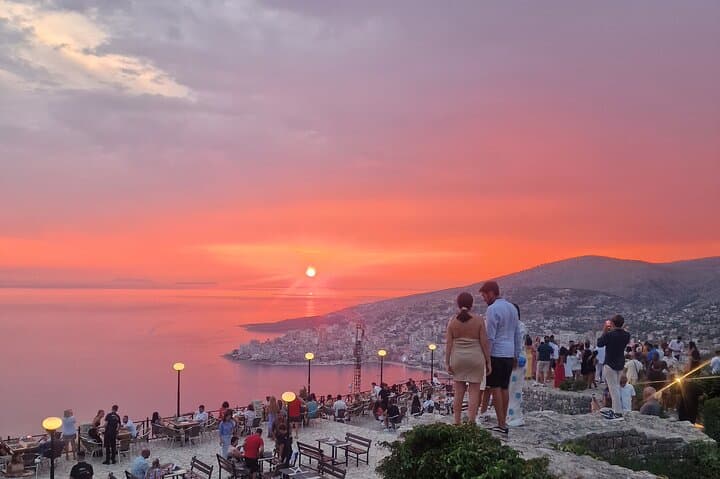
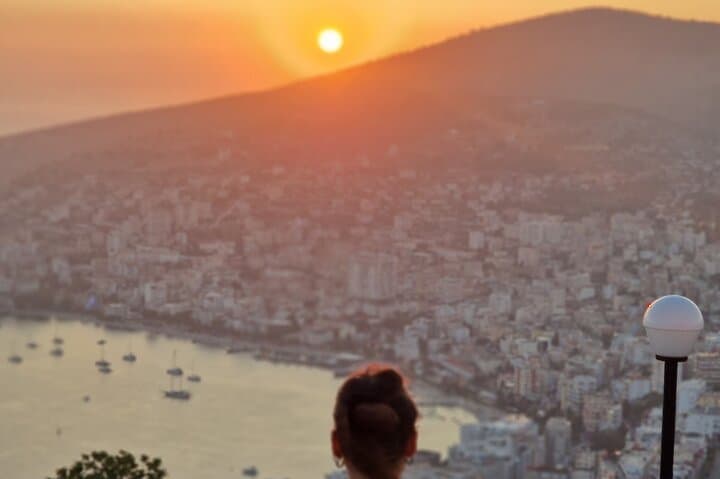
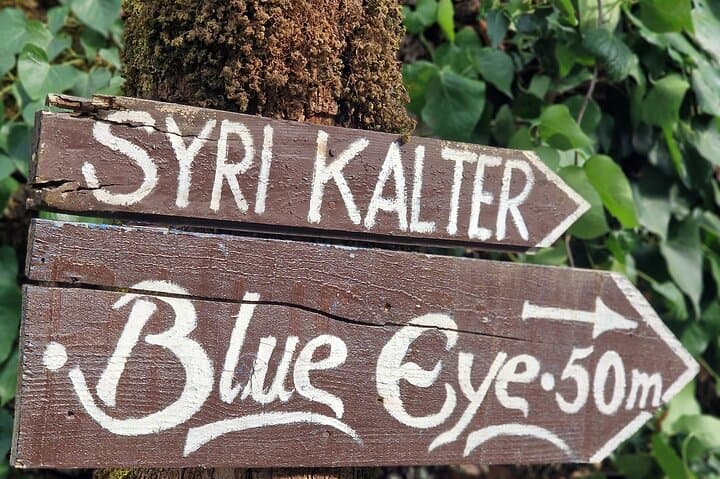
Geologically the Blue Eye (Syri i Kaltër) is a karst spring: water pushed from deep limestone fissures bubbles up, creating a clear, cold pool that feeds the Bistrica River and, eventually, Lake Butrint. A short drive away, Lekursi Castle presides over the Sarande gulf; its weathered walls reflect centuries of shifting control along this Ionian flank and offer a vantage where the Ionian Sea, Ksamil, and Corfu appear within a sweep of the eye.
Practical guidance: this half-day excursion runs roughly 3–4 hours with a 10–15 minute walk to the spring; train shuttles operate seasonally but the path is short and mostly flat. Wear sturdy shoes for uneven boardwalks, bring a light jacket for seaside wind at sunset, and carry water—there are limited services on-site. Expect crowds in peak summer; plan the visit late afternoon for cooler light at Blue Eye and to catch Lekursi’s sunset glow. Respect signage around the spring—swimming is restricted in places to protect the source and local flora. With basic fitness and sensible gear, the loop pairs a compact nature stop with panoramic cultural payoff.
moderate.
3–4 hours.
Suitable for travelers with a moderate level of fitness—short walks and brief standing at viewpoints.
The walk from the parking area is about 10–15 minutes on a mostly flat path; a tourist train may be available seasonally for a small fee.
There is a small entry fee for Blue Eye spring; Lekursi Castle’s hilltop area may have café prices but generally no formal admission is required for the viewpoint.
Swimming is restricted in places to protect the spring and its source; you can often dip your feet, but follow posted signs and local guidance.
The tour accommodates families; however, the path to the spring has uneven sections—infants may be transported in strollers on firmer sections but some carrying may be required.
Lekursi Castle sits on a strategic hill with Ottoman-era military significance and later restorations that shaped its present-day viewing terraces.
Visitors are encouraged to stay on marked paths and carry out trash; the karst spring is sensitive to pollution and visitor pressure.
Open Tour Albania operates guided outdoor trips and adventures with an emphasis on safety, stewardship, and memorable experiences.
A narrow track through low oak and olive scrubs widens as the van climbs away from Sarande, the sea shrinking behind you. By the time the group spills onto the Blue Eye parking area, the spring has already announced itself—the water a sudden, impossible turquoise, as if the ground has opened and painted a pool. The river dares you to approach; photographers lean in, curious travelers dip their toes, and the forest breathes around the hollow.
A narrow track through low oak and olive scrubs widens as the van climbs away from Sarande, the sea shrinking behind you. By the time the group spills onto the Blue Eye parking area, the spring has already announced itself—the water a sudden, impossible turquoise, as if the ground has opened and painted a pool. The river dares you to approach; photographers lean in, curious travelers dip their toes, and the forest breathes around the hollow.
Geologically the Blue Eye (Syri i Kaltër) is a karst spring: water pushed from deep limestone fissures bubbles up, creating a clear, cold pool that feeds the Bistrica River and, eventually, Lake Butrint. A short drive away, Lekursi Castle presides over the Sarande gulf; its weathered walls reflect centuries of shifting control along this Ionian flank and offer a vantage where the Ionian Sea, Ksamil, and Corfu appear within a sweep of the eye.
Practical guidance: this half-day excursion runs roughly 3–4 hours with a 10–15 minute walk to the spring; train shuttles operate seasonally but the path is short and mostly flat. Wear sturdy shoes for uneven boardwalks, bring a light jacket for seaside wind at sunset, and carry water—there are limited services on-site. Expect crowds in peak summer; plan the visit late afternoon for cooler light at Blue Eye and to catch Lekursi’s sunset glow. Respect signage around the spring—swimming is restricted in places to protect the source and local flora. With basic fitness and sensible gear, the loop pairs a compact nature stop with panoramic cultural payoff.