THE ADVENTURE COLLECTIVE® · Independent discovery and booking for outdoor travel

Spend a full day chasing a crystalline karst spring and exploring a hilltop fortress in southern Albania. This practical guide outlines what to expect — terrain, timing, and local tips for the Blue Eye and Gjirokastër bazaar.
Spend a full day chasing a crystalline karst spring and exploring a hilltop fortress in southern Albania. This practical guide outlines what to expect — terrain, timing, and local tips for the Blue Eye and Gjirokastër bazaar.
A cool draft from the Blue Eye pushes across your face before the first light of the day is swallowed by the hills. You step onto a compact trail that threads between karst outcrops where an underground spring erupts into a cobalt pool; the water seems to insist you slow down. After an hour beside the spring's bubbling aperture the group moves on, climbing into a different kind of history.
Verified experiences and guided adventures in the surrounding area.
Operated by EcoAlbVenture · Gjirokastër, Gjirokastër
A cool draft from the Blue Eye pushes across your face before the first light of the day is swallowed by the hills. You step onto a compact trail that threads between karst outcrops where an underground spring erupts into a cobalt pool; the water seems to insist you slow down. After an hour beside the spring's bubbling aperture the group moves on, climbing into a different kind of history.
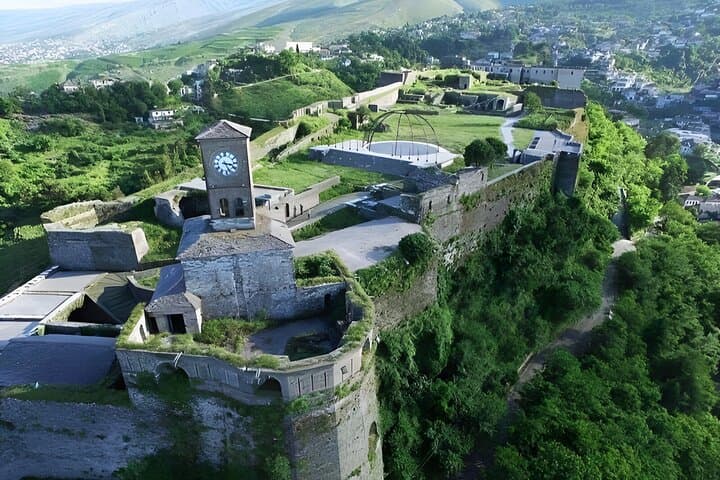
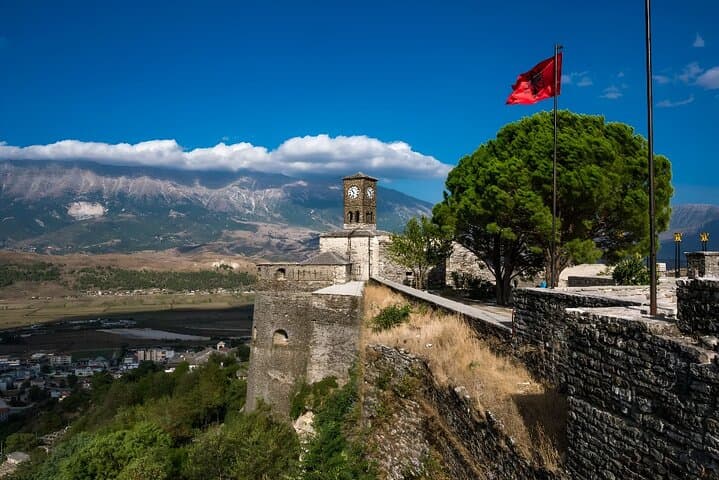
Gjirokastër's castle crowns the town with thick stone walls and terraces that read like a timeline — medieval fortifications reworked for Ottoman and modern uses. The fortress complex includes artillery and Cold War displays; the scale of the upper bailey (roughly 500 × 57 m in places) gives context to its strategic place over the Drino valley. The town below is a living archive: narrow stone streets, heavy wooden doors, and an old bazaar where trades and recipes have transferred over generations.
Geology, culture and modern tourism intersect cleanly on this full-day route: the Blue Eye illustrates karst hydrogeology — cold, oxygen-rich water from deep fissures — while Gjirokastër shows fortified urban life shaped by Ottoman-era architecture and 20th-century history.
Practical guidance: the day runs 8–10 hours with 2.5 hours' driving between stops. Trails around the Blue Eye are short but uneven; the castle involves steps and exposed ramps. Carry water, wear sturdy shoes, and bring cash for bazaar lunches. Expect cool microclimates at the spring and wind at the castle; plan clothing accordingly to stay comfortable while you explore.
moderate.
8–10 hours.
Moderate cardiovascular fitness and comfort with walking on uneven ground and stairs recommended
Typical driving time is about 2–2.5 hours from Sarandë to the Blue Eye and roughly 1 hour onward to Gjirokastër, depending on traffic and stops.
The tour lists entrance fees for the Blue Eye and castle as included; confirm at booking for any recent changes.
The Blue Eye area has uneven ground and the castle includes many stairs and ramped sections; it is not recommended for travelers with significant mobility constraints.
Swimming is usually restricted to protect the spring and safety; follow local signs and guide instructions at the site.
Gjirokastër is a UNESCO city known for its Ottoman-era stone houses and a fortress with layered military exhibits spanning medieval to Cold War periods.
The Blue Eye is ecologically sensitive — stay on marked paths, avoid disturbing vegetation, and respect local signage; entrance fees help support site management.
EcoAlbVenture operates guided outdoor trips and adventures with an emphasis on safety, stewardship, and memorable experiences.
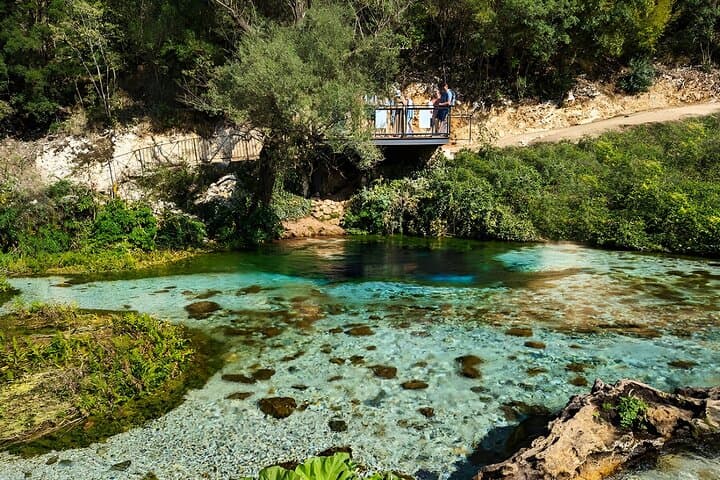
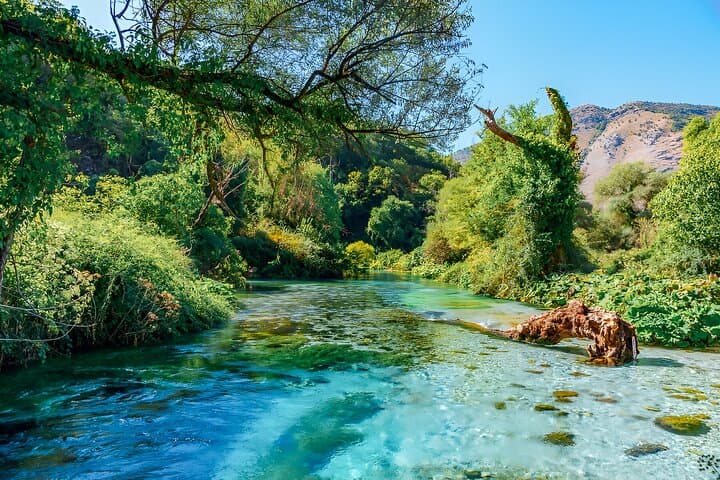
A cool draft from the Blue Eye pushes across your face before the first light of the day is swallowed by the hills. You step onto a compact trail that threads between karst outcrops where an underground spring erupts into a cobalt pool; the water seems to insist you slow down. After an hour beside the spring's bubbling aperture the group moves on, climbing into a different kind of history.
A cool draft from the Blue Eye pushes across your face before the first light of the day is swallowed by the hills. You step onto a compact trail that threads between karst outcrops where an underground spring erupts into a cobalt pool; the water seems to insist you slow down. After an hour beside the spring's bubbling aperture the group moves on, climbing into a different kind of history.
Gjirokastër's castle crowns the town with thick stone walls and terraces that read like a timeline — medieval fortifications reworked for Ottoman and modern uses. The fortress complex includes artillery and Cold War displays; the scale of the upper bailey (roughly 500 × 57 m in places) gives context to its strategic place over the Drino valley. The town below is a living archive: narrow stone streets, heavy wooden doors, and an old bazaar where trades and recipes have transferred over generations.
Geology, culture and modern tourism intersect cleanly on this full-day route: the Blue Eye illustrates karst hydrogeology — cold, oxygen-rich water from deep fissures — while Gjirokastër shows fortified urban life shaped by Ottoman-era architecture and 20th-century history.
Practical guidance: the day runs 8–10 hours with 2.5 hours' driving between stops. Trails around the Blue Eye are short but uneven; the castle involves steps and exposed ramps. Carry water, wear sturdy shoes, and bring cash for bazaar lunches. Expect cool microclimates at the spring and wind at the castle; plan clothing accordingly to stay comfortable while you explore.