THE ADVENTURE COLLECTIVE® · Independent discovery and booking for outdoor travel

Drive the winding Rif roads from Fes to the famously photogenic blue walls of Chefchaouen. This full‑day excursion blends easy walking through the medina, cultural stops like the Kasbah and Grand Mosque, and sweeping mountain scenery — all in a comfortable, private vehicle.
Drive the winding Rif roads from Fes to the famously photogenic blue walls of Chefchaouen. This full‑day excursion blends easy walking through the medina, cultural stops like the Kasbah and Grand Mosque, and sweeping mountain scenery — all in a comfortable, private vehicle.
The day starts before the medina wakes: an air-conditioned minivan peels away from Fes through patchwork fields and the sculpted ridgelines of the Rif Mountains. As the road climbs, the town’s cobalt walls appear, sudden and deliberate against a dry, stony horizon — blue that calms and frames every doorway.
Verified experiences and guided adventures in the surrounding area.
Operated by Badr Morocco Tours · Chefchaouen, Chefchaouen Province
The day starts before the medina wakes: an air-conditioned minivan peels away from Fes through patchwork fields and the sculpted ridgelines of the Rif Mountains. As the road climbs, the town’s cobalt walls appear, sudden and deliberate against a dry, stony horizon — blue that calms and frames every doorway.
Chefchaouen began in the 15th century as a refuge for Andalusian migrants and later took on Spanish and Moroccan layers visible in its tilework, kasbah and the slightly rounded minaret of the Grand Mosque. Geologically, the Rif is a folded, sedimentary range; limestone outcrops and terraced hillsides shape the views that approach the town.
Culture here is paced: artisans selling woven blankets and indigo-dyed wares, cafés opening onto Outa el Hammam square, and a relaxed rhythm that rewards slow wandering. The Kasbah Museum offers a concise glimpse into local craft and history while the tiny Ras El Maa spring at the medina’s edge lets the mountain breathe into the town.
Practical guidance: the full excursion is about 10 hours total — expect roughly 3–4 hours driving each way with 3–4 hours to explore. Streets are steep, cobbled and often narrow; comfortable shoes and a light daypack matter more than flash gear. Bring cash for small purchases, modest clothing for mosque areas, and plan photos for early morning or late afternoon when the blue is richest and crowds thin. Bottled water is provided, but a refillable bottle and sun protection make the day smoother. Return to Fes in the evening with a pocket full of postcards and new perspectives on northern Morocco.
easy.
10 hours.
Suitable for most fitness levels; expect several hours of standing and walking on uneven cobbles and short steep sections.
Expect roughly 3–4 hours one way depending on traffic and stops; the full tour is about 10 hours total.
Bottled water is included, but lunch is typically not; guides can suggest local restaurants with mountain views.
Transport and many public areas are accessible, but narrow cobbles and steps in the medina limit full wheelchair access in several spots.
Plan on moderate walking — a few kilometers across uneven cobbles and short climbs between viewpoints and the Kasbah.
Chefchaouen was founded in the 15th century as a refuge for people fleeing the Iberian Reconquista; Andalusian influences remain visible in the town’s architecture and crafts.
The town balances tourism with limited local water resources; support local artisans, avoid single‑use plastics where possible, and stick to marked paths to protect fragile terraces.
Badr Morocco Tours operates guided outdoor trips and adventures with an emphasis on safety, stewardship, and memorable experiences.
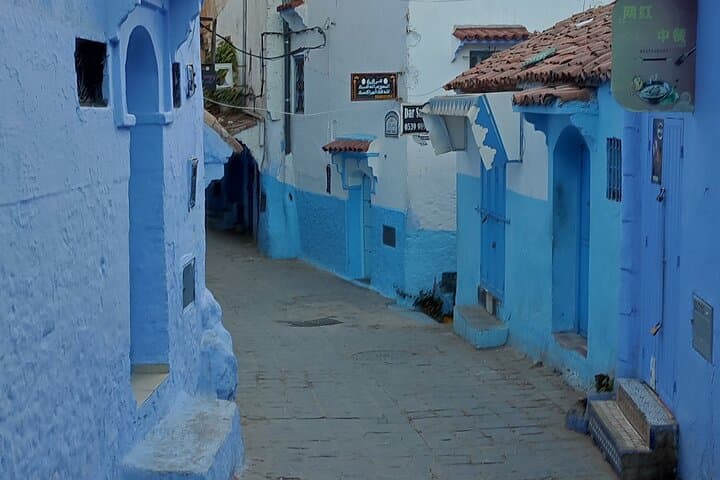
The day starts before the medina wakes: an air-conditioned minivan peels away from Fes through patchwork fields and the sculpted ridgelines of the Rif Mountains. As the road climbs, the town’s cobalt walls appear, sudden and deliberate against a dry, stony horizon — blue that calms and frames every doorway.
The day starts before the medina wakes: an air-conditioned minivan peels away from Fes through patchwork fields and the sculpted ridgelines of the Rif Mountains. As the road climbs, the town’s cobalt walls appear, sudden and deliberate against a dry, stony horizon — blue that calms and frames every doorway.
Chefchaouen began in the 15th century as a refuge for Andalusian migrants and later took on Spanish and Moroccan layers visible in its tilework, kasbah and the slightly rounded minaret of the Grand Mosque. Geologically, the Rif is a folded, sedimentary range; limestone outcrops and terraced hillsides shape the views that approach the town.
Culture here is paced: artisans selling woven blankets and indigo-dyed wares, cafés opening onto Outa el Hammam square, and a relaxed rhythm that rewards slow wandering. The Kasbah Museum offers a concise glimpse into local craft and history while the tiny Ras El Maa spring at the medina’s edge lets the mountain breathe into the town.
Practical guidance: the full excursion is about 10 hours total — expect roughly 3–4 hours driving each way with 3–4 hours to explore. Streets are steep, cobbled and often narrow; comfortable shoes and a light daypack matter more than flash gear. Bring cash for small purchases, modest clothing for mosque areas, and plan photos for early morning or late afternoon when the blue is richest and crowds thin. Bottled water is provided, but a refillable bottle and sun protection make the day smoother. Return to Fes in the evening with a pocket full of postcards and new perspectives on northern Morocco.