THE ADVENTURE COLLECTIVE® · Independent discovery and booking for outdoor travel

A four-hour coastal cruise that compresses the Bay of Kotor’s best moments: the luminous Blue Cave, Perast’s island shrine, military relics at Mamula, and a private-access pebble beach. Fuel, captain, and life jackets are included—just bring a towel and a sense of adventure.
A four-hour coastal cruise that compresses the Bay of Kotor’s best moments: the luminous Blue Cave, Perast’s island shrine, military relics at Mamula, and a private-access pebble beach. Fuel, captain, and life jackets are included—just bring a towel and a sense of adventure.
You step off Kotor’s stone quay to a small crowd of travelers shading their eyes against a hard Adriatic sun. The boat rocks gently, the captain calls out a quick welcome, and the bay tightens behind you—cliffs rise like old walls, and the water slips forward, eager to show what it hides.
Verified experiences and guided adventures in the surrounding area.
Operated by Dive Sicily · Kotor, Kotor Municipality
You step off Kotor’s stone quay to a small crowd of travelers shading their eyes against a hard Adriatic sun. The boat rocks gently, the captain calls out a quick welcome, and the bay tightens behind you—cliffs rise like old walls, and the water slips forward, eager to show what it hides.
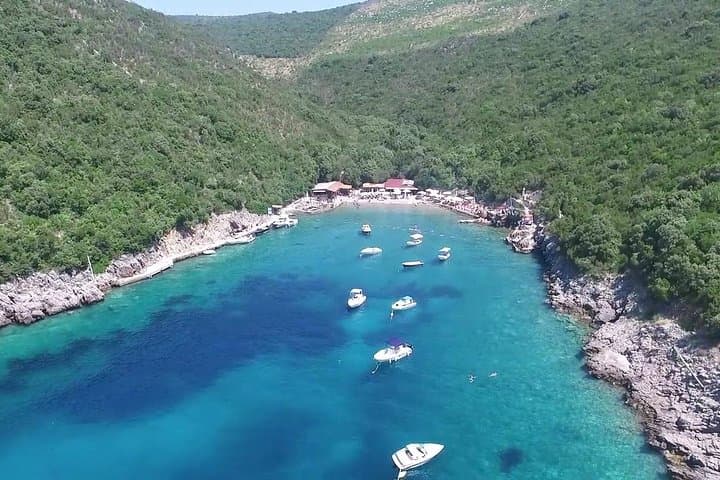
In four hours this compact route reads like a condensed history of the Bay of Kotor: a quick plunge into the Blue Cave on Luštica’s sheer flank, a hush at the artificial island of Our Lady of the Rocks, a pass by Mamula’s fortress-turned-prison, and a slow anchor at a remote pebble beach that is only reachable by sea. The Blue Cave itself was sculpted at the base of a 100‑meter cliff; for millennia, waves on porous limestone hollowed the rock until sunlight pouring through its mouth painted the interior electric blue. The bay is not a true fjord but a drowned river canyon carved by tectonics and time; karst limestone makes the cliffs jagged and porous, the same geology that gave the cave its color.
Culturally, the tour threads through Perast’s seafaring legacy. The Lady of the Rock, planted by fishermen in the 1400s, stands as a small, weathered monument to sailors who raised stone by stone. Mamula Island, with its austere ramparts built in the 19th century and later used as a prison during both world wars, projects the darker edges of the region’s past. On the return route you skirt abandoned Yugoslav submarine pens and the narrow Verige—300 meters of water that funnel between opposing cliffs where currents can pick up speed.
Practicalities are simple: the trip is four hours, fuel and a licensed captain are included, and life jackets are provided for all ages. Expect a maximum of a dozen passengers on shared departures—enough to feel communal without being crowded.
Bring swimwear and a towel if you plan to jump into the cobalt pool; the water will dare you. Footwear with grip is useful for stepping onto pebbled beach access points, and pack a small amount of cash for the beach snack bar. Sunscreen, a wide-brimmed hat, and a light wind layer are smart: the bay can be sheltered and hot at anchor, then breezy once you move.
Timing matters—early departures tend to find calmer water and clearer light in the Blue Cave, while late afternoon casts longer shadows across Mamula and the Perast churches. If you’re prone to seasickness, choose an earlier slot and sit mid-boat where motion is gentlest.
This tour is equal parts geology, quick history lesson, and a swim-anchored escape—an efficient way to let the Bay of Kotor push you toward its best blue moments without needing a whole day.
easy.
4 hours.
Suitable for most fitness levels—mostly seated cruising with short swims and brief onshore steps.
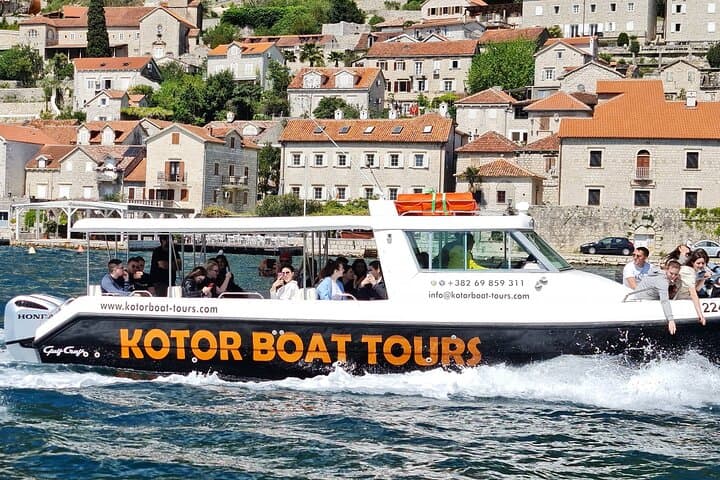
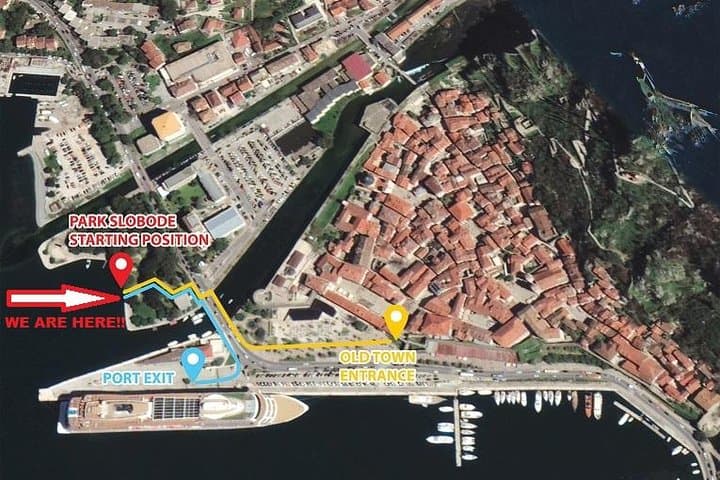
Meet at the Kotor town park desk where Kotor Boat Tours signs are posted; the meeting point is at the quay in front of the old town.
Yes—many passengers jump from the boat into the cave’s clear water; follow crew instructions about depth and currents before entering.
Life jackets for adults and children are included in the tour price and are available on board.
Yes—this tour is listed as physically easy; infants can ride in strollers and must sit on an adult's lap on board.
Fuel and the captain are included, but food and drinks at the beach restaurant are not included—bring cash if you plan to buy a snack.
The operator cancels for bad weather; cancel at least 24 hours ahead for a full refund otherwise standard cancellation policy applies.
Perast and surrounding islets reflect centuries of maritime life—Our Lady of the Rock was built by fishermen in the 15th century and Mamula Island was fortified in the 19th century and later used as a prison.
This stretch of the Adriatic is sensitive—use reef-safe sunscreen, avoid littering from boats, and follow crew guidance to minimize impact on fragile coastal habitats.
Dive Sicily operates guided outdoor trips and adventures with an emphasis on safety, stewardship, and memorable experiences.

You step off Kotor’s stone quay to a small crowd of travelers shading their eyes against a hard Adriatic sun. The boat rocks gently, the captain calls out a quick welcome, and the bay tightens behind you—cliffs rise like old walls, and the water slips forward, eager to show what it hides.
You step off Kotor’s stone quay to a small crowd of travelers shading their eyes against a hard Adriatic sun. The boat rocks gently, the captain calls out a quick welcome, and the bay tightens behind you—cliffs rise like old walls, and the water slips forward, eager to show what it hides.
In four hours this compact route reads like a condensed history of the Bay of Kotor: a quick plunge into the Blue Cave on Luštica’s sheer flank, a hush at the artificial island of Our Lady of the Rocks, a pass by Mamula’s fortress-turned-prison, and a slow anchor at a remote pebble beach that is only reachable by sea. The Blue Cave itself was sculpted at the base of a 100‑meter cliff; for millennia, waves on porous limestone hollowed the rock until sunlight pouring through its mouth painted the interior electric blue. The bay is not a true fjord but a drowned river canyon carved by tectonics and time; karst limestone makes the cliffs jagged and porous, the same geology that gave the cave its color.
Culturally, the tour threads through Perast’s seafaring legacy. The Lady of the Rock, planted by fishermen in the 1400s, stands as a small, weathered monument to sailors who raised stone by stone. Mamula Island, with its austere ramparts built in the 19th century and later used as a prison during both world wars, projects the darker edges of the region’s past. On the return route you skirt abandoned Yugoslav submarine pens and the narrow Verige—300 meters of water that funnel between opposing cliffs where currents can pick up speed.
Practicalities are simple: the trip is four hours, fuel and a licensed captain are included, and life jackets are provided for all ages. Expect a maximum of a dozen passengers on shared departures—enough to feel communal without being crowded.
Bring swimwear and a towel if you plan to jump into the cobalt pool; the water will dare you. Footwear with grip is useful for stepping onto pebbled beach access points, and pack a small amount of cash for the beach snack bar. Sunscreen, a wide-brimmed hat, and a light wind layer are smart: the bay can be sheltered and hot at anchor, then breezy once you move.
Timing matters—early departures tend to find calmer water and clearer light in the Blue Cave, while late afternoon casts longer shadows across Mamula and the Perast churches. If you’re prone to seasickness, choose an earlier slot and sit mid-boat where motion is gentlest.
This tour is equal parts geology, quick history lesson, and a swim-anchored escape—an efficient way to let the Bay of Kotor push you toward its best blue moments without needing a whole day.