THE ADVENTURE COLLECTIVE® · Independent discovery and booking for outdoor travel

Cut loose from the ramparts of Kotor for a three-hour boat trip that mixes a swim in an electric Blue Cave, a pass-by of Mamula fortress, and a guided stop at the votive island of Lady of the Rocks. Practical, scenic, and rich in coastal history.
Cut loose from the ramparts of Kotor for a three-hour boat trip that mixes a swim in an electric Blue Cave, a pass-by of Mamula fortress, and a guided stop at the votive island of Lady of the Rocks. Practical, scenic, and rich in coastal history.
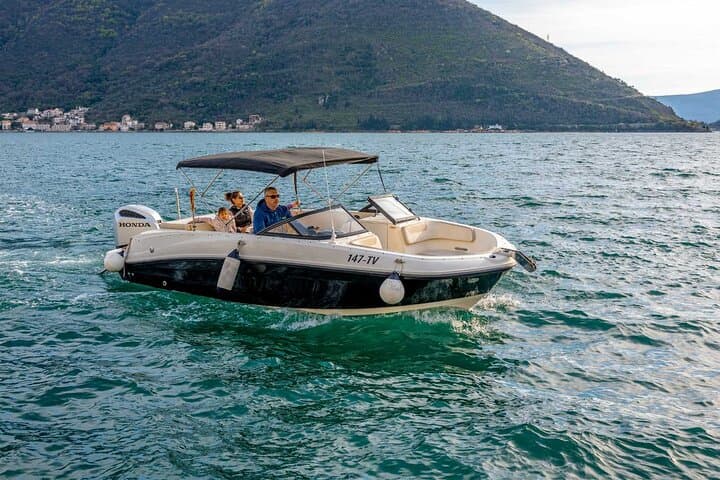
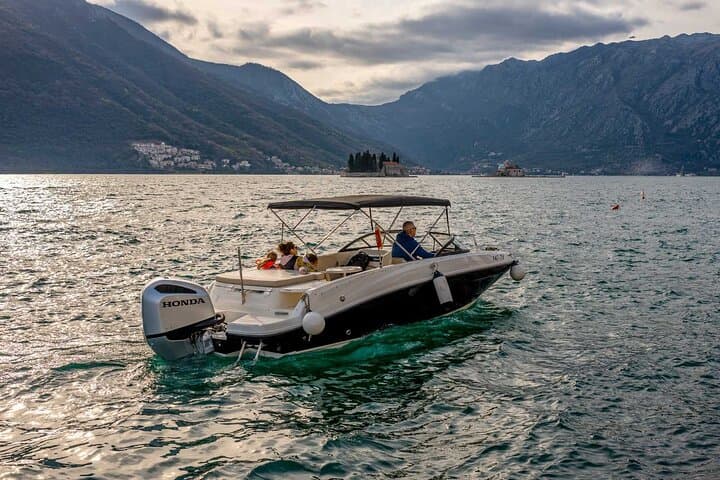
You step off the cobblestone quay in Kotor with salt already on your lips and a small boat waiting to rock you free of the fortified town. The motor cuts through the calm, fjord-like inlet of the Bay of Kotor and soon the limestone walls open to the Adriatic, where the first stop—the Blue Cave on the Luštica Peninsula—appears as a slit of shadow and reflected light.
Verified experiences and guided adventures in the surrounding area.
Operated by Sirius boat tours Kotor · Kotor, Kotor Municipality
You step off the cobblestone quay in Kotor with salt already on your lips and a small boat waiting to rock you free of the fortified town. The motor cuts through the calm, fjord-like inlet of the Bay of Kotor and soon the limestone walls open to the Adriatic, where the first stop—the Blue Cave on the Luštica Peninsula—appears as a slit of shadow and reflected light.
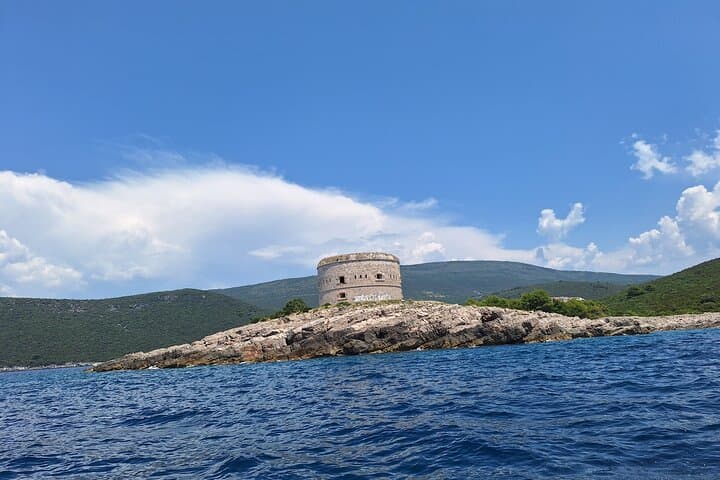
Jumping into that water feels like entering another clarity: the swim time is short, about 20 minutes, but the cave throws back electric shades of blue when sunlight slips in and catches the underwater minerals. Back on deck the captain steers past Mamula, its round stone fortress built in 1853 by Austro-Hungarian commandant Lazar Mamula, a compact silhouette that once controlled the bay’s entrance and has a reputation that shifts depending on wartime memory and recent renovation.
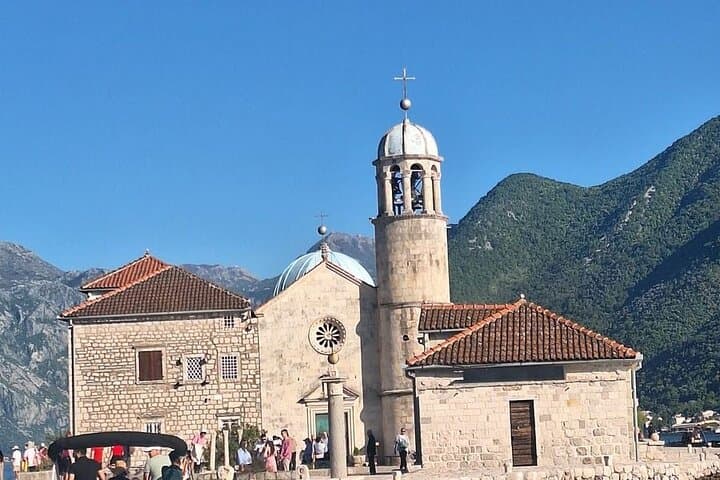
The boat threads through three nearby submarine tunnels—concrete mouths set low to the waves that hint at 20th-century coastal defenses—before you cut across to Perast and the sliver of an island called Lady of the Rocks. The tiny church there, completed in the early 17th century, holds votive frescoes and maritime offerings; local lore says fishermen dropped stones to make the island after finding an icon in the sea, a practice that continued for centuries and shaped Perast’s civic identity.
Geology frames every view here: karst ridges plunging into the bay, cliffs that hold old villages like stacked stone, and clear water so clean seagrass shows beneath. Culture is maritime—bell towers, a cadence of oars, and seafood kitchens back onshore—and the UNESCO-listed settlements around the bay reflect Venetian lines and Austro-Hungarian fortification logic.
Practical side: this is an easy, 3-hour outing, with short swims and minimal walking. Bring a swimsuit, reef shoes, and a towel; the operator provides bottled water and a guide. If you want the Blue Cave to flash its brightest blues, aim for morning light when the sun hits the cave mouth at a favorable angle. The sea is usually benign but can pick up wind; take motion-sickness meds if you’re prone.
Local tips and etiquette are simple: respect church hours on Lady of the Rocks, leave no trash on the island, and avoid stepping onto protected seagrass when boarding. The trip is compact but layered—history, geology, swim breaks, and a clear sense of how locals have shaped and read this coastal landscape. For three hours you trade the ramparts of Kotor for a seafaring rhythm that keeps one hand on the rail and the other ready for the next view.
easy.
3 hours.
Suitable for people in basic fitness — short swims and minimal walking required; stable on small boats recommended.
You get roughly 20 minutes for swimming and photos in the Blue Cave, timed around light and safety considerations.
Yes—there’s usually time to step ashore and enter the church when services aren’t in session; modest dress is requested.
Yes; the tour is family-friendly. Non-swimmers can remain on the boat during the swim stop and are closely supervised by the crew.
Bring a small amount of euros for tips, church donations, or onboard refreshments if offered outside the standard inclusions.
Access is limited—boarding and island landings involve ladders or uneven stone docks, so it’s not suitable for standard wheelchair users.
The operator cancels in unsafe sea or weather conditions and offers a full refund if cancellation is at least 24 hours prior, per policy.
Perast and Kotor show Venetian and Austro-Hungarian influences; Mamula fortress (1853) and the votive island of Lady of the Rocks reflect centuries of maritime defense and local seafaring devotion.
The bay’s seagrass beds are ecologically sensitive—avoid anchoring on meadows, pack out plastics, and follow crew guidance to minimize disturbance.
Sirius boat tours Kotor operates guided outdoor trips and adventures with an emphasis on safety, stewardship, and memorable experiences.
You step off the cobblestone quay in Kotor with salt already on your lips and a small boat waiting to rock you free of the fortified town. The motor cuts through the calm, fjord-like inlet of the Bay of Kotor and soon the limestone walls open to the Adriatic, where the first stop—the Blue Cave on the Luštica Peninsula—appears as a slit of shadow and reflected light.
You step off the cobblestone quay in Kotor with salt already on your lips and a small boat waiting to rock you free of the fortified town. The motor cuts through the calm, fjord-like inlet of the Bay of Kotor and soon the limestone walls open to the Adriatic, where the first stop—the Blue Cave on the Luštica Peninsula—appears as a slit of shadow and reflected light.
Jumping into that water feels like entering another clarity: the swim time is short, about 20 minutes, but the cave throws back electric shades of blue when sunlight slips in and catches the underwater minerals. Back on deck the captain steers past Mamula, its round stone fortress built in 1853 by Austro-Hungarian commandant Lazar Mamula, a compact silhouette that once controlled the bay’s entrance and has a reputation that shifts depending on wartime memory and recent renovation.
The boat threads through three nearby submarine tunnels—concrete mouths set low to the waves that hint at 20th-century coastal defenses—before you cut across to Perast and the sliver of an island called Lady of the Rocks. The tiny church there, completed in the early 17th century, holds votive frescoes and maritime offerings; local lore says fishermen dropped stones to make the island after finding an icon in the sea, a practice that continued for centuries and shaped Perast’s civic identity.
Geology frames every view here: karst ridges plunging into the bay, cliffs that hold old villages like stacked stone, and clear water so clean seagrass shows beneath. Culture is maritime—bell towers, a cadence of oars, and seafood kitchens back onshore—and the UNESCO-listed settlements around the bay reflect Venetian lines and Austro-Hungarian fortification logic.
Practical side: this is an easy, 3-hour outing, with short swims and minimal walking. Bring a swimsuit, reef shoes, and a towel; the operator provides bottled water and a guide. If you want the Blue Cave to flash its brightest blues, aim for morning light when the sun hits the cave mouth at a favorable angle. The sea is usually benign but can pick up wind; take motion-sickness meds if you’re prone.
Local tips and etiquette are simple: respect church hours on Lady of the Rocks, leave no trash on the island, and avoid stepping onto protected seagrass when boarding. The trip is compact but layered—history, geology, swim breaks, and a clear sense of how locals have shaped and read this coastal landscape. For three hours you trade the ramparts of Kotor for a seafaring rhythm that keeps one hand on the rail and the other ready for the next view.