THE ADVENTURE COLLECTIVE® · Independent discovery and booking for outdoor travel

A brisk 4-hour speedboat circuit from Kotor that pairs the luminous Blue Cave with island history and a waterfront lunch. Ideal for travelers who want big views, a swim in blue light, and a taste of Boka Bay’s coastal cuisine.
A brisk 4-hour speedboat circuit from Kotor that pairs the luminous Blue Cave with island history and a waterfront lunch. Ideal for travelers who want big views, a swim in blue light, and a taste of Boka Bay’s coastal cuisine.
You push off from Kotor’s small marina and the bay takes hold of you—mountain flanks lean in, the water loosens into glass, and the boat’s wake writes a white line across centuries of maritime traffic.
Verified experiences and guided adventures in the surrounding area.
Operated by Boka Bliss Boats · Kotor, Kotor Municipality
You push off from Kotor’s small marina and the bay takes hold of you—mountain flanks lean in, the water loosens into glass, and the boat’s wake writes a white line across centuries of maritime traffic.
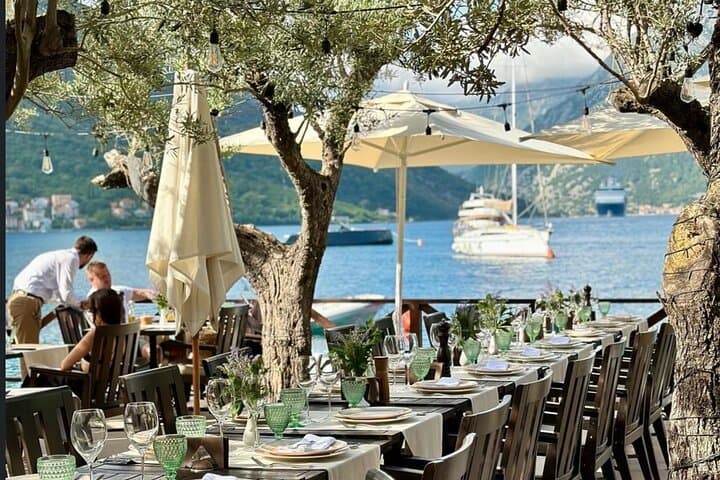
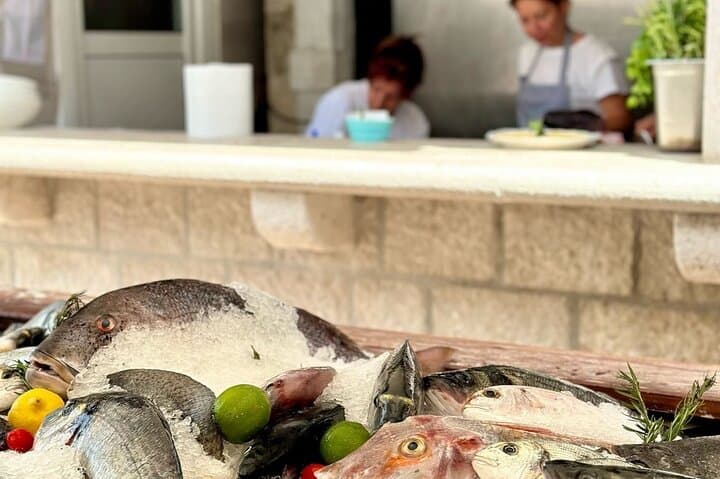
In four hours this speedboat route stitches together the Bay of Kotor’s most cinematic moments: a 20-minute step ashore at the man-made islet of Our Lady of the Rocks, a rare peek into a Cold War submarine tunnel, a slow pass by the squat stone of Mamula, then the surreal cobalt glow of the Blue Cave followed by a relaxed hour of seafood at Adriatica restaurant.
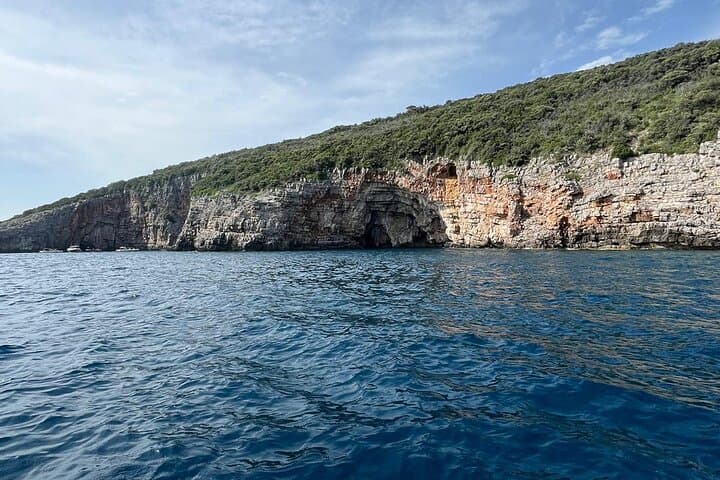
The bay itself is geologic theatre. Carved by glacial rivers and tectonic lift, Boka Kotorska’s fjord-like inlet is steep, folded limestone that drops rapidly to deep water—the cliffs still slough small rockfalls into dark channels that the boat skirts with practiced ease. Culturally, the route reads like Montenegro’s maritime ledger: Perast’s baroque captain palaces reflect an era when local families ran merchant fleets; Our Lady of the Rocks is a votive archive of sailors’ promises and Tripo Kokolja paintings; Mamula is a blunt reminder of Austro-Hungarian prisons and later strategic use during Yugoslavia.
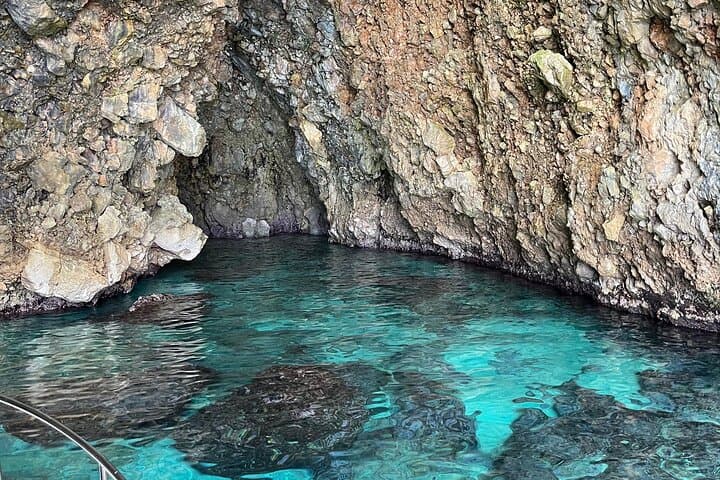
When the boat eases into the Blue Cave, sunlight becomes an active collaborator. Rays entering a low sea mouth refract, lifting a blue that seems to come from the water itself—swimming here is a sensory step into a different light. The submarine tunnel visit gives the day a harder edge: concrete bunkers and rusted fittings hint at strategic anxieties that once hid beneath these placid waves.
Practical edge: the tour covers roughly a circular loop of the inner bay—expect about 12–20 nautical miles of cruising with multiple short stops, and a 30-minute swim window in the cave. Wear water shoes for wet landings at pebbled shores, bring a light wind layer for the return when the sea obligingly chops, and keep a towel handy for the restaurant stop.
Timing matters: the Blue Cave’s glow is strongest when the sun is higher—midday light concentrates the effect—while late afternoon softens the bay for photography. For families and less mobile travelers, the operator provides easy boarding from Kotor’s Park Slobode and can arrange hotel pickup; this is an accessible day at sea, but basic swimming ability is recommended for the cave swim.
In short, this is fast-moving coastal history with a culinary exclamation: a compact, sensory-rich loop through Boka’s natural and human story, built for travelers who want dramatic views and a real lunch afterward rather than an all-day expedition.
easy.
4 hours.
Suitable for most fitness levels; must be able to step on/off a small boat and swim short distances.
The meeting point is near Park Slobode in Kotor, about a 2–3 minute walk from the old town marina; return is to the same spot and hotel pickup can often be arranged.
A basic ability to swim is recommended—the stop is in open water near the cave mouth and swimmers enter from the boat; flotation can sometimes be provided on request.
Yes—you typically have about 20 minutes ashore to explore the church, its votive tablets, and works by Tripo Kokolja.
The tunnel is an abandoned Yugoslav-era structure open for short visits; the operator manages access and you should follow crew instructions and avoid restricted areas.
Casual seaside attire is appropriate; you'll dock for about an hour and the restaurant serves local seafood and traditional dishes.
The tour is described as physically easy and wheelchair/stroller accessible for main boarding points, but check with the operator for specific mobility needs and child seating.
Kotor and Perast were once key maritime centers; Our Lady of the Rocks is an artificial islet built by generations of sailors, while Mamula and nearby tunnels reflect Austro-Hungarian and Yugoslav strategic use of the bay.
Boka Kotorska has sensitive marine habitats—avoid anchoring on seagrass beds and follow crew guidance to minimize disturbance to wildlife and underwater meadows.
Boka Bliss Boats operates guided outdoor trips and adventures with an emphasis on safety, stewardship, and memorable experiences.
You push off from Kotor’s small marina and the bay takes hold of you—mountain flanks lean in, the water loosens into glass, and the boat’s wake writes a white line across centuries of maritime traffic.
You push off from Kotor’s small marina and the bay takes hold of you—mountain flanks lean in, the water loosens into glass, and the boat’s wake writes a white line across centuries of maritime traffic.
In four hours this speedboat route stitches together the Bay of Kotor’s most cinematic moments: a 20-minute step ashore at the man-made islet of Our Lady of the Rocks, a rare peek into a Cold War submarine tunnel, a slow pass by the squat stone of Mamula, then the surreal cobalt glow of the Blue Cave followed by a relaxed hour of seafood at Adriatica restaurant.
The bay itself is geologic theatre. Carved by glacial rivers and tectonic lift, Boka Kotorska’s fjord-like inlet is steep, folded limestone that drops rapidly to deep water—the cliffs still slough small rockfalls into dark channels that the boat skirts with practiced ease. Culturally, the route reads like Montenegro’s maritime ledger: Perast’s baroque captain palaces reflect an era when local families ran merchant fleets; Our Lady of the Rocks is a votive archive of sailors’ promises and Tripo Kokolja paintings; Mamula is a blunt reminder of Austro-Hungarian prisons and later strategic use during Yugoslavia.
When the boat eases into the Blue Cave, sunlight becomes an active collaborator. Rays entering a low sea mouth refract, lifting a blue that seems to come from the water itself—swimming here is a sensory step into a different light. The submarine tunnel visit gives the day a harder edge: concrete bunkers and rusted fittings hint at strategic anxieties that once hid beneath these placid waves.
Practical edge: the tour covers roughly a circular loop of the inner bay—expect about 12–20 nautical miles of cruising with multiple short stops, and a 30-minute swim window in the cave. Wear water shoes for wet landings at pebbled shores, bring a light wind layer for the return when the sea obligingly chops, and keep a towel handy for the restaurant stop.
Timing matters: the Blue Cave’s glow is strongest when the sun is higher—midday light concentrates the effect—while late afternoon softens the bay for photography. For families and less mobile travelers, the operator provides easy boarding from Kotor’s Park Slobode and can arrange hotel pickup; this is an accessible day at sea, but basic swimming ability is recommended for the cave swim.
In short, this is fast-moving coastal history with a culinary exclamation: a compact, sensory-rich loop through Boka’s natural and human story, built for travelers who want dramatic views and a real lunch afterward rather than an all-day expedition.