THE ADVENTURE COLLECTIVE® · Independent discovery and booking for outdoor travel

Walk York’s most complete medieval walls with a storyteller who pairs grisly history with clear, practical route notes. This two-hour guided loop visits major gateways, points out Roman and medieval masonry, and leaves you with a map to finish the circuit.
Walk York’s most complete medieval walls with a storyteller who pairs grisly history with clear, practical route notes. This two-hour guided loop visits major gateways, points out Roman and medieval masonry, and leaves you with a map to finish the circuit.
A wind off the River Ouse catches the stone and carries the faint smell of soot and beer as the group ascends the first flight of steps onto the ancient rampart.
Verified experiences and guided adventures in the surrounding area.
Operated by The Bloody Tour of York · York, North Yorkshire
A wind off the River Ouse catches the stone and carries the faint smell of soot and beer as the group ascends the first flight of steps onto the ancient rampart.
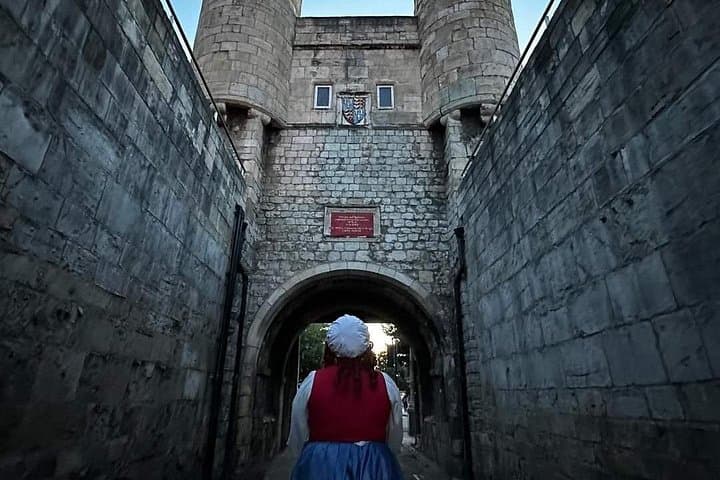
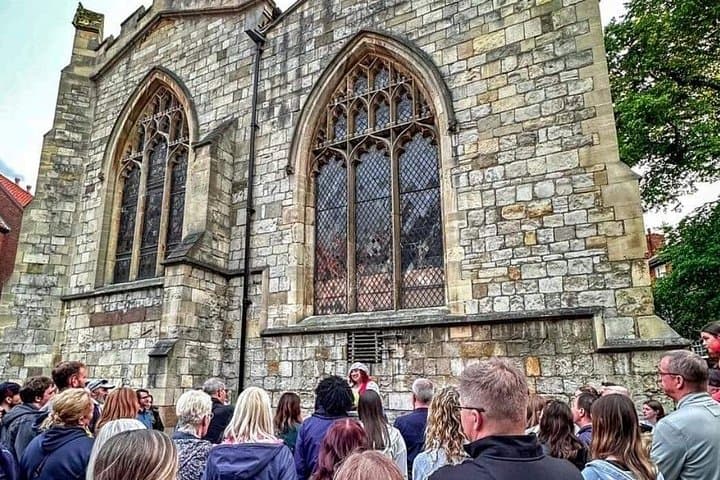
Walking atop York’s city walls feels like moving along the city’s spine: underfoot are Roman foundations, medieval masonry, and Victorian repairs, and every gate frames a different face of the city — narrow streets, the cathedral’s stained-glass shoulder, the river folding back on itself. Mad Alice leads the two-hour clockwise circuit with a steady voice that places grisly events alongside the stones that survived them: heads displayed at Micklegate Bar, Civil War cannon strikes in 1644, and the vanished Jewish quarter that once thrived by the fortress edge.
Geology and engineering are plain to see: worked sandstone blocks over Roman magnesian limestone, defensive tilt and scar that still define sightlines. Cultural threads run from Eboracum’s garrison to Tudor processions and 19th‑century restorations that rescued much of the wall from demolition.
Practically, the route covers roughly 2–2.5 miles with multiple staircases and narrow parapets; the tour visits three of the four major gateways and stops at viewpoints like the botanical gardens and King’s Manor. Expect uneven flagstones, exposed stretches in wind and rain, and low railings in places. Bring sturdy shoes, a weatherproof jacket, and a sense of balance.
At the end Mad Alice issues a marked map so visitors can finish the full circuit independently or step down into a nearby pub to measure the day’s chills. The tour balances local lore with precise landmarks — grim, human, and undeniably rooted in the city’s living fabric.
moderate.
2 hours.
Moderate — able to climb stairs and walk on uneven surfaces for a couple of miles.
No — City Walls regulations prohibit dogs and pushchairs due to narrow paths and stairs.
In extreme weather the walls may be closed by council protocol; tours will be cancelled and refunded if the route is unsafe.
Yes — the guide provides a marked map so you can finish the 2.5 mile circuit independently if you wish.
Not recommended — the route includes multiple staircases and uneven surfaces; limited-mobility visitors should check with the operator for alternatives.
York’s walls trace back to Roman Eboracum and were heavily fortified in medieval times; they witnessed public executions, Civil War action in 1644, and 19th‑century restoration campaigns.
The City of York Council maintains and occasionally closes sections of the walls; stick to designated paths, avoid climbing on masonry, and follow local guidance to reduce wear.
The Bloody Tour of York operates guided outdoor trips and adventures with an emphasis on safety, stewardship, and memorable experiences.

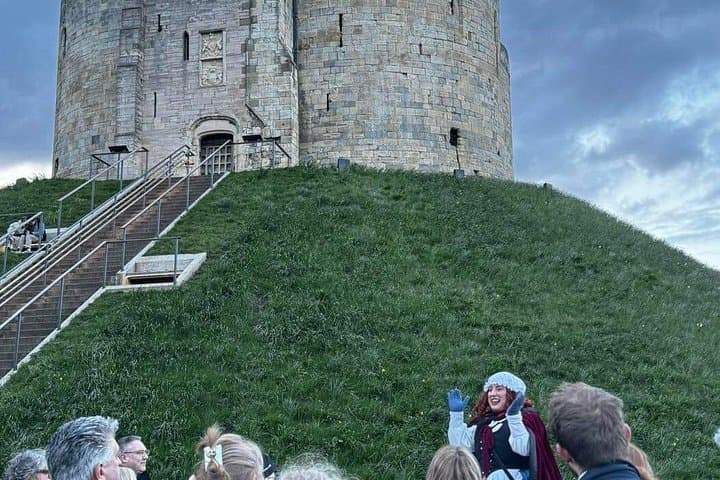
A wind off the River Ouse catches the stone and carries the faint smell of soot and beer as the group ascends the first flight of steps onto the ancient rampart.
A wind off the River Ouse catches the stone and carries the faint smell of soot and beer as the group ascends the first flight of steps onto the ancient rampart.
Walking atop York’s city walls feels like moving along the city’s spine: underfoot are Roman foundations, medieval masonry, and Victorian repairs, and every gate frames a different face of the city — narrow streets, the cathedral’s stained-glass shoulder, the river folding back on itself. Mad Alice leads the two-hour clockwise circuit with a steady voice that places grisly events alongside the stones that survived them: heads displayed at Micklegate Bar, Civil War cannon strikes in 1644, and the vanished Jewish quarter that once thrived by the fortress edge.
Geology and engineering are plain to see: worked sandstone blocks over Roman magnesian limestone, defensive tilt and scar that still define sightlines. Cultural threads run from Eboracum’s garrison to Tudor processions and 19th‑century restorations that rescued much of the wall from demolition.
Practically, the route covers roughly 2–2.5 miles with multiple staircases and narrow parapets; the tour visits three of the four major gateways and stops at viewpoints like the botanical gardens and King’s Manor. Expect uneven flagstones, exposed stretches in wind and rain, and low railings in places. Bring sturdy shoes, a weatherproof jacket, and a sense of balance.
At the end Mad Alice issues a marked map so visitors can finish the full circuit independently or step down into a nearby pub to measure the day’s chills. The tour balances local lore with precise landmarks — grim, human, and undeniably rooted in the city’s living fabric.