THE ADVENTURE COLLECTIVE® · Independent discovery and booking for outdoor travel

Stand at Free Derry Corner and walk the Bogside with a local guide who traces Bloody Sunday’s history through murals, memorials, and lived memory. This private 90‑minute tour pairs clear historical context with practical route advice for visitors.
Stand at Free Derry Corner and walk the Bogside with a local guide who traces Bloody Sunday’s history through murals, memorials, and lived memory. This private 90‑minute tour pairs clear historical context with practical route advice for visitors.
You begin at Free Derry Corner with the city’s breath in your face — wind off the River Foyle, damp cobblestones underfoot, and the white-painted wall that once declared a community’s claim to space. The guide sets a steady pace, voice low and exacting, pointing out dates carved into brickwork and the sequence of murals that map a neighborhood’s memory.
Verified experiences and guided adventures in the surrounding area.
Operated by Opatrip.com Ireland · Derry / Londonderry, County Londonderry
You begin at Free Derry Corner with the city’s breath in your face — wind off the River Foyle, damp cobblestones underfoot, and the white-painted wall that once declared a community’s claim to space. The guide sets a steady pace, voice low and exacting, pointing out dates carved into brickwork and the sequence of murals that map a neighborhood’s memory.
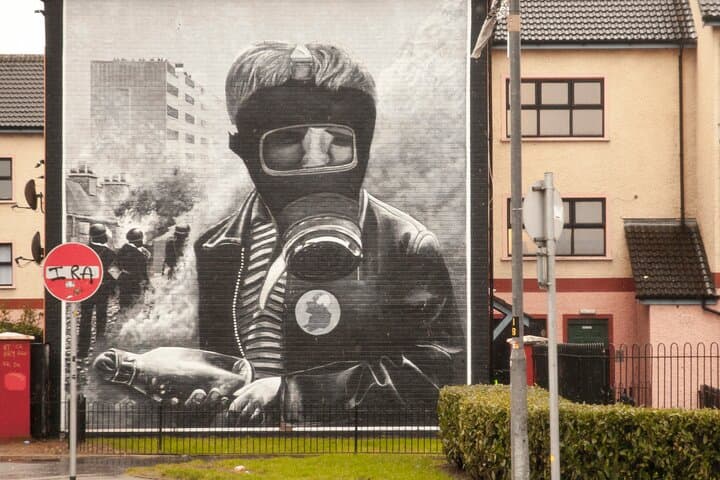
The Bogside’s streets are recent geology: urban layers of Victorian masonry over an older estuary plain shaped by the Foyle. The murals by the Bogside Artists transform walls into narrative panels—visual history that anchors stories of civil rights, protest, and the shootings of January 30, 1972. Walking these blocks you’ll pass the Bloody Sunday Monument and hear first-hand context about the lives behind the headlines: local activists, the changing political landscape, and how the city has rebuilt while keeping these sites as places of remembrance.
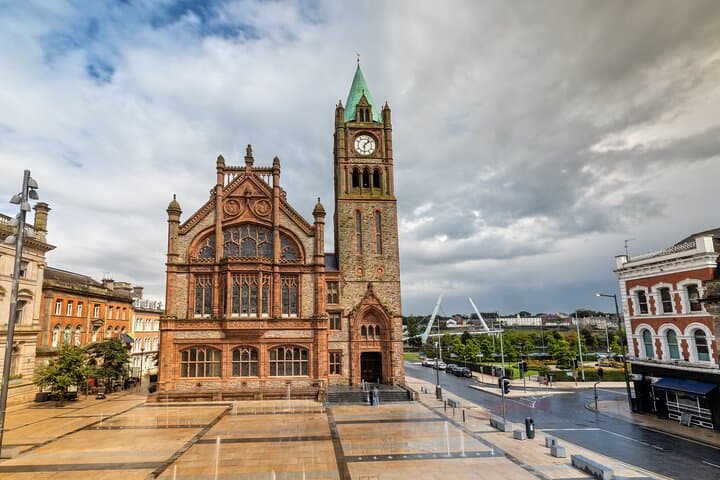
Practical guidance: this private 90-minute walk covers short urban distances on paved streets and some uneven surfaces — suitable for most fitness levels. Wear sturdy shoes and a waterproof layer; Northern Irish weather can shift quickly. Allow time to pause at memorials respectfully; photography is common but observe any requests at sensitive sites. The tour starts near public transit and is easy to combine with a visit to Derry’s 17th-century walls or the Tower Museum afterward.
This is a historical, not a sightseeing-only, walk: expect candid storytelling, local perspective, and an emphasis on respect and context as you move through one of Northern Ireland’s most significant urban landscapes.
easy.
1.5 hours.
Suitable for most adults and families; involves standing and short, uneven stretches.
The private tour lasts 90 minutes and covers short urban distances in the Bogside—expect mostly paved streets and a few brief uphill sections.
Yes—it's described as physically easy, but there are some uneven pavements; contact the operator about mobility needs to confirm accessibility options.
Photography is generally allowed, but be respectful at memorial sites—follow your guide’s instructions and avoid disruptive behavior.
Public buses and taxis serve the city center; the Bogside is a short walk from central Derry and well-served by local transport links.
Derry’s Bogside was a focal point during The Troubles; Bloody Sunday in 1972 — when British soldiers shot unarmed civil rights protesters — remains central to the city’s modern history.
Murals and memorials are maintained through community initiatives; visitors are asked to respect these sites and support local businesses that fund upkeep.
Opatrip.com Ireland operates guided outdoor trips and adventures with an emphasis on safety, stewardship, and memorable experiences.

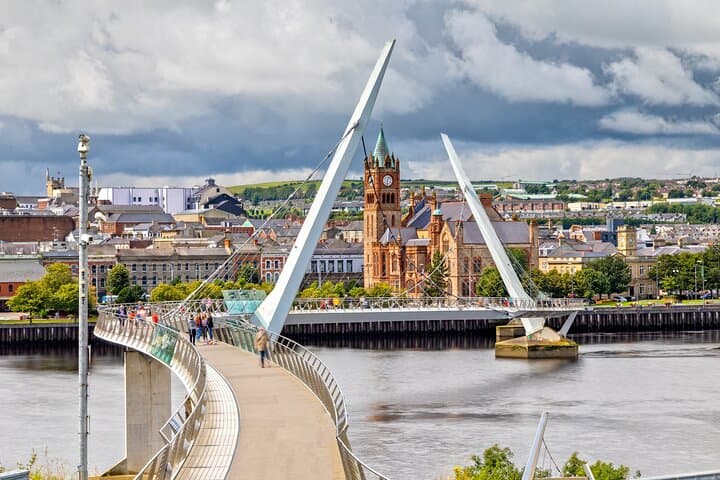
You begin at Free Derry Corner with the city’s breath in your face — wind off the River Foyle, damp cobblestones underfoot, and the white-painted wall that once declared a community’s claim to space. The guide sets a steady pace, voice low and exacting, pointing out dates carved into brickwork and the sequence of murals that map a neighborhood’s memory.
You begin at Free Derry Corner with the city’s breath in your face — wind off the River Foyle, damp cobblestones underfoot, and the white-painted wall that once declared a community’s claim to space. The guide sets a steady pace, voice low and exacting, pointing out dates carved into brickwork and the sequence of murals that map a neighborhood’s memory.
The Bogside’s streets are recent geology: urban layers of Victorian masonry over an older estuary plain shaped by the Foyle. The murals by the Bogside Artists transform walls into narrative panels—visual history that anchors stories of civil rights, protest, and the shootings of January 30, 1972. Walking these blocks you’ll pass the Bloody Sunday Monument and hear first-hand context about the lives behind the headlines: local activists, the changing political landscape, and how the city has rebuilt while keeping these sites as places of remembrance.
Practical guidance: this private 90-minute walk covers short urban distances on paved streets and some uneven surfaces — suitable for most fitness levels. Wear sturdy shoes and a waterproof layer; Northern Irish weather can shift quickly. Allow time to pause at memorials respectfully; photography is common but observe any requests at sensitive sites. The tour starts near public transit and is easy to combine with a visit to Derry’s 17th-century walls or the Tower Museum afterward.
This is a historical, not a sightseeing-only, walk: expect candid storytelling, local perspective, and an emphasis on respect and context as you move through one of Northern Ireland’s most significant urban landscapes.