THE ADVENTURE COLLECTIVE® · Independent discovery and booking for outdoor travel

Spend a laid-back half day on Bainbridge Island: ferry across Puget Sound, watch shoreline wildlife at Fay Bainbridge State Park, then wander the reflective gardens of the Bloedel Reserve with a knowledgeable local guide.
Spend a laid-back half day on Bainbridge Island: ferry across Puget Sound, watch shoreline wildlife at Fay Bainbridge State Park, then wander the reflective gardens of the Bloedel Reserve with a knowledgeable local guide.
You step off the ferry into a small town that still moves at island pace: Winslow Way hums with coffee shops and art galleries, gulls wheel overhead, and the air smells faintly of cedar and salt. The tour groups meet by a black bus marked Tour Bainbridge; from there the road peels away from the town and into pockets of forest where rhododendrons and Douglas fir shoulder the shoulders of quiet lanes.
Verified experiences and guided adventures in the surrounding area.
Operated by Tour Bainbridge · Bainbridge Island, Washington
You step off the ferry into a small town that still moves at island pace: Winslow Way hums with coffee shops and art galleries, gulls wheel overhead, and the air smells faintly of cedar and salt. The tour groups meet by a black bus marked Tour Bainbridge; from there the road peels away from the town and into pockets of forest where rhododendrons and Douglas fir shoulder the shoulders of quiet lanes.
The first stop is Fay Bainbridge State Park, a short shoreline stretch where the Sound pushes pebbles and driftwood toward the land. The park is a good primer in Puget Sound geology — beaches formed by glacial outwash and steady tidal sorting — and an excellent place to watch scoters, diving ducks, and the occasional harbor seal. Guides hand out snacks and sparkling water while pointing out seasonal bird activity and the ferry’s wake cutting a white line across the inlet.
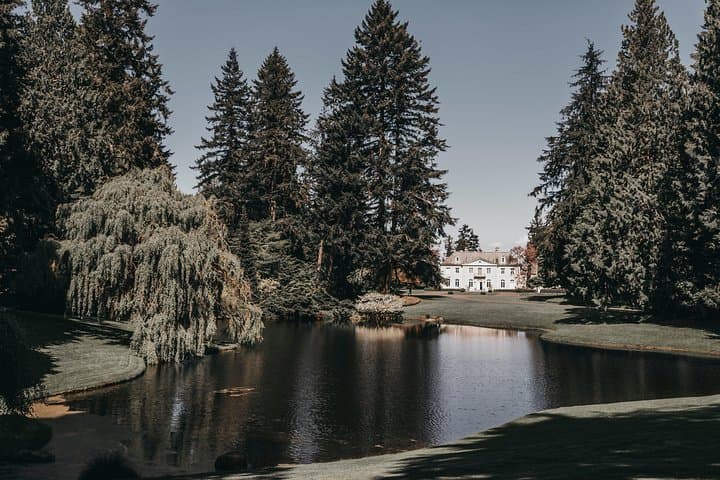
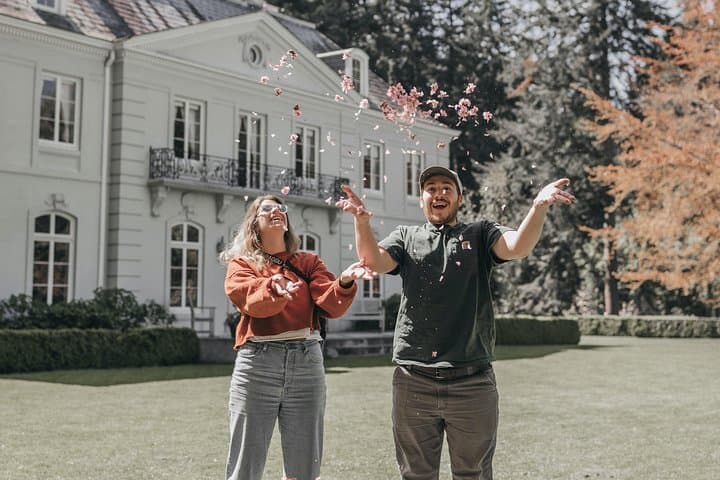
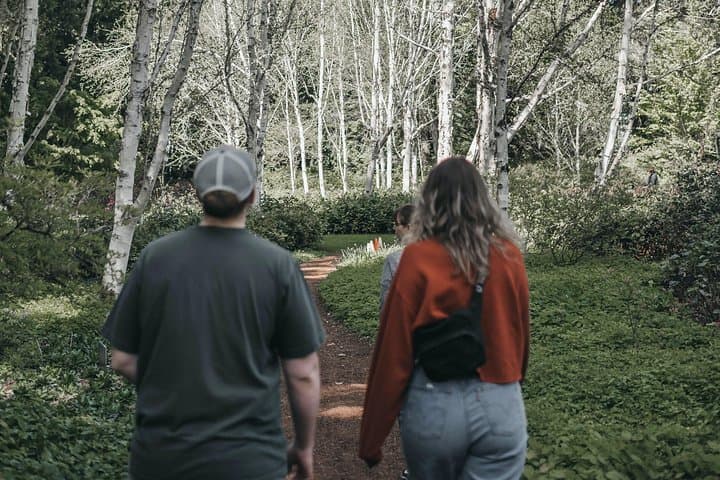
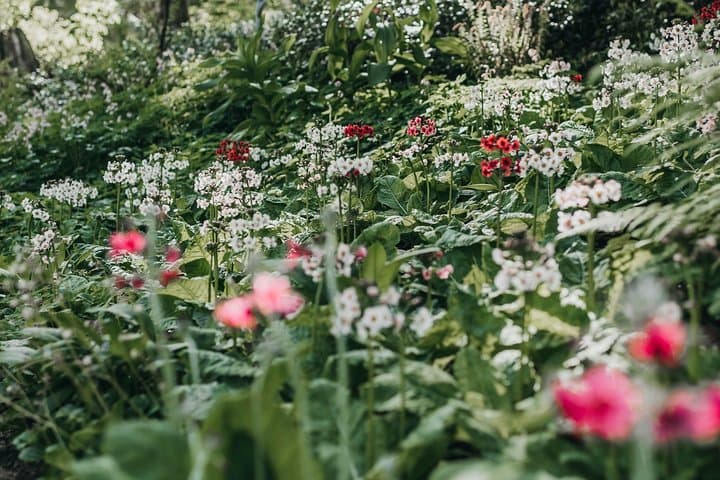
Then comes the Bloedel Reserve, the property that gives the tour its name. Created in the mid-20th century by Prentice and Virginia Bloedel, the Reserve moves deliberately between formal plantings and naturalistic woodlands: moss-slick paths, reflective ponds, open lawns framed by imported and native trees. The landscape design borrows from Japanese garden principles — composition, borrowed views, and intentional pacing — yet the place never feels staged; it invites slow exploration and quiet observation.
Bainbridge Island itself sits on lands long used by Coast Salish peoples, including the Suquamish, whose presence predates the ferry timetable by millennia. The island’s modern character blends that deep local history with a strong arts community and small-scale agriculture, visible in roadside farm stands and gallery windows as you travel between stops.
Practicalities are straightforward. The full experience runs about three hours, including the ferry ride from downtown Seattle (roughly 35 minutes) and an eight-minute walk from the ferry terminal to the meeting point at the Bainbridge Island Museum of Art. Expect 1.5–2 miles of mostly flat walking at the Reserve and light shoreline scrambling at Fay Bainbridge. Wear waterproof layers depending on season, comfortable walking shoes, and bring a small daypack for a camera and binoculars. The Reserve has strict path rules—stay on marked routes, no drones, and respect quiet zones.
For photographers, the Reserve’s pond reflections and the beach’s low-angle light are prime. For those who want a quieter day, the guide’s local stories about the island’s artists and early settlers help stitch the stops into a single afternoon. This is an accessible, richly textured outing for travelers who want more than a garden visit: it’s a short, scenic immersion into the Sound’s coastal ecology and Bainbridge’s cultural rhythms.
easy.
3 hours.
Suitable for most fitness levels; expect 1.5–2 miles of walking with short stretches of standing and gentle terrain.
No — the tour meets on Bainbridge Island; you must take the ferry from Seattle to the Bainbridge ferry terminal and walk about eight minutes to the meeting point.
The entire experience is about three hours, including time at Fay Bainbridge State Park and the Bloedel Reserve.
The tour notes stroller accessibility; however, some paths within the Reserve are uneven—call ahead if you need specific accessibility accommodations.
Yes — the tour includes tickets and a private guide for the Bloedel Reserve as stated in the inclusions.
Expect common Puget Sound species: diving ducks, scoters, occasional harbor seals, and seasonal shorebirds at the state park.
All sales are final; the operator may cancel for bad weather or low bookings but refunds are not issued under the stated policy.
The Bloedel Reserve was developed in the mid-20th century by Prentice and Virginia Bloedel and later opened to public access, blending formal landscape design with native forest.
The Reserve emphasizes low-impact visitation—stick to paths and observe quiet zones to protect plant communities; Puget Sound shoreline areas benefit from responsible wildlife viewing.
Tour Bainbridge operates guided outdoor trips and adventures with an emphasis on safety, stewardship, and memorable experiences.
You step off the ferry into a small town that still moves at island pace: Winslow Way hums with coffee shops and art galleries, gulls wheel overhead, and the air smells faintly of cedar and salt. The tour groups meet by a black bus marked Tour Bainbridge; from there the road peels away from the town and into pockets of forest where rhododendrons and Douglas fir shoulder the shoulders of quiet lanes.
You step off the ferry into a small town that still moves at island pace: Winslow Way hums with coffee shops and art galleries, gulls wheel overhead, and the air smells faintly of cedar and salt. The tour groups meet by a black bus marked Tour Bainbridge; from there the road peels away from the town and into pockets of forest where rhododendrons and Douglas fir shoulder the shoulders of quiet lanes.
The first stop is Fay Bainbridge State Park, a short shoreline stretch where the Sound pushes pebbles and driftwood toward the land. The park is a good primer in Puget Sound geology — beaches formed by glacial outwash and steady tidal sorting — and an excellent place to watch scoters, diving ducks, and the occasional harbor seal. Guides hand out snacks and sparkling water while pointing out seasonal bird activity and the ferry’s wake cutting a white line across the inlet.
Then comes the Bloedel Reserve, the property that gives the tour its name. Created in the mid-20th century by Prentice and Virginia Bloedel, the Reserve moves deliberately between formal plantings and naturalistic woodlands: moss-slick paths, reflective ponds, open lawns framed by imported and native trees. The landscape design borrows from Japanese garden principles — composition, borrowed views, and intentional pacing — yet the place never feels staged; it invites slow exploration and quiet observation.
Bainbridge Island itself sits on lands long used by Coast Salish peoples, including the Suquamish, whose presence predates the ferry timetable by millennia. The island’s modern character blends that deep local history with a strong arts community and small-scale agriculture, visible in roadside farm stands and gallery windows as you travel between stops.
Practicalities are straightforward. The full experience runs about three hours, including the ferry ride from downtown Seattle (roughly 35 minutes) and an eight-minute walk from the ferry terminal to the meeting point at the Bainbridge Island Museum of Art. Expect 1.5–2 miles of mostly flat walking at the Reserve and light shoreline scrambling at Fay Bainbridge. Wear waterproof layers depending on season, comfortable walking shoes, and bring a small daypack for a camera and binoculars. The Reserve has strict path rules—stay on marked routes, no drones, and respect quiet zones.
For photographers, the Reserve’s pond reflections and the beach’s low-angle light are prime. For those who want a quieter day, the guide’s local stories about the island’s artists and early settlers help stitch the stops into a single afternoon. This is an accessible, richly textured outing for travelers who want more than a garden visit: it’s a short, scenic immersion into the Sound’s coastal ecology and Bainbridge’s cultural rhythms.