THE ADVENTURE COLLECTIVE® · Independent discovery and booking for outdoor travel

Walk Blaubeuren’s historic streets, visit a medieval monastery, and see the vivid Blautopf spring on a 90-minute private guided tour. Learn local geology, history and practical tips for a compact, accessible outing.
Walk Blaubeuren’s historic streets, visit a medieval monastery, and see the vivid Blautopf spring on a 90-minute private guided tour. Learn local geology, history and practical tips for a compact, accessible outing.
You step onto cobblestones that still hold the prints of centuries — half-timbered facades rise on either side, roofs leaning into a narrow sky. The guide points toward a deep, impossible blue: the Blautopf, the karst spring that feeds the river Blau, its surface smooth as glass yet fed by underground caverns.
Verified experiences and guided adventures in the surrounding area.
Operated by BlackBuck Travels · Blaubeuren, Baden-Württemberg
You step onto cobblestones that still hold the prints of centuries — half-timbered facades rise on either side, roofs leaning into a narrow sky. The guide points toward a deep, impossible blue: the Blautopf, the karst spring that feeds the river Blau, its surface smooth as glass yet fed by underground caverns.
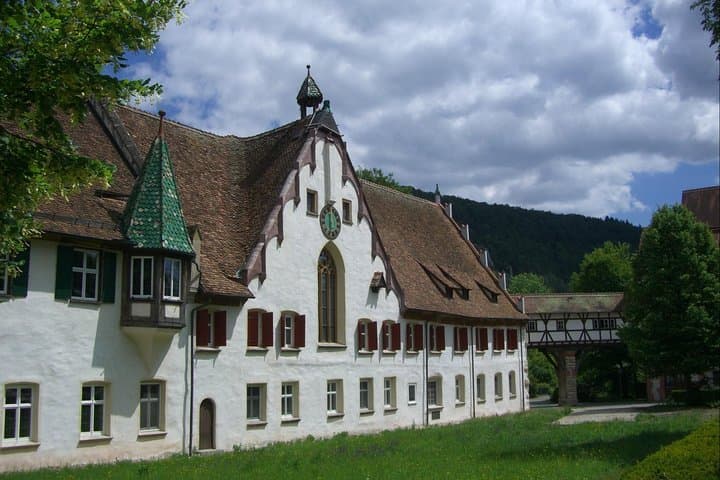
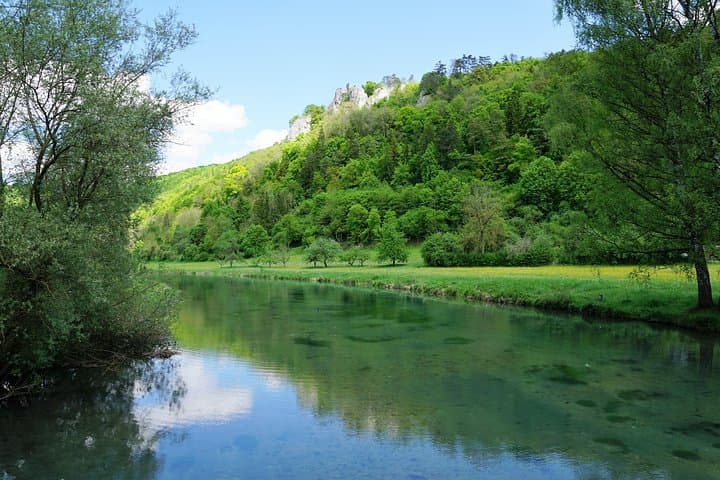
Blaubeuren’s story is carved into limestone. The spring is a karst phenomenon where groundwater funnels through the Swabian Jura, creating a blue pool and a current that dares you downstream. The nearby Benedictine monastery dates to the Middle Ages; its well chapel and cloisters show Romanesque and Gothic layers shaped by local faith and farming life. Culture here is quiet and rooted — local festivals focus on Swabian food, crafts and the river that sustained the town.
Practically, this is a compact, 90-minute private walking tour that stitches together the old town, the monastery complex, cloisters and the Blautopf viewpoint. Expect paved streets and short stair sections; most of the route is accessible to moderately mobile visitors. Photography opportunities are excellent at the spring and from the monastery terraces.
Bring a light jacket and sturdy shoes — the weather on the Alb can shift fast, and limestone paths get slick after rain. Public transport reaches Blaubeuren from Ulm, and flexible start times mean you can plan around crowds. Note admissions to some interiors may not be included; ask your guide about entry policies. Above all, respect the spring: it’s a fragile karst system and staying on designated paths helps keep the Blau clear for future visitors.
easy.
1–1.5 hours.
Suitable for most fitness levels; requires short walking on uneven cobbles and a few steps.
The guided experience is approximately 90 minutes and covers the old town, the monastery, cloisters (view-only in places) and the Blautopf viewpoint.
Yes — the route is short with minimal elevation change, but some cobblestones and steps may be challenging for strollers or limited mobility; contact the operator for accommodations.
Interior admission to specific museum rooms or special exhibitions may not be included; the standard tour includes exterior and cloister viewing where public access is allowed.
Yes — regional trains and buses connect Blaubeuren with Ulm; the meeting point is typically within walking distance from local transit stops.
Blaubeuren grew around a medieval Benedictine monastery whose cloisters and well chapel reflect Romanesque and Gothic phases; the town prospered on wool and agriculture.
The Blautopf is a protected karst spring; visitors should stay on marked paths and avoid swimming to protect groundwater quality and fragile cave systems.
BlackBuck Travels operates guided outdoor trips and adventures with an emphasis on safety, stewardship, and memorable experiences.
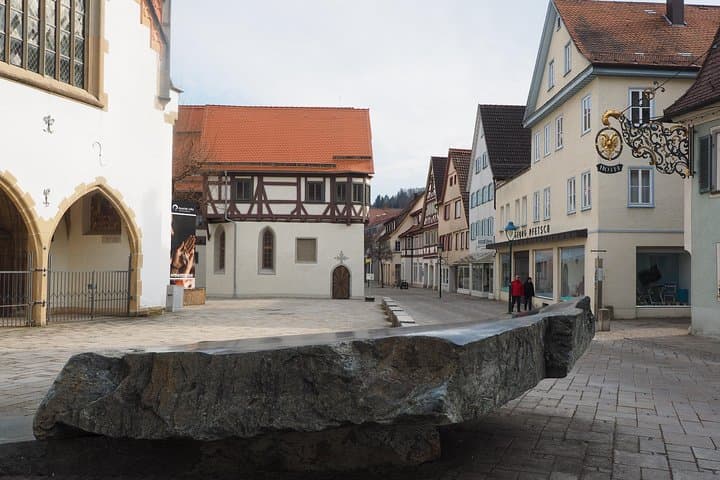
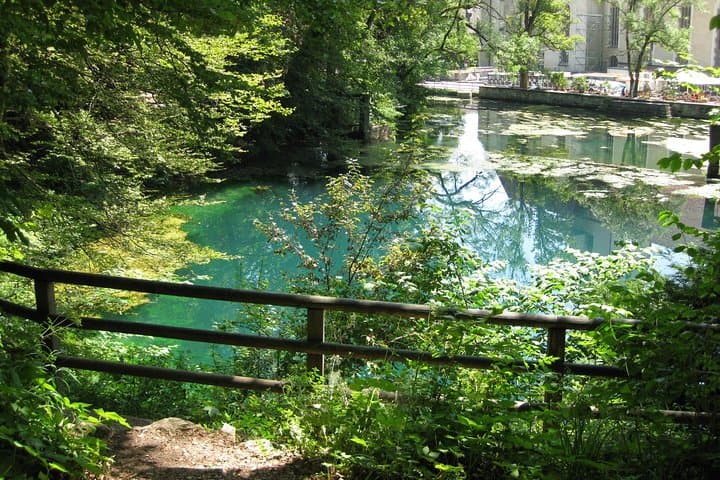
You step onto cobblestones that still hold the prints of centuries — half-timbered facades rise on either side, roofs leaning into a narrow sky. The guide points toward a deep, impossible blue: the Blautopf, the karst spring that feeds the river Blau, its surface smooth as glass yet fed by underground caverns.
You step onto cobblestones that still hold the prints of centuries — half-timbered facades rise on either side, roofs leaning into a narrow sky. The guide points toward a deep, impossible blue: the Blautopf, the karst spring that feeds the river Blau, its surface smooth as glass yet fed by underground caverns.
Blaubeuren’s story is carved into limestone. The spring is a karst phenomenon where groundwater funnels through the Swabian Jura, creating a blue pool and a current that dares you downstream. The nearby Benedictine monastery dates to the Middle Ages; its well chapel and cloisters show Romanesque and Gothic layers shaped by local faith and farming life. Culture here is quiet and rooted — local festivals focus on Swabian food, crafts and the river that sustained the town.
Practically, this is a compact, 90-minute private walking tour that stitches together the old town, the monastery complex, cloisters and the Blautopf viewpoint. Expect paved streets and short stair sections; most of the route is accessible to moderately mobile visitors. Photography opportunities are excellent at the spring and from the monastery terraces.
Bring a light jacket and sturdy shoes — the weather on the Alb can shift fast, and limestone paths get slick after rain. Public transport reaches Blaubeuren from Ulm, and flexible start times mean you can plan around crowds. Note admissions to some interiors may not be included; ask your guide about entry policies. Above all, respect the spring: it’s a fragile karst system and staying on designated paths helps keep the Blau clear for future visitors.