THE ADVENTURE COLLECTIVE® · Independent discovery and booking for outdoor travel

Walk to the source of the Buna River and visit a 16th‑century Dervish tekija just outside Mostar. This half‑day tour pairs striking karst scenery with Ottoman‑era history and practical access for most travelers.
Walk to the source of the Buna River and visit a 16th‑century Dervish tekija just outside Mostar. This half‑day tour pairs striking karst scenery with Ottoman‑era history and practical access for most travelers.
You step from the car into a cool shaft of air where the Buna River pours from a cave beneath a vertical limestone wall; the water seems to exhale, daring you to follow its turquoise edge. The 16th‑century Dervish Tekija perches beside the spring, its whitewashed walls and wooden balconies pressed close to the cliff as if listening to the river’s voice.
Verified experiences and guided adventures in the surrounding area.
Operated by Fortuna Trade Tours Mostar d.o.o. · Blagaj, Herzegovina-Neretva Canton
You step from the car into a cool shaft of air where the Buna River pours from a cave beneath a vertical limestone wall; the water seems to exhale, daring you to follow its turquoise edge. The 16th‑century Dervish Tekija perches beside the spring, its whitewashed walls and wooden balconies pressed close to the cliff as if listening to the river’s voice.
The site is a crossroads of Ottoman architecture and Sufi practice: tekke houses where dervishes once gathered for zikr, and a riverscape carved over millennia by karst processes. The Buna spring is one of Europe’s strongest karst sources — water forced through limestone emerges cool and clear, feeding a short river that joins the Neretva. Nearby Mostar, with its famous Ottoman-era Stari Most bridge, provides the broader cultural frame: centuries of trade, faith, and craft shaped the valley you’re seeing.
On a half-day visit you’ll move deliberately: a guided walk through the tekija, a riverside pause at low stone walls, and time at the spring mouth for photos. Expect easy terrain—paved alleys and short steps—but bring steady shoes; surfaces can be wet. Best light is morning or late afternoon for the turquoise tones and cliff shadow contrast. Respect the spiritual space: modest clothing in sacred areas, quiet voices inside the tekija, and no swimming at the spring mouth. Hydrate, carry a light rain layer, and leave no trace: karst springs are sensitive to pollutants. For a compact outing that blends geology, history, and quiet riverside atmosphere, Blagaj is immediate, accessible, and quietly powerful.
easy.
2–3 hours.
Suitable for most fitness levels; requires short walks and standing during explanations
The tour runs about 2–3 hours, typically including a guided visit to the tekija and time at the Buna spring.
Paths near the tekija and spring include steps and uneven paving; basic mobility is recommended, though parts are viewable from lower levels.
Yes — the tour generally includes the entrance fee to Blagaj Tekija as part of the booking.
Swimming at the spring mouth is discouraged for safety and conservation reasons; the water is cold and currents near the cave can be unpredictable.
Blagaj Tekija dates to the 16th century and reflects Ottoman and Sufi spiritual practices; the tekija served as a local religious and social center.
The Buna spring is a vulnerable karst source; avoid litter, use biodegradable products, and follow local guidelines to minimize impact.
Fortuna Trade Tours Mostar d.o.o. operates guided outdoor trips and adventures with an emphasis on safety, stewardship, and memorable experiences.
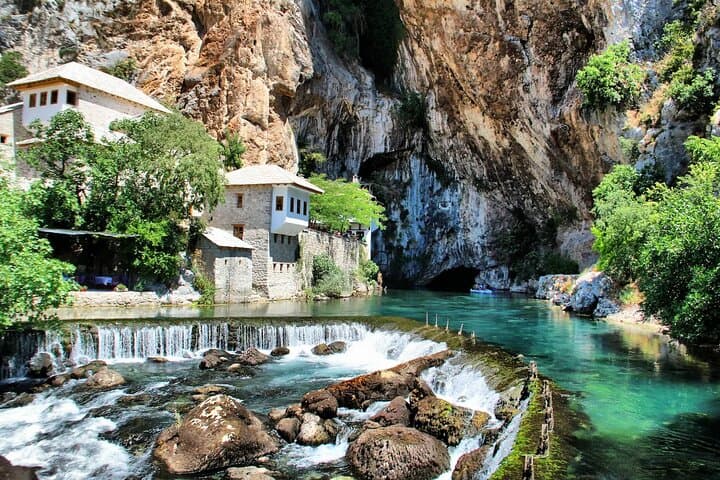
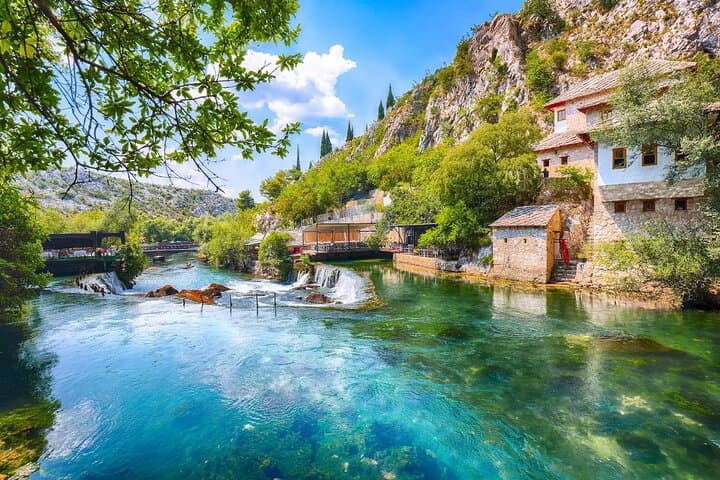
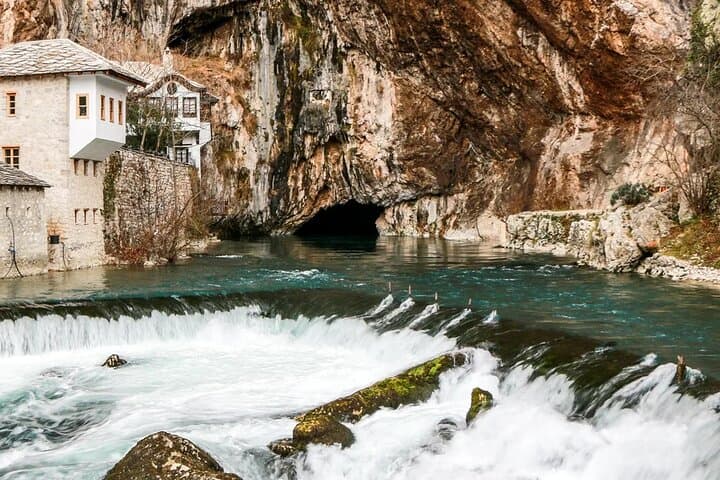
You step from the car into a cool shaft of air where the Buna River pours from a cave beneath a vertical limestone wall; the water seems to exhale, daring you to follow its turquoise edge. The 16th‑century Dervish Tekija perches beside the spring, its whitewashed walls and wooden balconies pressed close to the cliff as if listening to the river’s voice.
You step from the car into a cool shaft of air where the Buna River pours from a cave beneath a vertical limestone wall; the water seems to exhale, daring you to follow its turquoise edge. The 16th‑century Dervish Tekija perches beside the spring, its whitewashed walls and wooden balconies pressed close to the cliff as if listening to the river’s voice.
The site is a crossroads of Ottoman architecture and Sufi practice: tekke houses where dervishes once gathered for zikr, and a riverscape carved over millennia by karst processes. The Buna spring is one of Europe’s strongest karst sources — water forced through limestone emerges cool and clear, feeding a short river that joins the Neretva. Nearby Mostar, with its famous Ottoman-era Stari Most bridge, provides the broader cultural frame: centuries of trade, faith, and craft shaped the valley you’re seeing.
On a half-day visit you’ll move deliberately: a guided walk through the tekija, a riverside pause at low stone walls, and time at the spring mouth for photos. Expect easy terrain—paved alleys and short steps—but bring steady shoes; surfaces can be wet. Best light is morning or late afternoon for the turquoise tones and cliff shadow contrast. Respect the spiritual space: modest clothing in sacred areas, quiet voices inside the tekija, and no swimming at the spring mouth. Hydrate, carry a light rain layer, and leave no trace: karst springs are sensitive to pollutants. For a compact outing that blends geology, history, and quiet riverside atmosphere, Blagaj is immediate, accessible, and quietly powerful.