THE ADVENTURE COLLECTIVE® · Independent discovery and booking for outdoor travel

Explore two defining chapters of Afro-Panamanian history on a 2–3 hour walking tour through Casco Antiguo and Central Avenue. Hear stories of colonial-era resistance and West Indian migration while visiting an Afro-Antillean museum and local neighborhoods.
Explore two defining chapters of Afro-Panamanian history on a 2–3 hour walking tour through Casco Antiguo and Central Avenue. Hear stories of colonial-era resistance and West Indian migration while visiting an Afro-Antillean museum and local neighborhoods.
You arrive on cobbles that rattle underfoot, colonial façades leaning like old friends, and the Atlantic breeze carrying the sharp tang of the bay. The guide — an Afro-Panamanian storyteller — opens the day with a map of power and pain: plazas where wealth was displayed, alleys where laborers rested, and walls that once separated elites from working-class Santa Ana.
Verified experiences and guided adventures in the surrounding area.
Operated by With Meli · Panama City, Panama Province
You arrive on cobbles that rattle underfoot, colonial façades leaning like old friends, and the Atlantic breeze carrying the sharp tang of the bay. The guide — an Afro-Panamanian storyteller — opens the day with a map of power and pain: plazas where wealth was displayed, alleys where laborers rested, and walls that once separated elites from working-class Santa Ana.
The walk threads two historical chapters. First, the colonial era: forced labor, maroon resistance, and how Africa’s people were pressed into the Spanish imperial economy. Then the West Indian migrations: laborers from the Caribbean who arrived to build railroads and the Panama Canal, bringing languages, foods, and rhythms that reshaped city life.
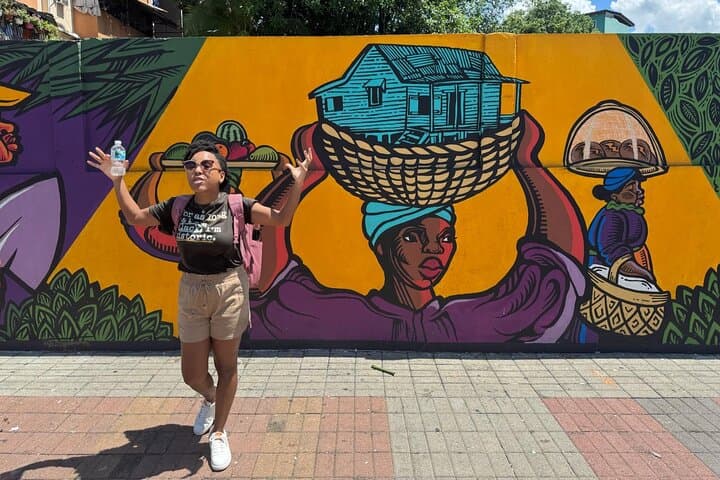
Geology and geography matter here — the Isthmus of Panama made this place a crossroads and a prize. Urban layers of stone, lime, and stucco show rebuilding after fires and decay, and the reclaimed chapel-turned-museum offers mural narratives of labor and daily life.
Practical guidance is straightforward. The route covers roughly 2–3 hours of standing and walking on uneven historic stone. Morning departures dodge midday heat and crowds; bring sunscreen, a refillable bottle, and comfortable, grippy shoes for cobbles and curbs. Be ready to pause: markers, murals, and small plazas reward slow attention.
This is a walk for curious listeners who want context as well as scenes — not a passive sightseeing loop but a close look at how colonial systems and Caribbean migration continue to shape Panama today.
moderate.
2–3 hours.
Moderate — able to walk and stand for stretches up to 90 minutes with pauses
The experience runs about 2–3 hours and includes several stops for interpretation and a snack.
Not recommended for travelers with walking difficulties or spinal issues; the route uses historic streets and uneven surfaces.
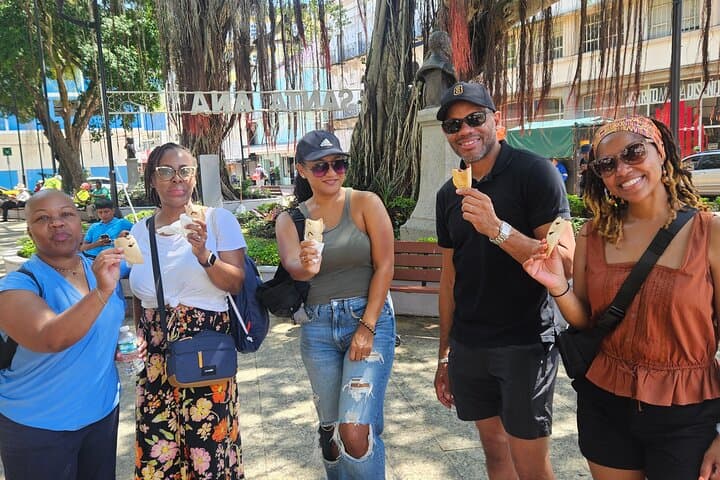
Yes — bottled water and a traditional Afro-Panamanian snack are provided during the itinerary.
Full refunds are available if you cancel at least 24 hours before the scheduled departure time; check your booking for details.
Casco Antiguo preserves layers of Panama’s past — Spanish colonial structures, republican expansions, and the cultural imprint of West Indian laborers who helped build the railroad and canal.
Tours support cultural conservation by directing visitors to registered museums and community areas; practice low-impact behaviors and respect residential neighborhoods.
With Meli operates guided outdoor trips and adventures with an emphasis on safety, stewardship, and memorable experiences.
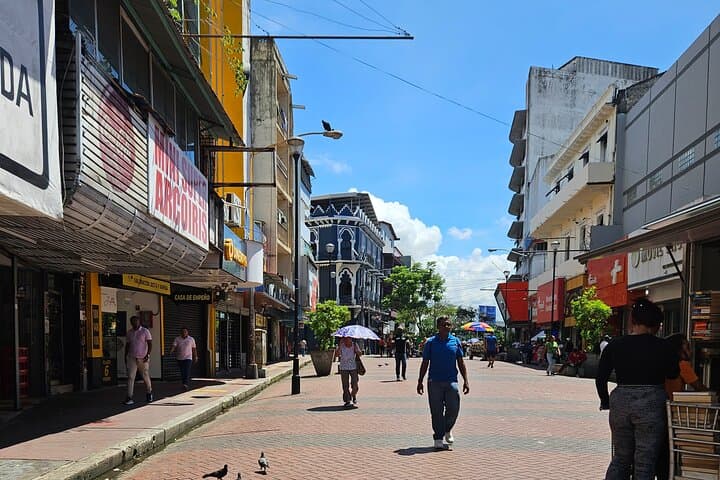
You arrive on cobbles that rattle underfoot, colonial façades leaning like old friends, and the Atlantic breeze carrying the sharp tang of the bay. The guide — an Afro-Panamanian storyteller — opens the day with a map of power and pain: plazas where wealth was displayed, alleys where laborers rested, and walls that once separated elites from working-class Santa Ana.
You arrive on cobbles that rattle underfoot, colonial façades leaning like old friends, and the Atlantic breeze carrying the sharp tang of the bay. The guide — an Afro-Panamanian storyteller — opens the day with a map of power and pain: plazas where wealth was displayed, alleys where laborers rested, and walls that once separated elites from working-class Santa Ana.
The walk threads two historical chapters. First, the colonial era: forced labor, maroon resistance, and how Africa’s people were pressed into the Spanish imperial economy. Then the West Indian migrations: laborers from the Caribbean who arrived to build railroads and the Panama Canal, bringing languages, foods, and rhythms that reshaped city life.
Geology and geography matter here — the Isthmus of Panama made this place a crossroads and a prize. Urban layers of stone, lime, and stucco show rebuilding after fires and decay, and the reclaimed chapel-turned-museum offers mural narratives of labor and daily life.
Practical guidance is straightforward. The route covers roughly 2–3 hours of standing and walking on uneven historic stone. Morning departures dodge midday heat and crowds; bring sunscreen, a refillable bottle, and comfortable, grippy shoes for cobbles and curbs. Be ready to pause: markers, murals, and small plazas reward slow attention.
This is a walk for curious listeners who want context as well as scenes — not a passive sightseeing loop but a close look at how colonial systems and Caribbean migration continue to shape Panama today.