THE ADVENTURE COLLECTIVE® · Independent discovery and booking for outdoor travel

See Mount Rushmore’s granite faces at eye level, witness the ongoing scale of Crazy Horse Memorial, and roll through Custer State Park’s wildlife country—all in one seamless private day. This guided Black Hills circuit blends big landmarks with close-up moments, smart routing, and time to breathe it all in.
See Mount Rushmore’s granite faces at eye level, witness the ongoing scale of Crazy Horse Memorial, and roll through Custer State Park’s wildlife country—all in one seamless private day. This guided Black Hills circuit blends big landmarks with close-up moments, smart routing, and time to breathe it all in.
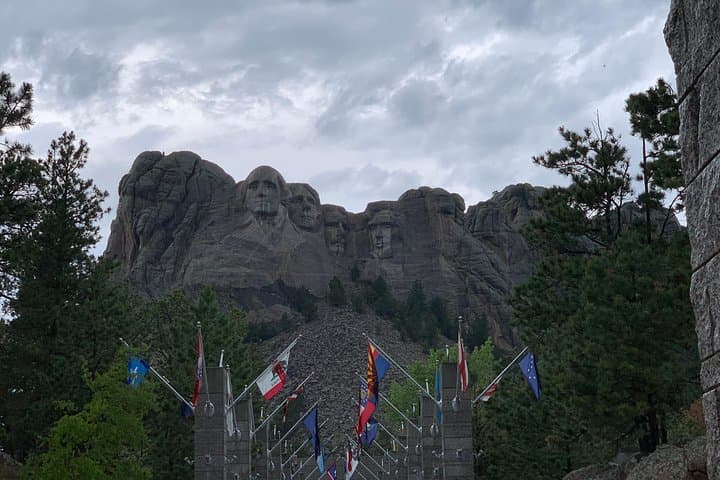
Dawn slides across the Black Hills and the pines wake first, shaking out their scent as your guide points the van toward granite country. The road climbs past dark needles and pale meadows before the presidents appear—sixty-foot faces cut into Rushmore’s cliff, watching the sky the way old stones do. You step onto the Avenue of Flags, the breeze tugging at fabric, then drop to the 0.6-mile Presidential Trail where wood boardwalk and stair sets (expect a few hundred steps) deliver shifting angles and unexpected intimacy with the carving.
Verified experiences and guided adventures in the surrounding area.
Operated by Black Hills Adventure Tours, Inc · Keystone, South Dakota
Dawn slides across the Black Hills and the pines wake first, shaking out their scent as your guide points the van toward granite country. The road climbs past dark needles and pale meadows before the presidents appear—sixty-foot faces cut into Rushmore’s cliff, watching the sky the way old stones do. You step onto the Avenue of Flags, the breeze tugging at fabric, then drop to the 0.6-mile Presidential Trail where wood boardwalk and stair sets (expect a few hundred steps) deliver shifting angles and unexpected intimacy with the carving.
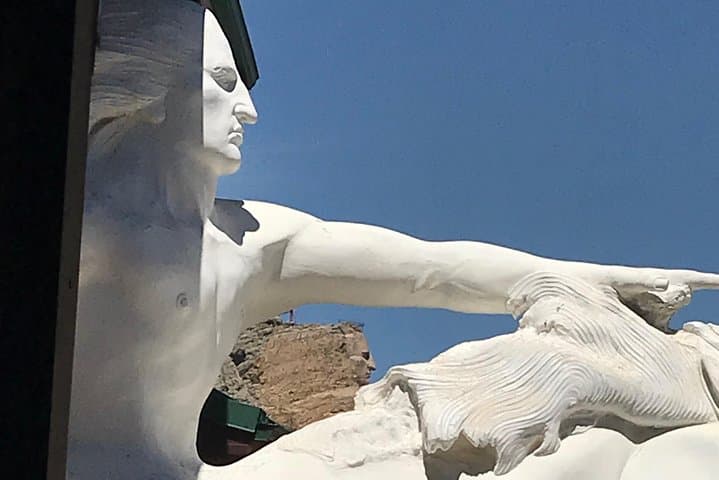
This is South Dakota’s headline act, but the day is built as a three-part story. Rushmore—blasted and chiseled from 1927 to 1941 under Gutzon and Lincoln Borglum—sets the stage. Crazy Horse raises the questions. At the world’s largest mountain carving in progress, cranes hover like patient birds over an 87-foot-tall face. The memorial honors Oglala Lakota leader Crazy Horse and anchors a campus of museums, workshops, and cultural performances. Inside, exhibits trace Lakota history and the decades-long vision that began with sculptor Korczak Ziolkowski in 1948 and continues under the nonprofit that stewards the site today.
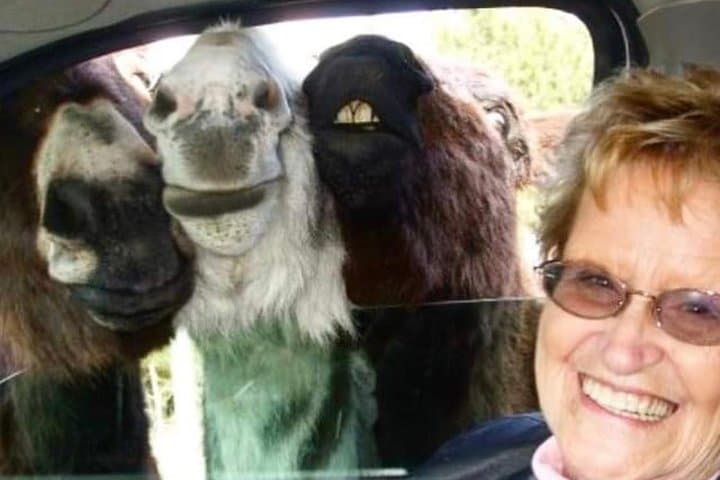
The pace shifts again as the prairie opens inside Custer State Park—71,000 acres of granite spires, ponderosa slopes, and grassland that breathes with a bison herd. Wildlife Loop Road likes to play coy, hiding pronghorn behind swales then sending them arrowing across the horizon. Burros beg, magpies heckle, and the wind keeps things moving. If conditions allow, your guide may thread classic byways like Iron Mountain Road, where framed glimpses of Rushmore punch through forest windows, or pause among the Needles’ blade-like formations.
Plan for elevation between 4,500 and 6,000 feet, strong sun, and a full-day cadence—roughly eight hours including scenic walking, museum time, and plenty of pullouts. Good footwear matters for the steps at Rushmore and uneven shoulders along the Wildlife Loop. Layers are smart; the Black Hills can swing from cool mornings to thunder-spiked afternoons in summer and calm, crisp air in fall. Lunch and water take the edge off, while your guide handles logistics, parking, and timing to outmaneuver the busiest windows.
What stays with you isn’t just the scale of stone. It’s how the landscape asserts itself at every turn: granite pushing skyward, prairies waving you onward, and a park that moves—literally—on the hooves of its most famous residents. By day’s end, the story of the Black Hills feels less like a chapter you read and more like a conversation the land insisted on having.
easy.
8–9 hours.
Comfortable walking short distances with stairs and standing at viewpoints; elevation up to ~6,000 feet.
Plan for 8–9 hours including scenic driving, short walks at Rushmore and Crazy Horse, museum time, and multiple wildlife/viewpoint stops.
Yes. All fees and taxes are covered, and lunch plus bottled water and snacks are included.
Yes—pickup is offered across Rapid City and surrounding areas, including some campgrounds. Confirm your location when booking.
The 0.6-mile Presidential Trail includes several hundred steps but is optional; there are also accessible viewpoints and the Avenue of Flags.
Storms or unsafe conditions may trigger itinerary changes or cancellation; your guide monitors forecasts and will advise options as needed.
Yes, there is a two-person minimum to operate this private tour.
Mount Rushmore was carved between 1927 and 1941 under Gutzon and Lincoln Borglum; Crazy Horse Memorial began in 1948 with Korczak Ziolkowski and continues today through a nonprofit foundation.
Custer State Park manages one of the nation’s largest public bison herds, highlighted by the annual fall roundup. Stay on boardwalks, don’t feed wildlife, and pack out all trash to reduce impacts on prairie and pine ecosystems.
Black Hills Adventure Tours, Inc operates guided outdoor trips and adventures with an emphasis on safety, stewardship, and memorable experiences.
Dawn slides across the Black Hills and the pines wake first, shaking out their scent as your guide points the van toward granite country. The road climbs past dark needles and pale meadows before the presidents appear—sixty-foot faces cut into Rushmore’s cliff, watching the sky the way old stones do. You step onto the Avenue of Flags, the breeze tugging at fabric, then drop to the 0.6-mile Presidential Trail where wood boardwalk and stair sets (expect a few hundred steps) deliver shifting angles and unexpected intimacy with the carving.
Dawn slides across the Black Hills and the pines wake first, shaking out their scent as your guide points the van toward granite country. The road climbs past dark needles and pale meadows before the presidents appear—sixty-foot faces cut into Rushmore’s cliff, watching the sky the way old stones do. You step onto the Avenue of Flags, the breeze tugging at fabric, then drop to the 0.6-mile Presidential Trail where wood boardwalk and stair sets (expect a few hundred steps) deliver shifting angles and unexpected intimacy with the carving.
This is South Dakota’s headline act, but the day is built as a three-part story. Rushmore—blasted and chiseled from 1927 to 1941 under Gutzon and Lincoln Borglum—sets the stage. Crazy Horse raises the questions. At the world’s largest mountain carving in progress, cranes hover like patient birds over an 87-foot-tall face. The memorial honors Oglala Lakota leader Crazy Horse and anchors a campus of museums, workshops, and cultural performances. Inside, exhibits trace Lakota history and the decades-long vision that began with sculptor Korczak Ziolkowski in 1948 and continues under the nonprofit that stewards the site today.
The pace shifts again as the prairie opens inside Custer State Park—71,000 acres of granite spires, ponderosa slopes, and grassland that breathes with a bison herd. Wildlife Loop Road likes to play coy, hiding pronghorn behind swales then sending them arrowing across the horizon. Burros beg, magpies heckle, and the wind keeps things moving. If conditions allow, your guide may thread classic byways like Iron Mountain Road, where framed glimpses of Rushmore punch through forest windows, or pause among the Needles’ blade-like formations.
Plan for elevation between 4,500 and 6,000 feet, strong sun, and a full-day cadence—roughly eight hours including scenic walking, museum time, and plenty of pullouts. Good footwear matters for the steps at Rushmore and uneven shoulders along the Wildlife Loop. Layers are smart; the Black Hills can swing from cool mornings to thunder-spiked afternoons in summer and calm, crisp air in fall. Lunch and water take the edge off, while your guide handles logistics, parking, and timing to outmaneuver the busiest windows.
What stays with you isn’t just the scale of stone. It’s how the landscape asserts itself at every turn: granite pushing skyward, prairies waving you onward, and a park that moves—literally—on the hooves of its most famous residents. By day’s end, the story of the Black Hills feels less like a chapter you read and more like a conversation the land insisted on having.