THE ADVENTURE COLLECTIVE® · Independent discovery and booking for outdoor travel

A long day from Cairo to Bahariya Oasis and the White Desert delivers stark contrasts: dark volcanic hills, wind-carved chalk mushrooms, Bedouin villages and off-road sandboarding. This practical guide outlines what to expect and how to prepare for the full-day desert experience.
A long day from Cairo to Bahariya Oasis and the White Desert delivers stark contrasts: dark volcanic hills, wind-carved chalk mushrooms, Bedouin villages and off-road sandboarding. This practical guide outlines what to expect and how to prepare for the full-day desert experience.
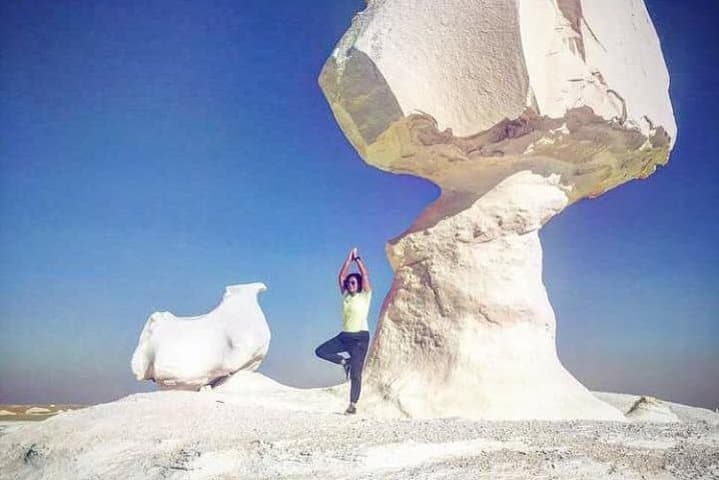
Morning light in the Western Desert slices across low dunes and chalk pinnacles as a convoy rolls away from Cairo toward Bahariya Oasis. Travelers arrive to a landscape where dark, volcanic hills of the Black Desert punctuate broad sweeps of sand and the White Desert’s limestone sculptures rise like frozen waves—wind-sculpted forms that shift with each passing hour of daylight.
Verified experiences and guided adventures in the surrounding area.
Operated by White desert camp Safari · Al-Bawiti (Bahariya Oasis), New Valley Governorate
Morning light in the Western Desert slices across low dunes and chalk pinnacles as a convoy rolls away from Cairo toward Bahariya Oasis. Travelers arrive to a landscape where dark, volcanic hills of the Black Desert punctuate broad sweeps of sand and the White Desert’s limestone sculptures rise like frozen waves—wind-sculpted forms that shift with each passing hour of daylight.
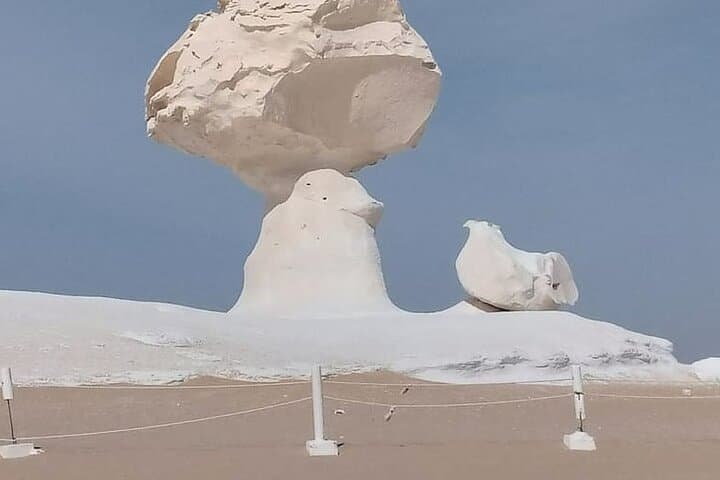
The route threads through an oasis settlement with a long history of agriculture and trade; Roman and Pharaonic artifacts have been found here, and Bedouin families still guide visitors across the dunes. Geologically, the Black Desert’s basaltic outcrops and iron-rich sands contrast with the White Desert’s Eocene-era chalk, eroded into mushrooms, sphinx-like figures and panoramic bowls.
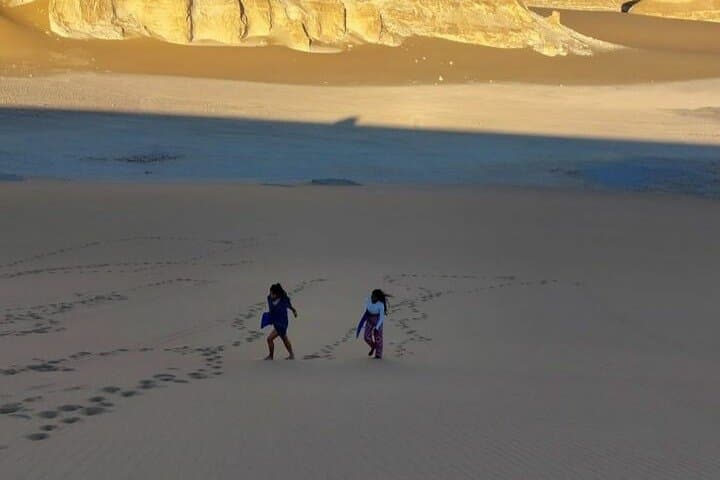
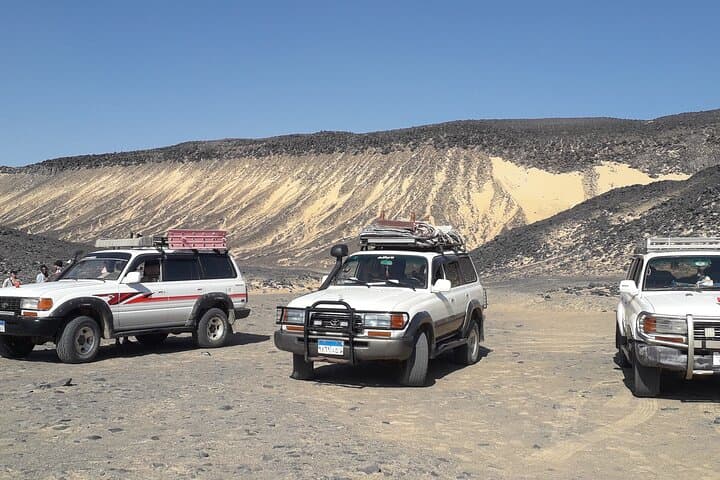
Cultural highlights include a short stop in a Bedouin village, the hot spring near the oasis, and Crystal Mountain — a quartz-rich ridge known locally as the Cave Crystal Mountain. Expect short walks on uneven sand, a chance to try sandboarding, and off-road sections by Toyota Land Cruiser that reveal remote panoramas.
Practical guidance: start at dawn to avoid peak heat, carry at least 2–3 liters of water, sun protection and sturdy shoes for rocky chalk and loose sand. Follow guides’ instructions on routes to protect fragile formations and bring a compact first-aid kit. Timing matters: winter mornings are cold and summer afternoons scorch, so plan clothing and stops accordingly. With the right preparation, the day trip delivers stark desert contrasts, quiet horizons, and hands-on encounters with Bedouin hospitality.
moderate.
12–14 hours.
Requires a moderate fitness level for short hikes, sand walking and tolerating long vehicle transfers
The round trip typically takes most of the day; expect 4–7 hours each way depending on route and stops, making this a full‑day excursion.
Many tours include a sandboarding opportunity in the Wonders Area; confirm with the operator beforehand if equipment or instruction is needed.
Facilities are limited; expect stops at Oasis settlements and basic rest stops—bring hand sanitizer and be prepared for minimal services in remote areas.
This tour is not recommended for travelers with significant spinal injuries, serious heart conditions, or pregnancy due to long transfers and rough off‑road segments.
Bahariya Oasis has been occupied since Pharaonic times and later saw Greco-Roman activity; oases were key caravan waypoints connecting inner Sahara routes.
The White Desert’s chalk formations are fragile — stay on tracks, avoid climbing features and carry out all trash to reduce erosion and human impact.
White desert camp Safari operates guided outdoor trips and adventures with an emphasis on safety, stewardship, and memorable experiences.
Morning light in the Western Desert slices across low dunes and chalk pinnacles as a convoy rolls away from Cairo toward Bahariya Oasis. Travelers arrive to a landscape where dark, volcanic hills of the Black Desert punctuate broad sweeps of sand and the White Desert’s limestone sculptures rise like frozen waves—wind-sculpted forms that shift with each passing hour of daylight.
Morning light in the Western Desert slices across low dunes and chalk pinnacles as a convoy rolls away from Cairo toward Bahariya Oasis. Travelers arrive to a landscape where dark, volcanic hills of the Black Desert punctuate broad sweeps of sand and the White Desert’s limestone sculptures rise like frozen waves—wind-sculpted forms that shift with each passing hour of daylight.
The route threads through an oasis settlement with a long history of agriculture and trade; Roman and Pharaonic artifacts have been found here, and Bedouin families still guide visitors across the dunes. Geologically, the Black Desert’s basaltic outcrops and iron-rich sands contrast with the White Desert’s Eocene-era chalk, eroded into mushrooms, sphinx-like figures and panoramic bowls.
Cultural highlights include a short stop in a Bedouin village, the hot spring near the oasis, and Crystal Mountain — a quartz-rich ridge known locally as the Cave Crystal Mountain. Expect short walks on uneven sand, a chance to try sandboarding, and off-road sections by Toyota Land Cruiser that reveal remote panoramas.
Practical guidance: start at dawn to avoid peak heat, carry at least 2–3 liters of water, sun protection and sturdy shoes for rocky chalk and loose sand. Follow guides’ instructions on routes to protect fragile formations and bring a compact first-aid kit. Timing matters: winter mornings are cold and summer afternoons scorch, so plan clothing and stops accordingly. With the right preparation, the day trip delivers stark desert contrasts, quiet horizons, and hands-on encounters with Bedouin hospitality.