THE ADVENTURE COLLECTIVE® · Independent discovery and booking for outdoor travel

Descend into Ruakuri Cave on a private, full‑day adventure from Auckland — abseils, a flying fox and glowworm‑lit river tubing combine for a high-adrenaline caving experience. Guides supply wetsuits and rigging; no prior caving experience required, but moderate fitness helps.
Descend into Ruakuri Cave on a private, full‑day adventure from Auckland — abseils, a flying fox and glowworm‑lit river tubing combine for a high-adrenaline caving experience. Guides supply wetsuits and rigging; no prior caving experience required, but moderate fitness helps.
Morning light thins as the minibus eases off State Highway 1 and the Waikato opens: green pasture gives way to a cool limestone rim. You slip into a wetsuit, click a helmet into place and lean toward the Ruakuri cave mouth — the underground breathes out cold, damp air. Abseils drop you into black river chambers, a flying fox spits you across a glowworm gallery, and currents nudge you into inflatable tubes that ferry you through narrow streamways lit by tiny bioluminescent stars.
Verified experiences and guided adventures in the surrounding area.
Operated by ExperienceKart · Waitomo Village, Waikato
Morning light thins as the minibus eases off State Highway 1 and the Waikato opens: green pasture gives way to a cool limestone rim. You slip into a wetsuit, click a helmet into place and lean toward the Ruakuri cave mouth — the underground breathes out cold, damp air. Abseils drop you into black river chambers, a flying fox spits you across a glowworm gallery, and currents nudge you into inflatable tubes that ferry you through narrow streamways lit by tiny bioluminescent stars.
The Waitomo system formed as Oligocene marine sediments rose and were hollowed by acidic groundwater over millions of years; stalactites and scalloped walls record long, slow chemistry. Maori connections to the land run deep here — guides often share place names and customary perspectives as part of the visit, adding human scale to the geology you’re crossing.
This is active caving: expect wet swims, ropework, vertical drops and tight passages. Guides provide all technical gear, photo documentation, and instruction, so no prior caving experience is required — but a good baseline of fitness matters. Water stays around 10–14°C year-round; the supplied wetsuit moderates cold but you’ll still want to control exposure time between pitches. Tours run from Auckland with private vehicle transfer, a cafe stop en route, and a roughly 12‑hour door‑to‑door schedule; the cave program itself lasts about five hours.
Practical tips: leave jewelry in the bus, bring swimwear and a towel, hydrate before arrival, and follow guides’ briefs strictly. Heavy rains can raise river levels and force cancellations, so plan buffer time in your itinerary and be ready to swap dates if conditions demand it.
challenging.
10–12 hours.
Moderate to strong cardiovascular fitness and comfort with confined spaces; good mobility for climbing and abseiling.
No — guides provide instruction and all technical equipment; however, participants must be physically capable of abseils and river crossings.
Participants must be at least 16 years old and typically above 45 kg; weight and size restrictions ensure safe use of rigging.
No — cameras and GoPros are not permitted for safety; guides take photos you can view and buy afterward.
Prolonged heavy rain can raise cave water levels and force cancellations; operators monitor conditions and may reschedule for safety.
Waitomo’s karst was formed by uplifted marine sediments; Maori have long-held cultural ties to cave networks in the region.
Operators limit group sizes and follow strict protocols to protect fragile cave formations and glowworm habitats; stay on routes and avoid touching formations.
ExperienceKart operates guided outdoor trips and adventures with an emphasis on safety, stewardship, and memorable experiences.
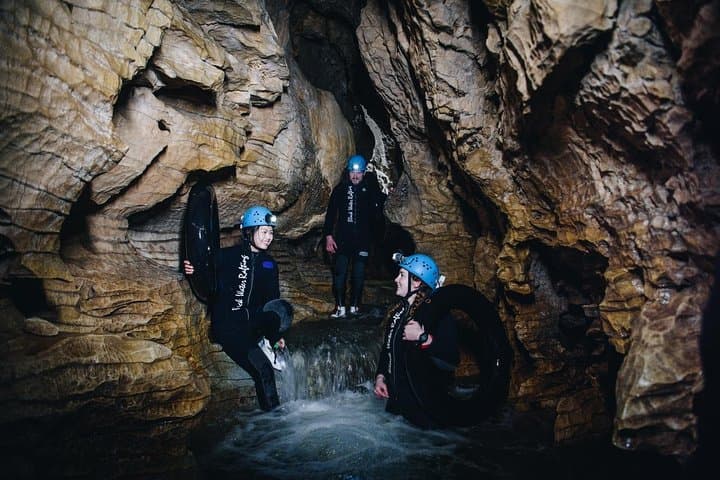
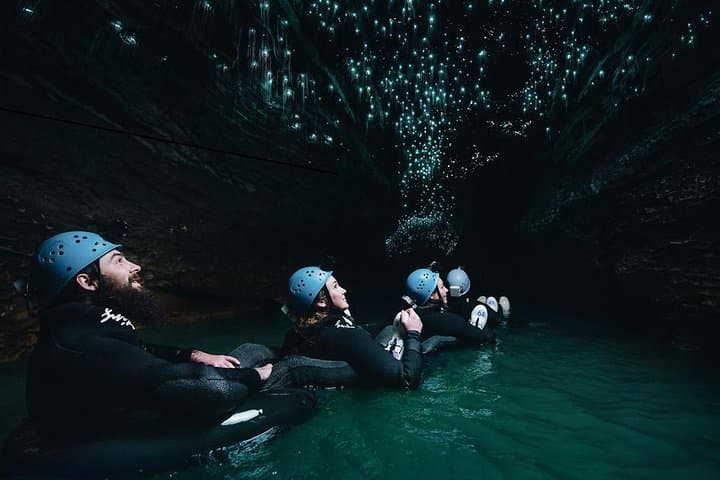
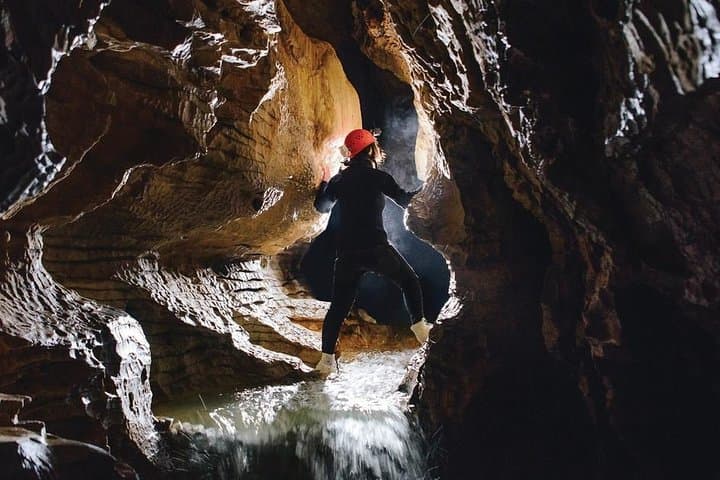
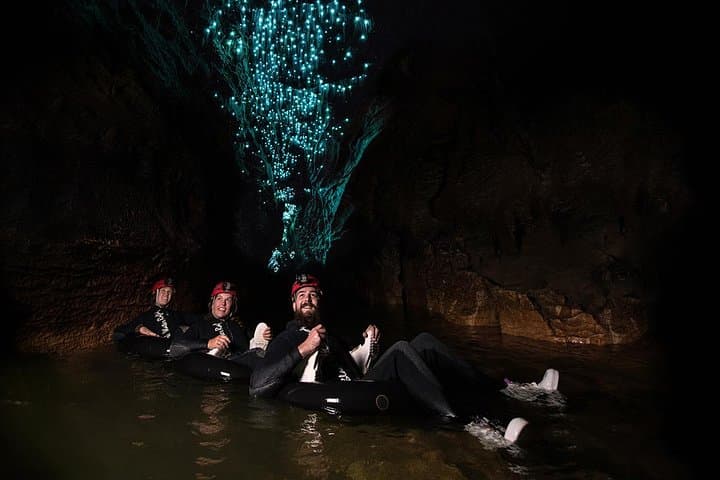
Morning light thins as the minibus eases off State Highway 1 and the Waikato opens: green pasture gives way to a cool limestone rim. You slip into a wetsuit, click a helmet into place and lean toward the Ruakuri cave mouth — the underground breathes out cold, damp air. Abseils drop you into black river chambers, a flying fox spits you across a glowworm gallery, and currents nudge you into inflatable tubes that ferry you through narrow streamways lit by tiny bioluminescent stars.
Morning light thins as the minibus eases off State Highway 1 and the Waikato opens: green pasture gives way to a cool limestone rim. You slip into a wetsuit, click a helmet into place and lean toward the Ruakuri cave mouth — the underground breathes out cold, damp air. Abseils drop you into black river chambers, a flying fox spits you across a glowworm gallery, and currents nudge you into inflatable tubes that ferry you through narrow streamways lit by tiny bioluminescent stars.
The Waitomo system formed as Oligocene marine sediments rose and were hollowed by acidic groundwater over millions of years; stalactites and scalloped walls record long, slow chemistry. Maori connections to the land run deep here — guides often share place names and customary perspectives as part of the visit, adding human scale to the geology you’re crossing.
This is active caving: expect wet swims, ropework, vertical drops and tight passages. Guides provide all technical gear, photo documentation, and instruction, so no prior caving experience is required — but a good baseline of fitness matters. Water stays around 10–14°C year-round; the supplied wetsuit moderates cold but you’ll still want to control exposure time between pitches. Tours run from Auckland with private vehicle transfer, a cafe stop en route, and a roughly 12‑hour door‑to‑door schedule; the cave program itself lasts about five hours.
Practical tips: leave jewelry in the bus, bring swimwear and a towel, hydrate before arrival, and follow guides’ briefs strictly. Heavy rains can raise river levels and force cancellations, so plan buffer time in your itinerary and be ready to swap dates if conditions demand it.