THE ADVENTURE COLLECTIVE® · Independent discovery and booking for outdoor travel

Walk from the Bronze Age Dolmen La Chianca through karst blades to the Santa Croce caves, then follow a wild Adriatic coast to the Ripalta sea caves. This 2–4 hour exploration blends archaeology, karst geology and rural Apulian landscapes.
Walk from the Bronze Age Dolmen La Chianca through karst blades to the Santa Croce caves, then follow a wild Adriatic coast to the Ripalta sea caves. This 2–4 hour exploration blends archaeology, karst geology and rural Apulian landscapes.
You begin on a sun-stroked limestone track off the old Posta Santa Croce, the wind from the Adriatic pushing you toward a low, raw horizon. The Dolmen La Chianca appears like a deliberate bruise in the earth — a Bronze Age megalith you can circle and touch — before the path drops into a blade, the narrow erosive furrow that channels water from the Murge to the sea.
Verified experiences and guided adventures in the surrounding area.
Operated by Viandanti del Sud · Bisceglie, Puglia
You begin on a sun-stroked limestone track off the old Posta Santa Croce, the wind from the Adriatic pushing you toward a low, raw horizon. The Dolmen La Chianca appears like a deliberate bruise in the earth — a Bronze Age megalith you can circle and touch — before the path drops into a blade, the narrow erosive furrow that channels water from the Murge to the sea.
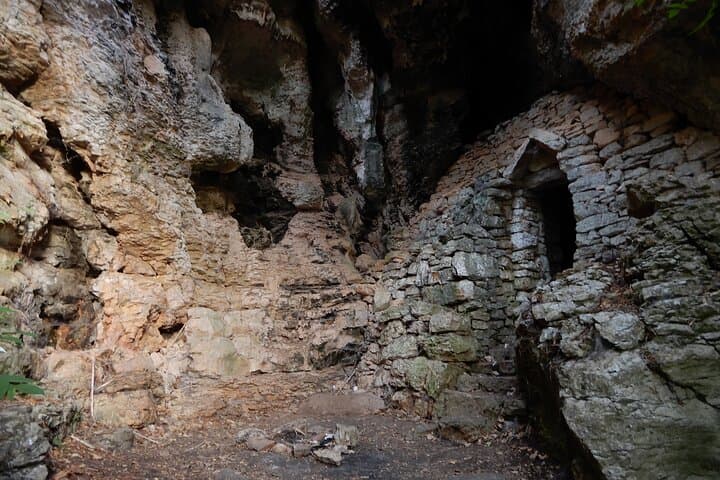
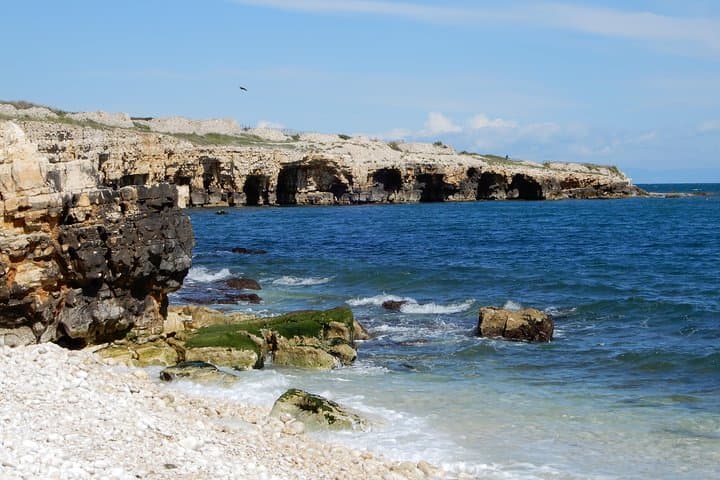
This walk threads human time into karst. The Santa Croce caves are hollowed from Mesozoic limestone and brim with archaeology: Paleolithic tools, Neolithic paintings and, famously, a mid-20th-century discovery of a hominin femur. The coastline toward Ripalta keeps the narrative alive — sea caves whose layers speak of tidal abrasion and millennia of coastal occupation documented by local researchers Majellaro and Prelorenzo.
Culture here is practical and rural: dry-stone walls, haystacks and small farmhouses mark land management that shaped the views you’re following. The Scout Group of Bisceglie and regional archaeology teams reopened and stabilized access in recent decades; treat the sites with the same care you’d give a fragile ruin.
Practical guidance: routes are mostly easy walking across uneven karst and pebble beaches — expect loose stones and short steep sections through blades. Bring at least 1.5 liters of water, sun protection and shoes with good grip. Morning or late-afternoon departures avoid the harshest sun and give softer light for the caves and orchid meadows. Respect signage, avoid entering unrestored cave interiors, and pack out all waste to keep these fragile karst drains and coastal inlets intact.
easy.
2–4 hours.
Suitable for travelers in basic walking fitness; able to manage uneven ground and short slopes.
The tour lasts about 2–4 hours and is classified as easy: mostly walking on uneven karst, short slopes and pebble beach sections rather than sustained climbs.
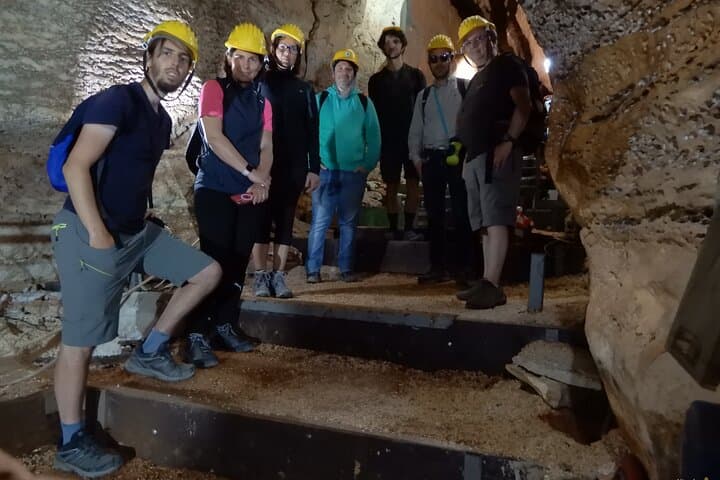
Stabilized sections of the Santa Croce caves have been made accessible; follow your guide and avoid entering unrestored chambers for safety and preservation.
The tour listing includes private transportation and hotel pick-up, but check your booking confirmation for exact pickup details and meeting points.
The route is suitable for most ages, but uneven ground and short steep sections may be challenging for limited mobility—check with the operator in advance.
The Dolmen La Chianca is a Bronze Age megalith; the Santa Croce caves contain archaeological layers from the Middle Paleolithic through the Neolithic, including notable 1955 finds.
This karst coastline is sensitive: stay on marked routes, avoid touching fragile cave art or archaeological deposits, and pack out all trash. Local groups and the Archaeological Superintendence oversee site protection.
Viandanti del Sud operates guided outdoor trips and adventures with an emphasis on safety, stewardship, and memorable experiences.
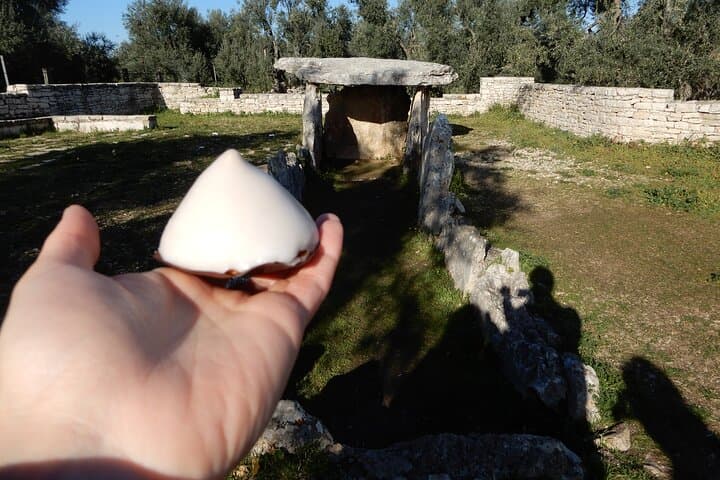
You begin on a sun-stroked limestone track off the old Posta Santa Croce, the wind from the Adriatic pushing you toward a low, raw horizon. The Dolmen La Chianca appears like a deliberate bruise in the earth — a Bronze Age megalith you can circle and touch — before the path drops into a blade, the narrow erosive furrow that channels water from the Murge to the sea.
You begin on a sun-stroked limestone track off the old Posta Santa Croce, the wind from the Adriatic pushing you toward a low, raw horizon. The Dolmen La Chianca appears like a deliberate bruise in the earth — a Bronze Age megalith you can circle and touch — before the path drops into a blade, the narrow erosive furrow that channels water from the Murge to the sea.
This walk threads human time into karst. The Santa Croce caves are hollowed from Mesozoic limestone and brim with archaeology: Paleolithic tools, Neolithic paintings and, famously, a mid-20th-century discovery of a hominin femur. The coastline toward Ripalta keeps the narrative alive — sea caves whose layers speak of tidal abrasion and millennia of coastal occupation documented by local researchers Majellaro and Prelorenzo.
Culture here is practical and rural: dry-stone walls, haystacks and small farmhouses mark land management that shaped the views you’re following. The Scout Group of Bisceglie and regional archaeology teams reopened and stabilized access in recent decades; treat the sites with the same care you’d give a fragile ruin.
Practical guidance: routes are mostly easy walking across uneven karst and pebble beaches — expect loose stones and short steep sections through blades. Bring at least 1.5 liters of water, sun protection and shoes with good grip. Morning or late-afternoon departures avoid the harshest sun and give softer light for the caves and orchid meadows. Respect signage, avoid entering unrestored cave interiors, and pack out all waste to keep these fragile karst drains and coastal inlets intact.