THE ADVENTURE COLLECTIVE® · Independent discovery and booking for outdoor travel

Spend a hands-on morning hunting azurite, malachite and turquoise around historic Bisbee. This guided two-hour rockhounding tour combines short walks, a couple short drives to tailings, and local mining history.
Spend a hands-on morning hunting azurite, malachite and turquoise around historic Bisbee. This guided two-hour rockhounding tour combines short walks, a couple short drives to tailings, and local mining history.
Morning light strips an ochre sheen across Bisbee’s weathered rooftops as you meet at the Copper Queen Library and step into a landscape shaped by copper and time. The guide moves with practiced certainty, pointing out veins and tailings where azurite flashes like buried cobalt and malachite stains the soil green. The town’s narrow streets fall away behind you; the Mule Mountains push up ahead, daring you toward outcrops and old mine dumps that still hold small, vivid specimens.
Verified experiences and guided adventures in the surrounding area.
Morning light strips an ochre sheen across Bisbee’s weathered rooftops as you meet at the Copper Queen Library and step into a landscape shaped by copper and time. The guide moves with practiced certainty, pointing out veins and tailings where azurite flashes like buried cobalt and malachite stains the soil green. The town’s narrow streets fall away behind you; the Mule Mountains push up ahead, daring you toward outcrops and old mine dumps that still hold small, vivid specimens.
Bisbee was one of America’s great copper boom towns in the late 19th and early 20th centuries. The geology is classic—porphyry copper deposits altered by hydrothermal fluids that left quartz, turquoise, azurite, and malachite in fractures and weathered tailings. Culturally, the town mixes miner-era buildings with an arts scene that celebrates its mining roots; you’ll find local collections and museum displays that put small finds in a larger story.
Practical guidance: this is a short, mostly easy 20-minute walk in Old Bisbee followed by two short drives to nearby tailings, totaling about two hours. Expect uneven ground, loose rock, and low desert heat; wear sturdy shoes and a hat. Guides will point out legal collecting spots—collect responsibly and follow instructions about private property and protected sites. Bring water, sunscreen, gloves, and a small bag for transport. Photography is welcome; take care around old mine openings. Whether you leave with a handful of colorful minerals or simply a deeper sense of place, the day combines a tactile treasure hunt with a compact lesson in southwestern mining geology and local history.
easy.
2 hours.
Light activity; suitable for beginners and most healthy adults who can manage short walks over uneven ground.
Yes—within the guided tour’s permitted collecting areas you may keep small specimens; guides will identify where collecting is allowed and where it isn’t.
Basic tools and guidance are often provided by the guide; if you bring tools, confirm they’re allowed and use them only where the guide permits to avoid damage or safety risks.
Yes—this tour is family friendly, but children should be supervised on uneven ground and around historic mine features.
The tour includes short walks over uneven, loose ground and is not recommended for those with serious mobility or spinal issues; contact the operator for specific accommodations.
Bisbee’s identity was forged by copper mining from the 1880s through the 1970s; the town’s architecture and surviving tailings reflect its boom-era industry.
Collect only in permitted areas, avoid expanding existing digs, and follow Leave No Trace principles to protect fragile desert soils and cultural sites.
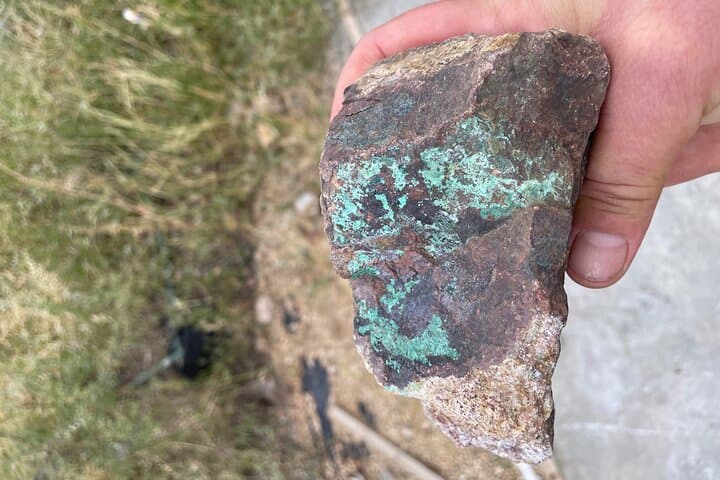
Morning light strips an ochre sheen across Bisbee’s weathered rooftops as you meet at the Copper Queen Library and step into a landscape shaped by copper and time. The guide moves with practiced certainty, pointing out veins and tailings where azurite flashes like buried cobalt and malachite stains the soil green. The town’s narrow streets fall away behind you; the Mule Mountains push up ahead, daring you toward outcrops and old mine dumps that still hold small, vivid specimens.
Morning light strips an ochre sheen across Bisbee’s weathered rooftops as you meet at the Copper Queen Library and step into a landscape shaped by copper and time. The guide moves with practiced certainty, pointing out veins and tailings where azurite flashes like buried cobalt and malachite stains the soil green. The town’s narrow streets fall away behind you; the Mule Mountains push up ahead, daring you toward outcrops and old mine dumps that still hold small, vivid specimens.
Bisbee was one of America’s great copper boom towns in the late 19th and early 20th centuries. The geology is classic—porphyry copper deposits altered by hydrothermal fluids that left quartz, turquoise, azurite, and malachite in fractures and weathered tailings. Culturally, the town mixes miner-era buildings with an arts scene that celebrates its mining roots; you’ll find local collections and museum displays that put small finds in a larger story.
Practical guidance: this is a short, mostly easy 20-minute walk in Old Bisbee followed by two short drives to nearby tailings, totaling about two hours. Expect uneven ground, loose rock, and low desert heat; wear sturdy shoes and a hat. Guides will point out legal collecting spots—collect responsibly and follow instructions about private property and protected sites. Bring water, sunscreen, gloves, and a small bag for transport. Photography is welcome; take care around old mine openings. Whether you leave with a handful of colorful minerals or simply a deeper sense of place, the day combines a tactile treasure hunt with a compact lesson in southwestern mining geology and local history.