THE ADVENTURE COLLECTIVE® · Independent discovery and booking for outdoor travel

Explore hidden catacombs and Victorian graves beneath Birmingham’s Jewellery Quarter on a self-guided walk. This 45–75 minute route reveals quarry-carved burial chambers, industrial-era memorials, and unexpected local stories—at your own pace.
Explore hidden catacombs and Victorian graves beneath Birmingham’s Jewellery Quarter on a self-guided walk. This 45–75 minute route reveals quarry-carved burial chambers, industrial-era memorials, and unexpected local stories—at your own pace.
Step off the Jewellery Quarter’s busy street and into a quieter world where carved sandstone walls hold stories and shadowed chambers invite close inspection.
Verified experiences and guided adventures in the surrounding area.
Operated by VoiceMap Audio Tours · Birmingham, West Midlands
Step off the Jewellery Quarter’s busy street and into a quieter world where carved sandstone walls hold stories and shadowed chambers invite close inspection.
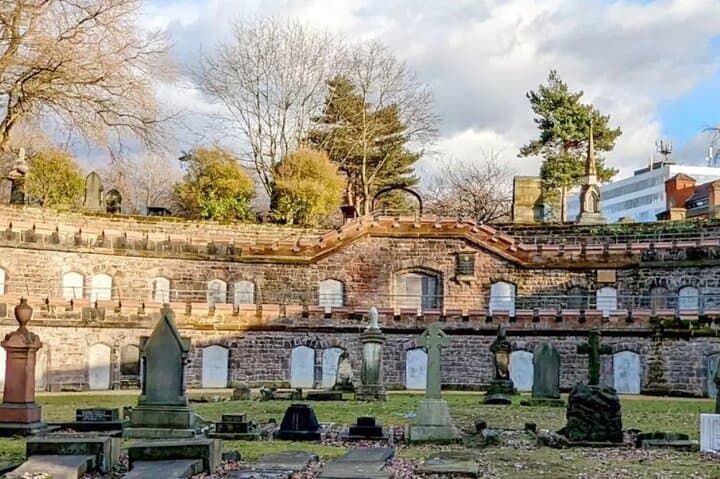
This self-guided walk threads between Warstone Lane (Brookfields) and Key Hill cemeteries, where two-tiered catacombs were cut into former sand quarries and Victorian gravestones keep watch along leafy lanes. The city’s industrial heartbeat is audible here—metalwork and clocks still hum from workshops a short walk away—while the stone itself seems to remember the miners who emptied the earth beneath the burials.
The cemeteries opened in the 19th century to serve a growing industrial city; Key Hill was founded as a nonconformist burial ground and Brookfields features unusual masonry where quarry faces became funerary architecture. Geologically, the local sandstone made both practical cellars and dramatic vertical walls; weathering and human reuse turned extraction sites into vaults.
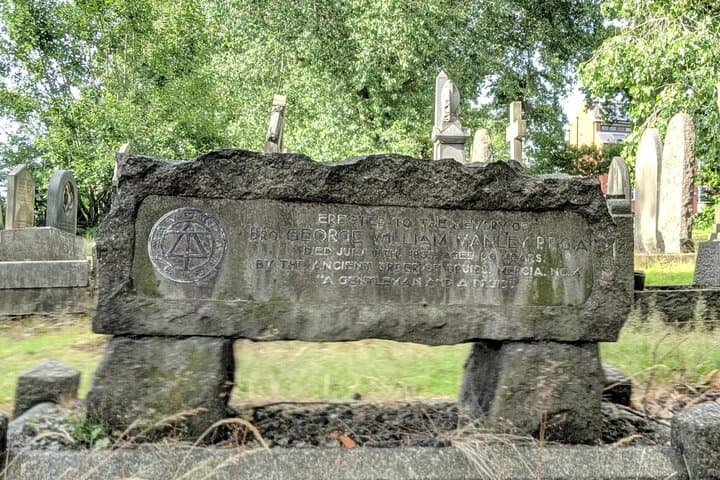
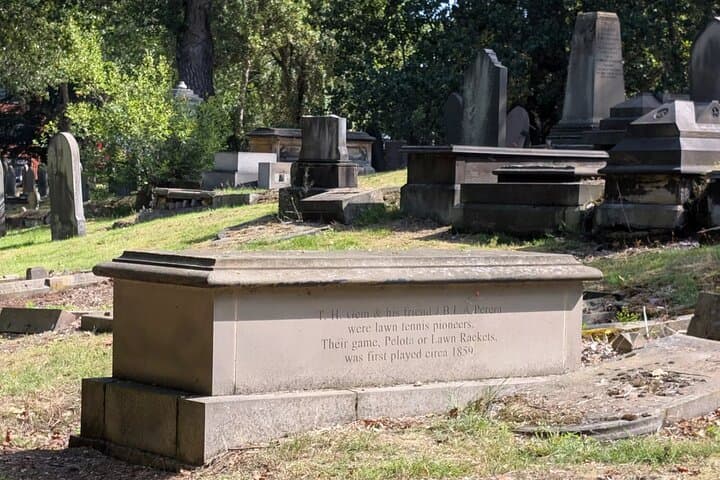
Expect close-up details: cast-iron railings, family plots marked by trade emblems, a memorial to a Titanic victim and the eccentric grave of an Arch Druid. The walk is as much about urban history and social change as it is about funerary art.
Practical guidance: routes are on paved paths with occasional steps and uneven stone; allow 45–75 minutes. Download the app and offline maps before you start, wear sturdy shoes, and be mindful that these are active historic sites—treat monuments with respect. Best times are early morning or late afternoon when light brings out relief in the stone and the city noise softens.
easy.
45–75 minutes.
Suitable for most fitness levels; requires normal walking ability and stable footing for short distances.
No—this is a self-guided tour with lifetime access to the route; you can begin when you arrive using the app.
There is no general admission fee for walking past or through these public cemeteries, though entry policies can vary—observe any posted signs.
The catacombs are visible from the paths and carved into quarry faces; internal access is generally restricted for safety, so expect observation rather than entry.
Parts of the route are on level paved paths, but steps and narrow lanes may limit full accessibility—check specific path segments in the app before setting out.
Key Hill and Warstone Lane date to the 19th century, created as Birmingham expanded; industrial pioneers and nonconformist figures are buried here, reflecting the city’s civic and commercial growth.
These cemeteries are managed as historic landscapes—stick to paths, avoid disturbing graves, and support local conservation groups that care for monuments and mature trees.
VoiceMap Audio Tours operates guided outdoor trips and adventures with an emphasis on safety, stewardship, and memorable experiences.

Step off the Jewellery Quarter’s busy street and into a quieter world where carved sandstone walls hold stories and shadowed chambers invite close inspection.
Step off the Jewellery Quarter’s busy street and into a quieter world where carved sandstone walls hold stories and shadowed chambers invite close inspection.
This self-guided walk threads between Warstone Lane (Brookfields) and Key Hill cemeteries, where two-tiered catacombs were cut into former sand quarries and Victorian gravestones keep watch along leafy lanes. The city’s industrial heartbeat is audible here—metalwork and clocks still hum from workshops a short walk away—while the stone itself seems to remember the miners who emptied the earth beneath the burials.
The cemeteries opened in the 19th century to serve a growing industrial city; Key Hill was founded as a nonconformist burial ground and Brookfields features unusual masonry where quarry faces became funerary architecture. Geologically, the local sandstone made both practical cellars and dramatic vertical walls; weathering and human reuse turned extraction sites into vaults.
Expect close-up details: cast-iron railings, family plots marked by trade emblems, a memorial to a Titanic victim and the eccentric grave of an Arch Druid. The walk is as much about urban history and social change as it is about funerary art.
Practical guidance: routes are on paved paths with occasional steps and uneven stone; allow 45–75 minutes. Download the app and offline maps before you start, wear sturdy shoes, and be mindful that these are active historic sites—treat monuments with respect. Best times are early morning or late afternoon when light brings out relief in the stone and the city noise softens.