THE ADVENTURE COLLECTIVE® · Independent discovery and booking for outdoor travel

Explore Birmingham on a private two-hour walking tour that links canals, civic squares, the historic Jewellery Quarter and the creative pulse of Digbeth. Ideal for first-time visitors who want history, street art and local tips in one easy urban stroll.
Explore Birmingham on a private two-hour walking tour that links canals, civic squares, the historic Jewellery Quarter and the creative pulse of Digbeth. Ideal for first-time visitors who want history, street art and local tips in one easy urban stroll.
Stand outside the Grand Hotel Birmingham and feel the city begin to move — canal water catching the light, tramlines humming, and a local guide ready with stories. This two-hour private walking tour threads through the Roundhouse by the canals, across Centenary Square with its striking modern architecture, into the compact streets of the Jewellery Quarter and onward to Digbeth’s street art, then through the Gay Village and past landmarks like The Bull, Victoria Square and The Mailbox.
Verified experiences and guided adventures in the surrounding area.
Operated by Guydeez · Birmingham, West Midlands
Stand outside the Grand Hotel Birmingham and feel the city begin to move — canal water catching the light, tramlines humming, and a local guide ready with stories. This two-hour private walking tour threads through the Roundhouse by the canals, across Centenary Square with its striking modern architecture, into the compact streets of the Jewellery Quarter and onward to Digbeth’s street art, then through the Gay Village and past landmarks like The Bull, Victoria Square and The Mailbox.
Birmingham’s rise during the Industrial Revolution shaped its brick-and-iron fabric; the Jewellery Quarter grew into a center for fine metalworking in the 19th century, while Digbeth has evolved from factories to creative workshops. The city sits on red sandstone and clays that supported canals and heavy industry; today those canals frame restaurants and cultural venues. Expect conversation about local craft trades, the wartime Hall of Memory, and contemporary regeneration projects that mix Victorian cemeteries with converted warehouses.
Practically, the route covers roughly 2–3 km on paved, mostly flat streets with many stops for photos and conversation — elevation gain is minimal. The pace is easy and family-friendly; the tour is wheelchair and stroller accessible. Bring comfortable walking shoes, a charged phone for photos and contactless payment for post-tour coffee or shopping. Aim for morning light to avoid crowds at The Bull and to see murals in Digbeth with sharper colors. Guides speak multiple languages and can tailor the route; check booking details for accessibility or special requests.
easy.
2 hours.
Suitable for people with a basic level of mobility; minimal elevation and frequent stops make it accessible for most.
Yes — the itinerary uses paved routes and public squares; the operator lists wheelchair and stroller accessibility but confirm any special requirements when booking.
This is a private tour, so your party will be the only group on the walk unless you request otherwise.
Yes — the tour includes customization and can emphasize history, architecture, food stops or street art; notify the guide when you book.
Guides can provide the tour in English, Spanish, French and Italian—confirm your language preference at booking.
Birmingham grew rapidly during the 18th–19th century industrial boom; the Jewellery Quarter became a world center for jewellery manufacture with workshops and small factories that still define its streetscape.
City-led regeneration balances preserving Victorian buildings with new cultural spaces; visitors can help by supporting independent shops and keeping public spaces litter-free.
Guydeez operates guided outdoor trips and adventures with an emphasis on safety, stewardship, and memorable experiences.
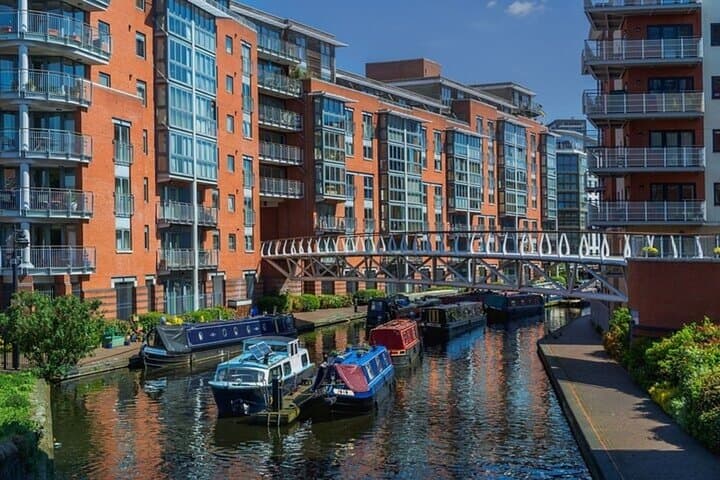
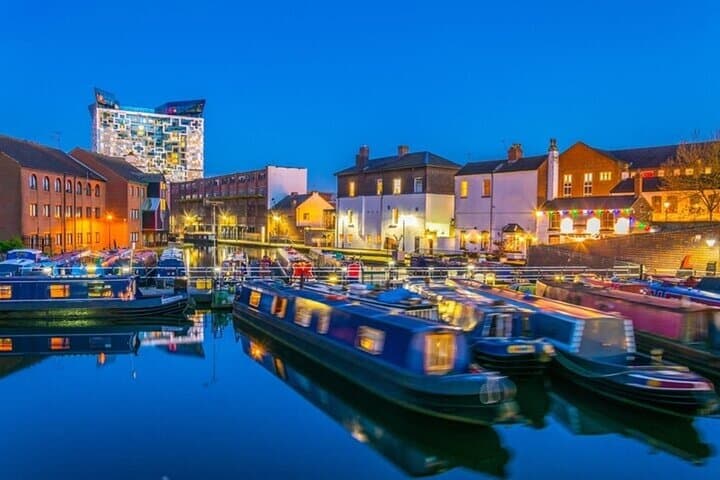
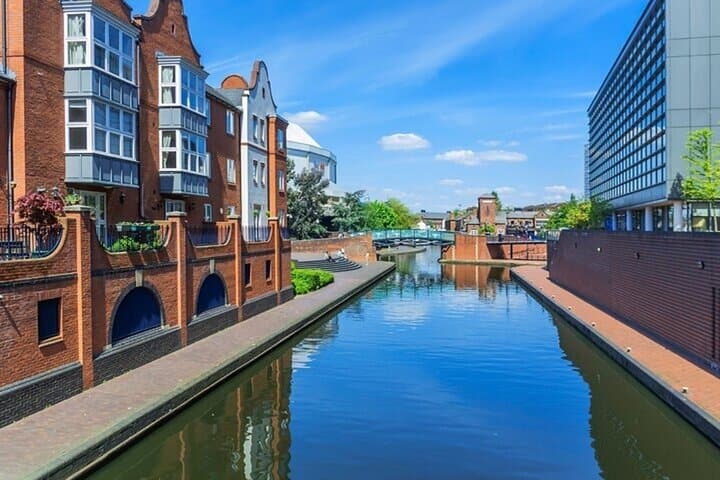
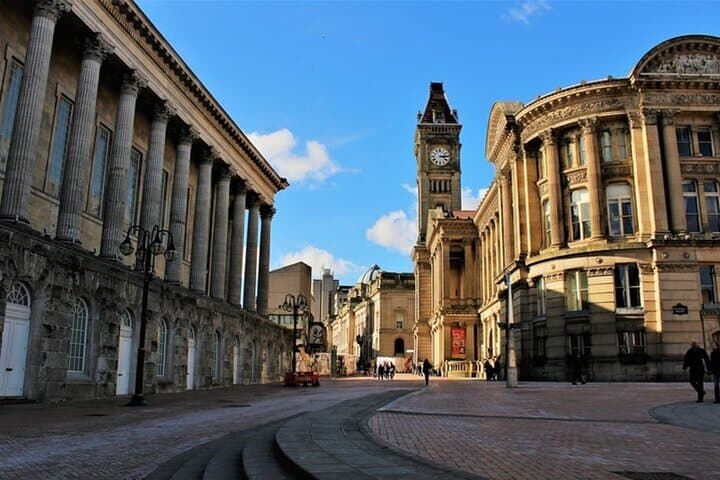
Stand outside the Grand Hotel Birmingham and feel the city begin to move — canal water catching the light, tramlines humming, and a local guide ready with stories. This two-hour private walking tour threads through the Roundhouse by the canals, across Centenary Square with its striking modern architecture, into the compact streets of the Jewellery Quarter and onward to Digbeth’s street art, then through the Gay Village and past landmarks like The Bull, Victoria Square and The Mailbox.
Stand outside the Grand Hotel Birmingham and feel the city begin to move — canal water catching the light, tramlines humming, and a local guide ready with stories. This two-hour private walking tour threads through the Roundhouse by the canals, across Centenary Square with its striking modern architecture, into the compact streets of the Jewellery Quarter and onward to Digbeth’s street art, then through the Gay Village and past landmarks like The Bull, Victoria Square and The Mailbox.
Birmingham’s rise during the Industrial Revolution shaped its brick-and-iron fabric; the Jewellery Quarter grew into a center for fine metalworking in the 19th century, while Digbeth has evolved from factories to creative workshops. The city sits on red sandstone and clays that supported canals and heavy industry; today those canals frame restaurants and cultural venues. Expect conversation about local craft trades, the wartime Hall of Memory, and contemporary regeneration projects that mix Victorian cemeteries with converted warehouses.
Practically, the route covers roughly 2–3 km on paved, mostly flat streets with many stops for photos and conversation — elevation gain is minimal. The pace is easy and family-friendly; the tour is wheelchair and stroller accessible. Bring comfortable walking shoes, a charged phone for photos and contactless payment for post-tour coffee or shopping. Aim for morning light to avoid crowds at The Bull and to see murals in Digbeth with sharper colors. Guides speak multiple languages and can tailor the route; check booking details for accessibility or special requests.