THE ADVENTURE COLLECTIVE® · Independent discovery and booking for outdoor travel

Drive up from Muscat into the cool Saiq Plateau for a day of terrace farms, old village lanes in Birkat Al Mouz, and panoramic canyon views on Jebel Akhdar. This full-day private tour pairs easy village walks with moderate mountain hiking and cultural insight.
Drive up from Muscat into the cool Saiq Plateau for a day of terrace farms, old village lanes in Birkat Al Mouz, and panoramic canyon views on Jebel Akhdar. This full-day private tour pairs easy village walks with moderate mountain hiking and cultural insight.
Morning light on the winding road from Muscat slices through the Al Hajar foothills as a private vehicle climbs toward Saiq Plateau. Travelers step out into cooler air where terraces carve the mountainside and a village mosque marks the start of the day’s walk. Palm-fringed lanes in Birkat Al Mouz lead into Harat Al Sibani, an old quarter of mud-brick houses and falaj channels that still coax water down from the heights.
Verified experiences and guided adventures in the surrounding area.
Operated by Majan Views Tourism · Birkat Al Mouz, Ad Dakhiliyah
Morning light on the winding road from Muscat slices through the Al Hajar foothills as a private vehicle climbs toward Saiq Plateau. Travelers step out into cooler air where terraces carve the mountainside and a village mosque marks the start of the day’s walk. Palm-fringed lanes in Birkat Al Mouz lead into Harat Al Sibani, an old quarter of mud-brick houses and falaj channels that still coax water down from the heights.
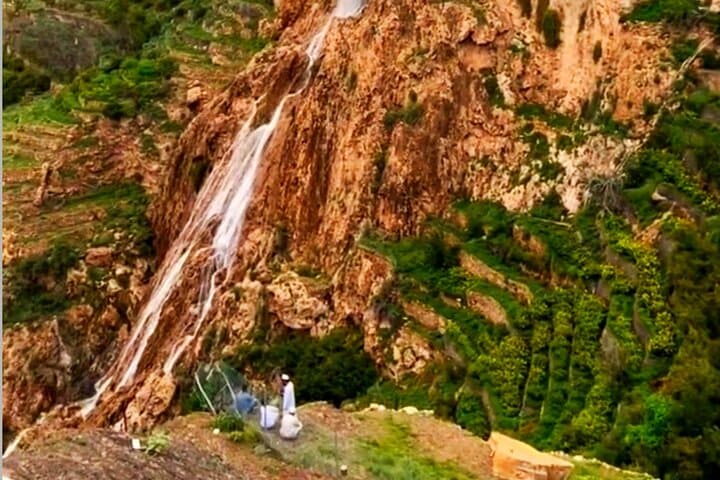
Geology here is raw: limestone and uplifted sedimentary strata form the steep canyons that give Jebel Akhdar its dramatic edges. Human history is equally present — terraced farms and ancient irrigation (falaj) demonstrate centuries of adaptation to scarce water. Local culture remains village-focused; shepherding and fruit orchards shape daily life, and stone-built houses hold quiet stories of mountain living.
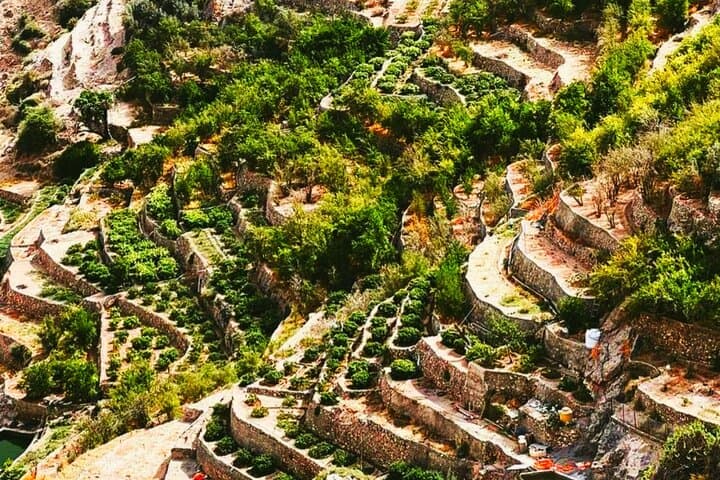
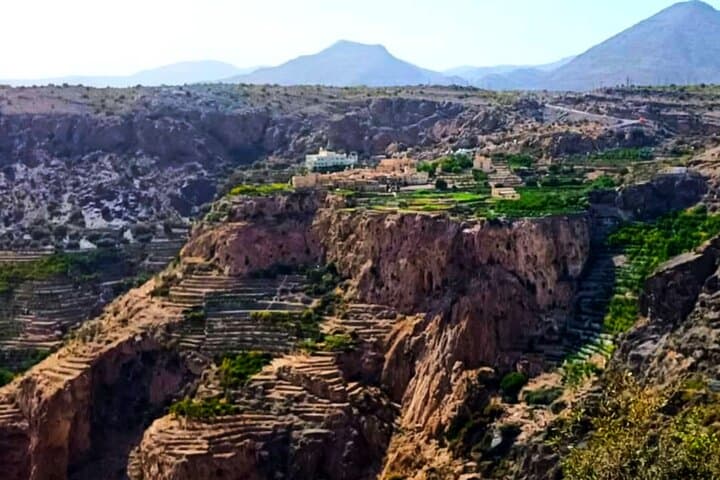
Expect a mix of paved village paths and steeper mountain trails with panoramic views over Wadi Bani Habib. The Saiq Plateau’s cool microclimate supports rose and pomegranate terraces, and narrow footpaths thread between villages — a steady, moderately paced walk that’s part landscape study, part cultural visit.
Practical guidance: bring at least 2 liters of water, sturdy hiking shoes with good grip, sun protection, and layered clothing for temperature shifts. Allow 6–8 hours for the excursion including transfers from Muscat. The walk is moderate: some uneven, rocky sections and short climbs. Respect private property, follow local guidance, and leave no trace to protect fragile terraces and falaj systems.
moderate.
6–8 hours.
Suitable for travelers with regular activity levels able to manage short steep sections and 3–6 miles of walking
Expect about 1.5–2.5 hours each way depending on traffic and the exact pickup point in Muscat.
Children and older adults can join if reasonably mobile; the tour notes it requires moderate fitness and some participants may find short climbs challenging.
The trip includes snacks; full meals are not typically provided so bring extra food or plan to eat in Muscat before/after the tour.
No formal permit is required, but visitors should follow local customs and stay on public paths; guides handle local access and etiquette.
The Saiq Plateau and Birkat Al Mouz sit within the Al Hajar uplift; terraced agriculture and falaj irrigation reflect centuries of mountain settlement and water management.
The terraces and falaj systems are fragile; visitors should avoid walking on cultivated plots and carry out waste to protect soil and water resources.
Majan Views Tourism operates guided outdoor trips and adventures with an emphasis on safety, stewardship, and memorable experiences.
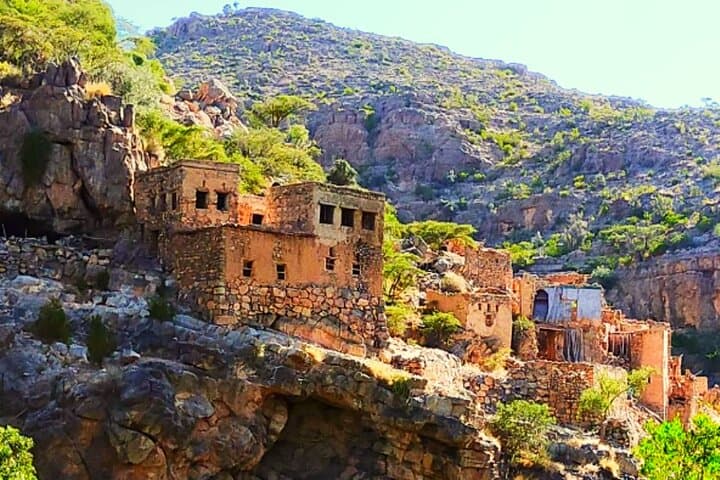
Morning light on the winding road from Muscat slices through the Al Hajar foothills as a private vehicle climbs toward Saiq Plateau. Travelers step out into cooler air where terraces carve the mountainside and a village mosque marks the start of the day’s walk. Palm-fringed lanes in Birkat Al Mouz lead into Harat Al Sibani, an old quarter of mud-brick houses and falaj channels that still coax water down from the heights.
Morning light on the winding road from Muscat slices through the Al Hajar foothills as a private vehicle climbs toward Saiq Plateau. Travelers step out into cooler air where terraces carve the mountainside and a village mosque marks the start of the day’s walk. Palm-fringed lanes in Birkat Al Mouz lead into Harat Al Sibani, an old quarter of mud-brick houses and falaj channels that still coax water down from the heights.
Geology here is raw: limestone and uplifted sedimentary strata form the steep canyons that give Jebel Akhdar its dramatic edges. Human history is equally present — terraced farms and ancient irrigation (falaj) demonstrate centuries of adaptation to scarce water. Local culture remains village-focused; shepherding and fruit orchards shape daily life, and stone-built houses hold quiet stories of mountain living.
Expect a mix of paved village paths and steeper mountain trails with panoramic views over Wadi Bani Habib. The Saiq Plateau’s cool microclimate supports rose and pomegranate terraces, and narrow footpaths thread between villages — a steady, moderately paced walk that’s part landscape study, part cultural visit.
Practical guidance: bring at least 2 liters of water, sturdy hiking shoes with good grip, sun protection, and layered clothing for temperature shifts. Allow 6–8 hours for the excursion including transfers from Muscat. The walk is moderate: some uneven, rocky sections and short climbs. Respect private property, follow local guidance, and leave no trace to protect fragile terraces and falaj systems.