THE ADVENTURE COLLECTIVE® · Independent discovery and booking for outdoor travel

Explore La Paz’s tidal flats and mangroves on a focused four-hour birding tour. Expect shorebird flocks, endemic thrashers, and guided stops along the malecón and quiet wetlands.
Explore La Paz’s tidal flats and mangroves on a focused four-hour birding tour. Expect shorebird flocks, endemic thrashers, and guided stops along the malecón and quiet wetlands.
A morning in La Paz begins with the slap of tide on rock and the low chatter of gulls as you step into an air-conditioned vehicle at the malecón. The guide steers toward fringe mangroves and tidal flats where shorebirds cluster on exposed mud and raptors quarter the bright horizon. You’ll move between quiet wetlands and scrubby shoreline, each stop promising a fresh call—mangrove warbler flicking through low branches, a reddish egret stalking shallow pools, or a yellow-footed gull loafing on distant sandbars.
Verified experiences and guided adventures in the surrounding area.
Operated by Birding La Paz · La Paz, Baja California Sur
A morning in La Paz begins with the slap of tide on rock and the low chatter of gulls as you step into an air-conditioned vehicle at the malecón. The guide steers toward fringe mangroves and tidal flats where shorebirds cluster on exposed mud and raptors quarter the bright horizon. You’ll move between quiet wetlands and scrubby shoreline, each stop promising a fresh call—mangrove warbler flicking through low branches, a reddish egret stalking shallow pools, or a yellow-footed gull loafing on distant sandbars.
This coastline sits on the Sea of Cortez, a geologically young gulf carved by tectonic rifts and fed by nutrient-rich currents that support vast feeding grounds for migratory and resident birds. La Paz’s ports and estuaries have long been used by local Cochimí communities and later Spanish mariners; today small fishing towns and the malecón’s cafés reflect that coastal culture.
Practically: the tour runs about four hours with hotel pickup and drop-off. Expect short walks over uneven, sometimes rocky or muddy ground—not difficult but not stroller-friendly. Guides provide binoculars if needed and water is included, but personal optics and a quick field guide improve the experience. Best light is early morning when the tide exposes feeding flats; bring sun protection and quiet patience—the birds often reveal themselves only after a still, observant approach.
This outing is ideal for casual birders who want targeted species IDs without long hikes, and for anyone who appreciates the Sea of Cortez’s raw, bird-rich coastline.
easy.
4 hours.
Light walking ability; participants should be comfortable standing and walking short uneven stretches.
The tour is approximately four hours with pickup from hotels in central La Paz and returns to the malecón or downtown for drop-off.
Terrain includes uneven, muddy, or rocky shoreline areas and is not suitable for standard wheelchairs; the vehicle transfers minimize walking but some mobility is required.
Common targets include mangrove warbler, California gnatcatcher, reddish egret, yellow-footed gull, gray thrasher and occasionally clapper rail or other vagrants depending on season.
Bottled water and fuel/parking are included; plan for snacks or brunch after the tour if desired, as the tour ends near downtown La Paz.
La Paz’s coastline has long been a maritime crossroads—from indigenous Cochimí peoples to Spanish-era ports—and its estuaries remain important communal fishing and gathering areas.
Mangrove wetlands here are critical stopover habitat for migratory birds; visitors are asked to stay on paths, avoid nesting areas, and minimize disturbance to feeding flocks.
Birding La Paz operates guided outdoor trips and adventures with an emphasis on safety, stewardship, and memorable experiences.
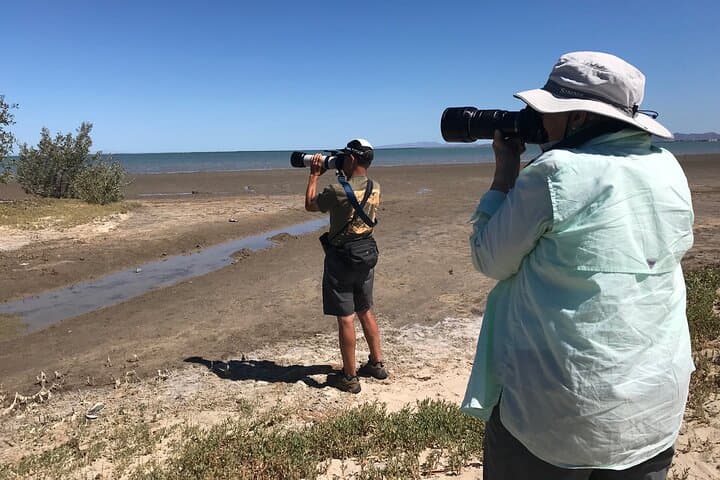


A morning in La Paz begins with the slap of tide on rock and the low chatter of gulls as you step into an air-conditioned vehicle at the malecón. The guide steers toward fringe mangroves and tidal flats where shorebirds cluster on exposed mud and raptors quarter the bright horizon. You’ll move between quiet wetlands and scrubby shoreline, each stop promising a fresh call—mangrove warbler flicking through low branches, a reddish egret stalking shallow pools, or a yellow-footed gull loafing on distant sandbars.
A morning in La Paz begins with the slap of tide on rock and the low chatter of gulls as you step into an air-conditioned vehicle at the malecón. The guide steers toward fringe mangroves and tidal flats where shorebirds cluster on exposed mud and raptors quarter the bright horizon. You’ll move between quiet wetlands and scrubby shoreline, each stop promising a fresh call—mangrove warbler flicking through low branches, a reddish egret stalking shallow pools, or a yellow-footed gull loafing on distant sandbars.
This coastline sits on the Sea of Cortez, a geologically young gulf carved by tectonic rifts and fed by nutrient-rich currents that support vast feeding grounds for migratory and resident birds. La Paz’s ports and estuaries have long been used by local Cochimí communities and later Spanish mariners; today small fishing towns and the malecón’s cafés reflect that coastal culture.
Practically: the tour runs about four hours with hotel pickup and drop-off. Expect short walks over uneven, sometimes rocky or muddy ground—not difficult but not stroller-friendly. Guides provide binoculars if needed and water is included, but personal optics and a quick field guide improve the experience. Best light is early morning when the tide exposes feeding flats; bring sun protection and quiet patience—the birds often reveal themselves only after a still, observant approach.
This outing is ideal for casual birders who want targeted species IDs without long hikes, and for anyone who appreciates the Sea of Cortez’s raw, bird-rich coastline.