THE ADVENTURE COLLECTIVE® · Independent discovery and booking for outdoor travel

Wake with the cloud forest on a guided half-day through Curi-Cancha, where quetzals, toucans and hummingbirds crowd moss‑draped branches. This practical guide covers what to expect, where to stay, and how to prepare for peak bird activity.
Wake with the cloud forest on a guided half-day through Curi-Cancha, where quetzals, toucans and hummingbirds crowd moss‑draped branches. This practical guide covers what to expect, where to stay, and how to prepare for peak bird activity.
Dawn breaks through a low bank of cloud and the forest exhales—moss beads with droplets, leaves clap softly, and a distant quetzal calls like a thread pulled through the trees. On the Curi-Cancha trail, the canopy tilts between cloud and dry ridge, and every pause can reveal a flash of iridescent throat or the rattle of a toucan’s bill.
Verified experiences and guided adventures in the surrounding area.
Operated by Felix Angel Barrantes Segura · Monteverde, Puntarenas
Dawn breaks through a low bank of cloud and the forest exhales—moss beads with droplets, leaves clap softly, and a distant quetzal calls like a thread pulled through the trees. On the Curi-Cancha trail, the canopy tilts between cloud and dry ridge, and every pause can reveal a flash of iridescent throat or the rattle of a toucan’s bill.
Curi-Cancha Wildlife Refuge sits on the Tilarán Range at roughly 1,300–1,500 m elevation, a fragment of highland cloud forest where volcanic soils and persistent mist create lush, epiphytic layers. The reserve’s name—often translated as “Golden Enclosure”—hints at pre-Columbian language roots and the long human relationship with this landscape. Local communities in Monteverde and Santa Elena developed conservation-minded ecotourism in the late 20th century; many guides are biologists or lifelong residents who blend scientific ID with cultural context and Pura Vida friendliness.
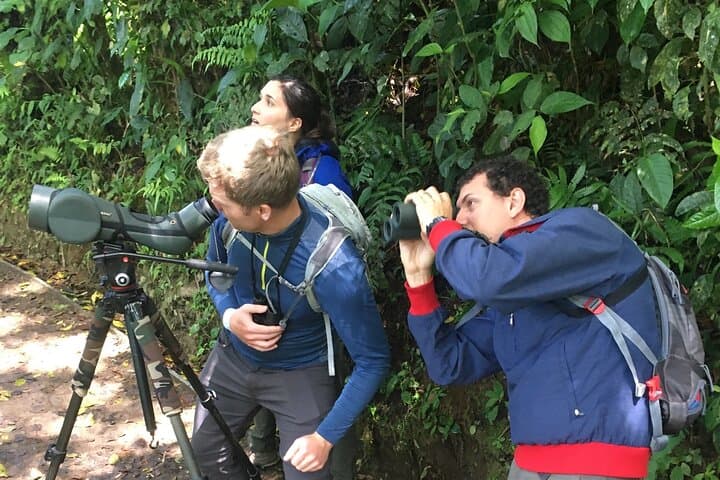
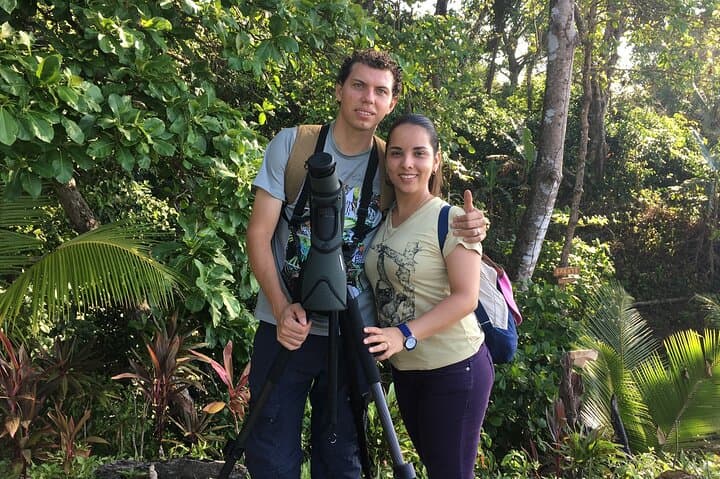
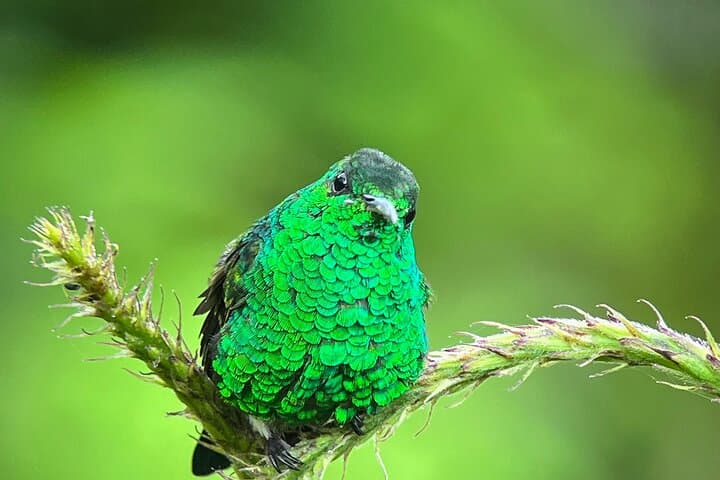
On a guided half-day tour you’ll target specialties: resplendent quetzal, black-and-yellow tanagers, hummingbird assemblies, trogons, woodcreepers, and mixed-species flocks. Expect narrow, sometimes muddy trails, short elevation changes, and plenty of stops for scope viewing and photography—the tour includes use of a Swarovski spotting scope.
Practical: go at first light for peak activity, wear grippy shoes and a breathable rain jacket, and bring water and insect repellent. Keep voices low, follow your guide’s lead on quiet observation points, and allow extra time for scope viewing and field-sketch or photos—Curi-Cancha rewards patience.
moderate.
3–4 hours.
Moderate fitness: able to walk uneven trails and stand quietly for long periods; short uphill sections expected.
The tour is about 4 hours and rated moderate—trail sections are short but uneven, with frequent stops for observation.
Common targets include resplendent quetzal in season, toucans, hummingbird gardens, tanagers, flycatchers, and resident understory species; sightings vary by season and time of day.
Children can participate but infants must sit on an adult’s lap and the guide recommends a moderate fitness level; keep young kids prepared for quiet, still observation.
Full refunds are available if you cancel at least 24 hours before departure; tours may also be canceled for bad weather or low bookings per provider policy.
Monteverde’s modern conservation history grew from community-led efforts in the 1970s–80s to protect cloud forest habitat; Curi-Cancha is part of that regional mosaic of private reserves.
Trails and guide limits reduce disturbance; stick to paths, avoid flash photography at close ranges, and follow local guidelines to support long-term bird habitat protection.
Felix Angel Barrantes Segura operates guided outdoor trips and adventures with an emphasis on safety, stewardship, and memorable experiences.
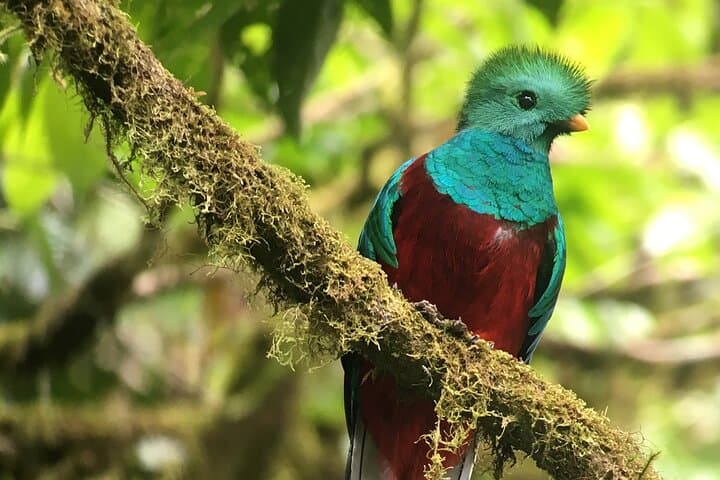
Dawn breaks through a low bank of cloud and the forest exhales—moss beads with droplets, leaves clap softly, and a distant quetzal calls like a thread pulled through the trees. On the Curi-Cancha trail, the canopy tilts between cloud and dry ridge, and every pause can reveal a flash of iridescent throat or the rattle of a toucan’s bill.
Dawn breaks through a low bank of cloud and the forest exhales—moss beads with droplets, leaves clap softly, and a distant quetzal calls like a thread pulled through the trees. On the Curi-Cancha trail, the canopy tilts between cloud and dry ridge, and every pause can reveal a flash of iridescent throat or the rattle of a toucan’s bill.
Curi-Cancha Wildlife Refuge sits on the Tilarán Range at roughly 1,300–1,500 m elevation, a fragment of highland cloud forest where volcanic soils and persistent mist create lush, epiphytic layers. The reserve’s name—often translated as “Golden Enclosure”—hints at pre-Columbian language roots and the long human relationship with this landscape. Local communities in Monteverde and Santa Elena developed conservation-minded ecotourism in the late 20th century; many guides are biologists or lifelong residents who blend scientific ID with cultural context and Pura Vida friendliness.
On a guided half-day tour you’ll target specialties: resplendent quetzal, black-and-yellow tanagers, hummingbird assemblies, trogons, woodcreepers, and mixed-species flocks. Expect narrow, sometimes muddy trails, short elevation changes, and plenty of stops for scope viewing and photography—the tour includes use of a Swarovski spotting scope.
Practical: go at first light for peak activity, wear grippy shoes and a breathable rain jacket, and bring water and insect repellent. Keep voices low, follow your guide’s lead on quiet observation points, and allow extra time for scope viewing and field-sketch or photos—Curi-Cancha rewards patience.