THE ADVENTURE COLLECTIVE® · Independent discovery and booking for outdoor travel

Experience the Annapurna Sanctuary from the air on a 90-minute helicopter tour from Pokhara. Land at Annapurna Base Camp for panoramic views, quick tea, and unbeatable photo opportunities — ideal for travelers short on time who still want a close encounter with the high Himalaya.
Experience the Annapurna Sanctuary from the air on a 90-minute helicopter tour from Pokhara. Land at Annapurna Base Camp for panoramic views, quick tea, and unbeatable photo opportunities — ideal for travelers short on time who still want a close encounter with the high Himalaya.
The helicopter lifts off Pokhara at dawn and the valley shrinks beneath you — terraced hills folding into emerald lakes while the first light chisels the jagged ridges of the Annapurna range. Snowfields glint like old coin; a sudden notch in the horizon frames Machhapuchhare (Fishtail) with uncanny clarity.
Verified experiences and guided adventures in the surrounding area.
Operated by Austravel & Tours Nepal P. Ltd. · Pokhara, Gandaki Province
The helicopter lifts off Pokhara at dawn and the valley shrinks beneath you — terraced hills folding into emerald lakes while the first light chisels the jagged ridges of the Annapurna range. Snowfields glint like old coin; a sudden notch in the horizon frames Machhapuchhare (Fishtail) with uncanny clarity.
This short flight threads geological history: the collision of the Indian and Eurasian plates that raised these peaks and carved deep gorges. Culturally the route passes Gurung and Magar villages where terrace farming and stone chortens mark a highland way of life that supplied early mountaineering expeditions. The Annapurna Conservation Area, Asia’s first community-managed protected zone, covers the sanctuary and helps preserve alpine meadows, glaciers, and local customs.
On arrival at Annapurna Base Camp you stand in an amphitheater of peaks — Annapurna I, Hiunchuli, and Dhaulagiri press close like watchful giants. The landing gives 30–90 minutes on the ground to photograph, sip tea at a nearby tea-house, and feel the thin, cold air that reminds you how high you are.
Practical guidance: weather dictates timing — book early-morning slots for the most stable conditions. Expect strong sunlight and cold wind; layer up. Bring a camera with fast shutter speeds (helicopter vibration and brilliant contrast), and keep personal documents and weight info at hand for check-in. The tour is quick and accessible for most travelers, but not recommended for people with serious heart or respiratory conditions. Plan travel time back to Pokhara and allow flexibility for weather delays.
easy.
1.5–2 hours.
No specific fitness required; suitable for most travelers but not recommended for those with serious cardiovascular or respiratory conditions.
The advertised duration is about 90 minutes total, including roughly 30 minutes of scenic flight and a short landing period at Annapurna Base Camp, though exact times can vary with weather.
Infants are allowed but must sit on an adult’s lap; airlines/operators may have specific age and safety rules — check at booking.
Flights are commonly canceled for bad weather; most operators offer full refunds or rebooking when cancellations are weather-related — confirm the policy when you book.
No strenuous effort or acclimatization is required since the visit is by helicopter, but travelers with heart or severe respiratory conditions should consult a physician before flying.
The Annapurna region has been a crossroads for Gurung and Magar communities; the sanctuary was later protected under the Annapurna Conservation Area Project to balance tourism and traditional livelihoods.
The area is managed by ACAP, which emphasizes community-based conservation—stick to marked areas, avoid litter, and respect local grazing and pilgrimage routes.
Austravel & Tours Nepal P. Ltd. operates guided outdoor trips and adventures with an emphasis on safety, stewardship, and memorable experiences.
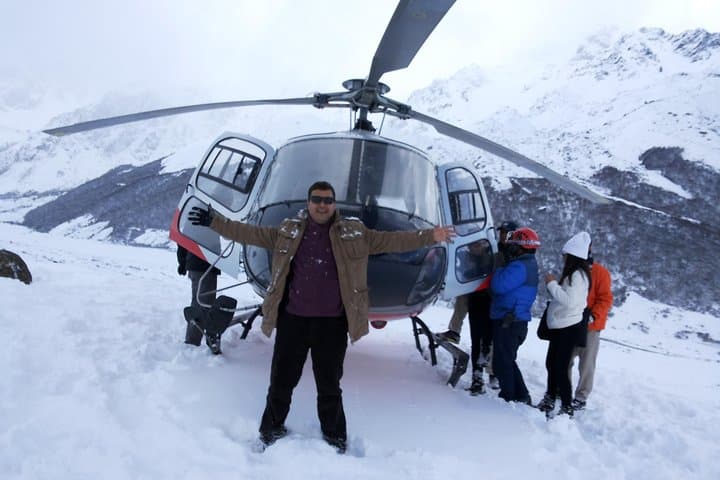
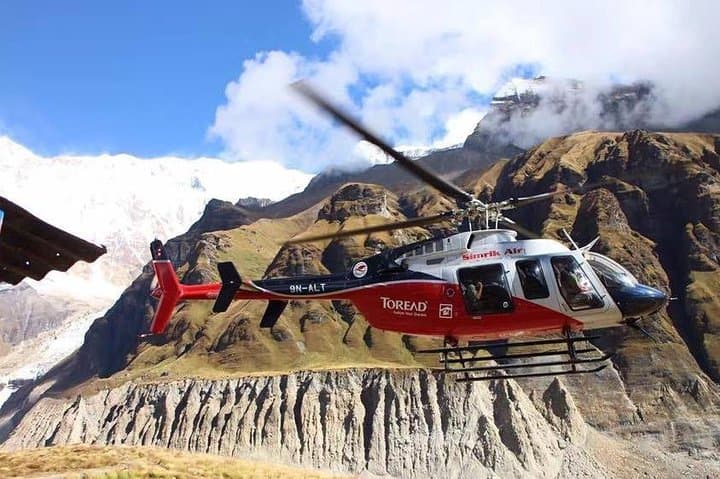
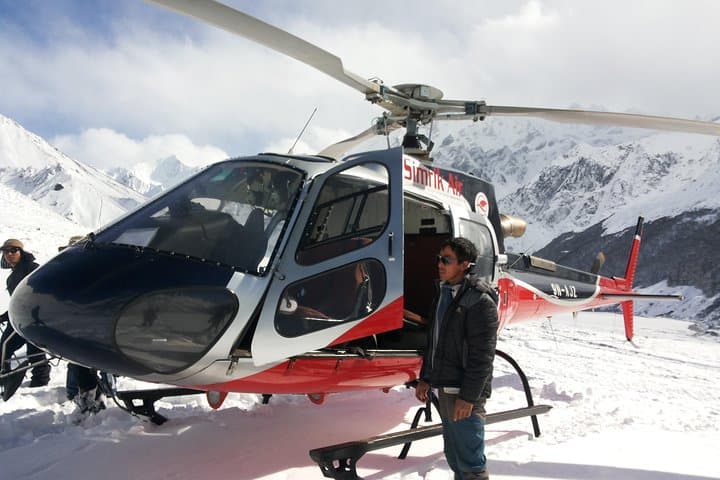
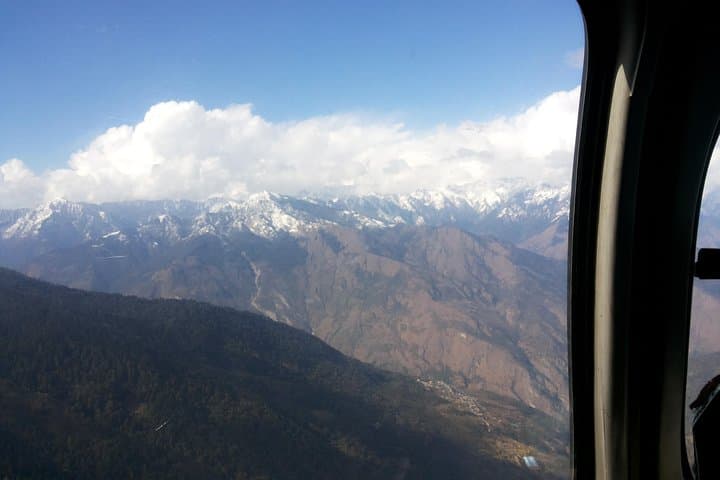
The helicopter lifts off Pokhara at dawn and the valley shrinks beneath you — terraced hills folding into emerald lakes while the first light chisels the jagged ridges of the Annapurna range. Snowfields glint like old coin; a sudden notch in the horizon frames Machhapuchhare (Fishtail) with uncanny clarity.
The helicopter lifts off Pokhara at dawn and the valley shrinks beneath you — terraced hills folding into emerald lakes while the first light chisels the jagged ridges of the Annapurna range. Snowfields glint like old coin; a sudden notch in the horizon frames Machhapuchhare (Fishtail) with uncanny clarity.
This short flight threads geological history: the collision of the Indian and Eurasian plates that raised these peaks and carved deep gorges. Culturally the route passes Gurung and Magar villages where terrace farming and stone chortens mark a highland way of life that supplied early mountaineering expeditions. The Annapurna Conservation Area, Asia’s first community-managed protected zone, covers the sanctuary and helps preserve alpine meadows, glaciers, and local customs.
On arrival at Annapurna Base Camp you stand in an amphitheater of peaks — Annapurna I, Hiunchuli, and Dhaulagiri press close like watchful giants. The landing gives 30–90 minutes on the ground to photograph, sip tea at a nearby tea-house, and feel the thin, cold air that reminds you how high you are.
Practical guidance: weather dictates timing — book early-morning slots for the most stable conditions. Expect strong sunlight and cold wind; layer up. Bring a camera with fast shutter speeds (helicopter vibration and brilliant contrast), and keep personal documents and weight info at hand for check-in. The tour is quick and accessible for most travelers, but not recommended for people with serious heart or respiratory conditions. Plan travel time back to Pokhara and allow flexibility for weather delays.