THE ADVENTURE COLLECTIVE® · Independent discovery and booking for outdoor travel

Explore Orongo’s cliff-top ceremonies, Rano Kau’s crater lake and the island’s most evocative moai on a private, full-day Birdman Quest tour. Personalized pacing, a local guide, and hotel pickup make this a relaxed, deeply cultural way to experience Rapa Nui.
Explore Orongo’s cliff-top ceremonies, Rano Kau’s crater lake and the island’s most evocative moai on a private, full-day Birdman Quest tour. Personalized pacing, a local guide, and hotel pickup make this a relaxed, deeply cultural way to experience Rapa Nui.
The day opens with a low, salt-scented light as your private guide lifts you from Hanga Roa and drives the island’s western coast road toward the rim of Rano Kau. Wind takes the lead here—spreading grass and seaspray like a warning—and the three offshore motu sit like punctuation marks against the Pacific.
Verified experiences and guided adventures in the surrounding area.
Operated by City Trekking Guide · Hanga Roa, Valparaíso Region
The day opens with a low, salt-scented light as your private guide lifts you from Hanga Roa and drives the island’s western coast road toward the rim of Rano Kau. Wind takes the lead here—spreading grass and seaspray like a warning—and the three offshore motu sit like punctuation marks against the Pacific.
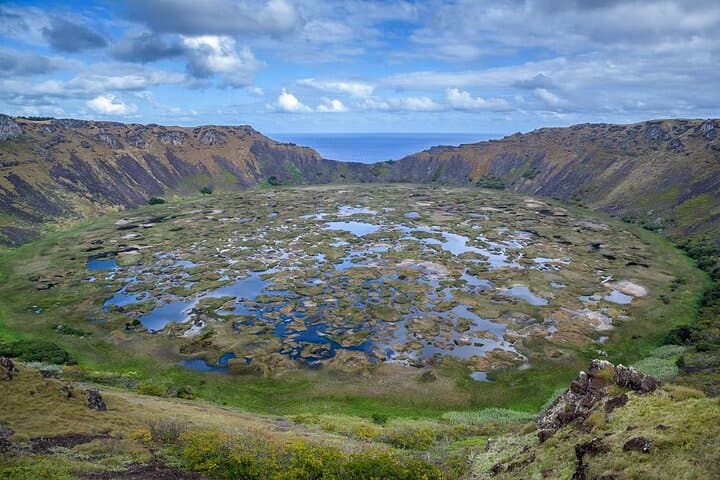
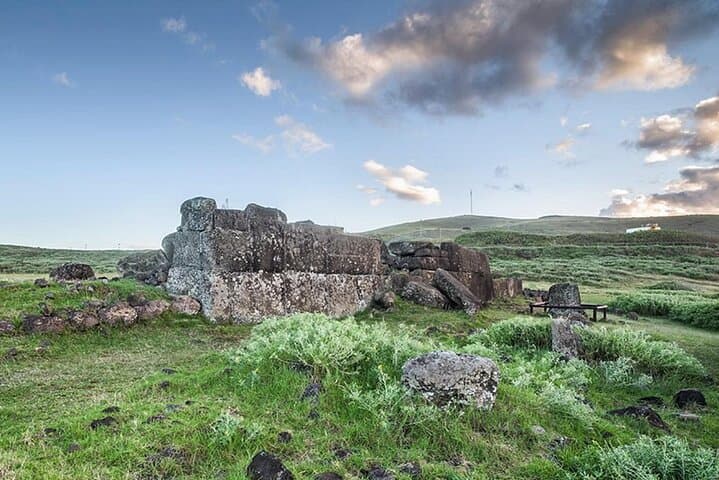
History and geology sit side-by-side on this route. Rano Kau’s volcanic caldera holds a freshwater basin and an enclave of endemic plants; Orongo, perched on the crater’s lip, was once the ceremonial center for the Birdman cult where competitors raced for honor and survival. The moai around Tahai and inland at Ahu Akivi reveal different chapters of Rapa Nui’s craftsmanship—carved from tuff, topped by red scoria pukao quarried at Puna Pau, and moved across volcanic plains by methods still debated by archaeologists.
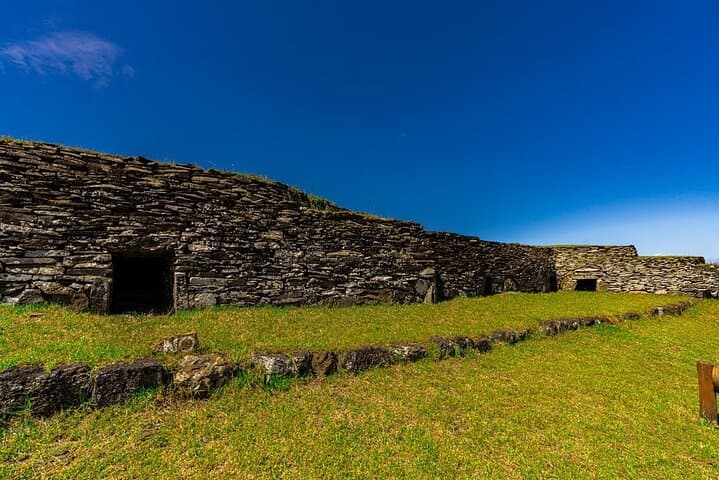
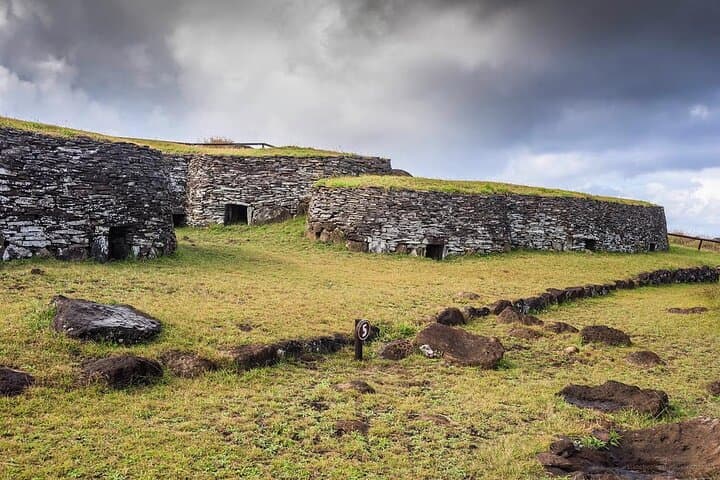
Culturally, the tour is a conversation: your Rapanui guide links petroglyphs, restored stone houses and astronomical alignments to contemporary island life. Alongside archaeology you’ll find small surprises—quiet viewpoints over Hanga Roa, a coastal reef fissure where waves assert themselves, and the odd seabird that seems to challenge your timing.
Practical guidance: plan for uneven ground, coastal wind, and sharp sun. Wear sturdy walking shoes, bring layered wind protection, and carry a refillable bottle—the tour includes bottled water but extra hydration helps. Morning light is best for photography and calmer seas; late afternoons bring dramatic sunsets at Tahai. The pace is relaxed and private, making this a solid full-day cultural-archaeological outing for most travelers.
easy.
5–5.8 hours.
Suitable for most fitness levels; includes short walks on uneven volcanic terrain and low-gradient steps.
Yes—this private tour is paced to participants’ needs with short walks and vehicle access between sites; note that some stops involve uneven ground and short steps.
Admission specifics vary by site; this tour description lists transportation and guide services—confirm whether museum or park entry fees are included when booking.
Yes—this private experience is designed to adapt to your interests and pace; discuss priorities with your guide during the pre-tour advisory session.
Follow your guide’s instructions: avoid climbing ahu or moai, don’t remove artifacts or stones, and ask before photographing locals or ceremonial spaces.
Orongo was the ceremonial center of the Birdman (Tangata Manu) competition; Rapa Nui’s moai were carved from volcanic tuff and moved across the island using methods still studied by archaeologists.
Sites are fragile—stick to designated paths, avoid touching petroglyphs and moai, and support local conservation efforts by following guide instructions and minimizing waste.
City Trekking Guide operates guided outdoor trips and adventures with an emphasis on safety, stewardship, and memorable experiences.
The day opens with a low, salt-scented light as your private guide lifts you from Hanga Roa and drives the island’s western coast road toward the rim of Rano Kau. Wind takes the lead here—spreading grass and seaspray like a warning—and the three offshore motu sit like punctuation marks against the Pacific.
The day opens with a low, salt-scented light as your private guide lifts you from Hanga Roa and drives the island’s western coast road toward the rim of Rano Kau. Wind takes the lead here—spreading grass and seaspray like a warning—and the three offshore motu sit like punctuation marks against the Pacific.
History and geology sit side-by-side on this route. Rano Kau’s volcanic caldera holds a freshwater basin and an enclave of endemic plants; Orongo, perched on the crater’s lip, was once the ceremonial center for the Birdman cult where competitors raced for honor and survival. The moai around Tahai and inland at Ahu Akivi reveal different chapters of Rapa Nui’s craftsmanship—carved from tuff, topped by red scoria pukao quarried at Puna Pau, and moved across volcanic plains by methods still debated by archaeologists.
Culturally, the tour is a conversation: your Rapanui guide links petroglyphs, restored stone houses and astronomical alignments to contemporary island life. Alongside archaeology you’ll find small surprises—quiet viewpoints over Hanga Roa, a coastal reef fissure where waves assert themselves, and the odd seabird that seems to challenge your timing.
Practical guidance: plan for uneven ground, coastal wind, and sharp sun. Wear sturdy walking shoes, bring layered wind protection, and carry a refillable bottle—the tour includes bottled water but extra hydration helps. Morning light is best for photography and calmer seas; late afternoons bring dramatic sunsets at Tahai. The pace is relaxed and private, making this a solid full-day cultural-archaeological outing for most travelers.