THE ADVENTURE COLLECTIVE® · Independent discovery and booking for outdoor travel

Walk one of the Americas’ premier tropical birding corridors: Pipeline Road offers over 400 recorded species, a 35 m canopy tower and morning army-ant swarms. This 5–6 hour tour from port or Panama City is best at first light for mixed-species flocks and raptor views.
Walk one of the Americas’ premier tropical birding corridors: Pipeline Road offers over 400 recorded species, a 35 m canopy tower and morning army-ant swarms. This 5–6 hour tour from port or Panama City is best at first light for mixed-species flocks and raptor views.
Dawn settles over the lowland rainforest and the dirt ribbon of Camino del Oleoducto—Pipeline Road—glows with the first flashes of bird activity. Early light slices through the canopy and toucans call like punctuation marks; guides scan the branches while binoculars lift in unison. The road itself is long and patient, running roughly 17 km along an old pipeline right-of-way and giving access to canopy, understory and wet side trails.
Verified experiences and guided adventures in the surrounding area.
Operated by Guided Bird Tours · Gamboa, Panamá Province
Dawn settles over the lowland rainforest and the dirt ribbon of Camino del Oleoducto—Pipeline Road—glows with the first flashes of bird activity. Early light slices through the canopy and toucans call like punctuation marks; guides scan the branches while binoculars lift in unison. The road itself is long and patient, running roughly 17 km along an old pipeline right-of-way and giving access to canopy, understory and wet side trails.
The corridor sits inside Soberanía National Park, a remnant of Panama’s tropical lowland forest shaped by river terraces and human infrastructure: the road traces an oil-pipeline route constructed in the 20th century that unintentionally created one of the continent’s most productive birding lanes. Geology here is low-elevation, flat to gently rolling, with clay and leaf-litter surfaces that become sticky when it rains. The area is culturally tied to nearby Gamboa and the Caribbean port of Colón, and the Panama Rainforest Discovery Center—complete with a 35 m tower—offers a high vantage for canopy species and raptors.
Practical guidance: go at first light when mixed-species flocks and army-ant swarms are most active, and expect 5–6 hours out with minimal elevation gain (under 100 m) but uneven, sometimes muddy footing. Bring binoculars or a spotting scope, layered lightweight clothing, insect repellent and a rain poncho. Follow your guide’s pace—quiet movement and patience are what turn the long walk into a parade of tanagers, woodcreepers, antbirds and parrots.
moderate.
5–6 hours.
Suitable for travelers with a moderate fitness level—comfortable walking on uneven, sometimes muddy trails for several hours.
Tours run about 5–6 hours total, including travel time from port or Panama City and a guided walk along the road and to the canopy tower.
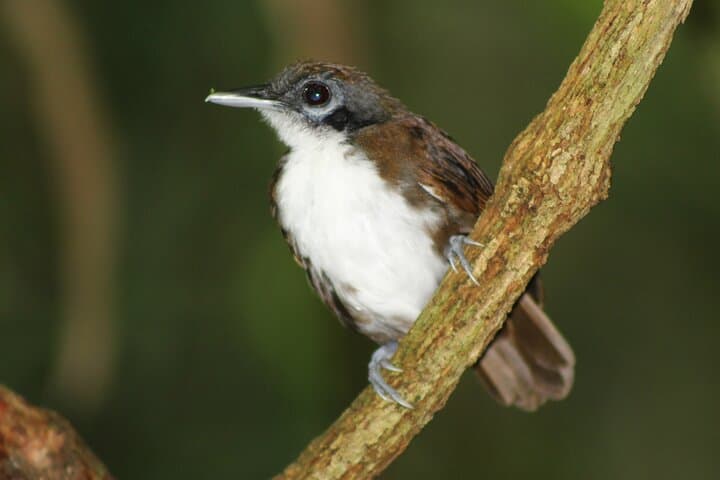
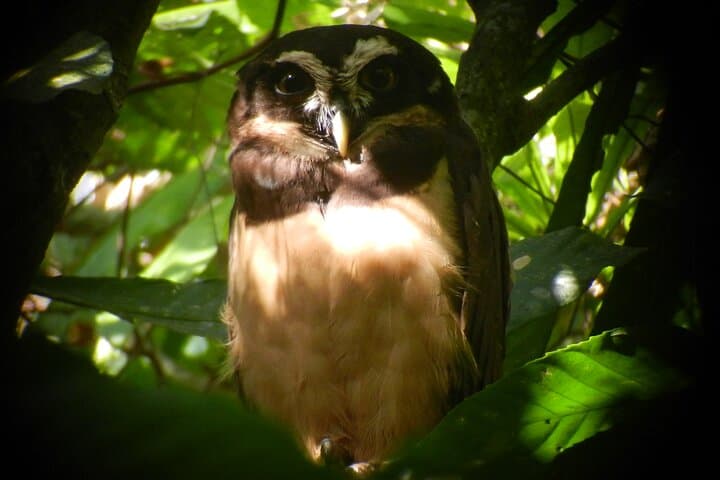
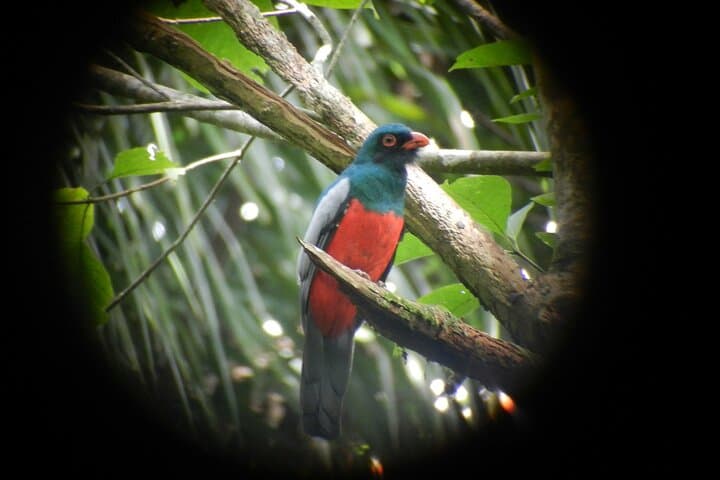
Expect toucans, parrots, hummingbirds, woodpeckers, woodcreepers and ant-following species like Bicolored, Ocellated and Spotted Antbirds; over 400 species have been recorded in the corridor.
Yes—the Panama Rainforest Discovery Center has a 35 m observation tower included on many itineraries for high-canopy and raptor viewing; expect a brief climb.
Some tours stop for lunch at an optional restaurant; participants typically pay for their own meals—always carry water and snacks for the walk.
Pipeline Road follows the Camino del Oleoducto—an access route created alongside a trans-isthmian oil pipeline—whose existence opened remote forest stretches to birders and researchers in the 20th century.
Soberanía National Park protects critical lowland forest habitat; visitors should stick to trails, avoid feeding wildlife and follow leave-no-trace guidelines to minimize impact.
Guided Bird Tours operates guided outdoor trips and adventures with an emphasis on safety, stewardship, and memorable experiences.
Dawn settles over the lowland rainforest and the dirt ribbon of Camino del Oleoducto—Pipeline Road—glows with the first flashes of bird activity. Early light slices through the canopy and toucans call like punctuation marks; guides scan the branches while binoculars lift in unison. The road itself is long and patient, running roughly 17 km along an old pipeline right-of-way and giving access to canopy, understory and wet side trails.
Dawn settles over the lowland rainforest and the dirt ribbon of Camino del Oleoducto—Pipeline Road—glows with the first flashes of bird activity. Early light slices through the canopy and toucans call like punctuation marks; guides scan the branches while binoculars lift in unison. The road itself is long and patient, running roughly 17 km along an old pipeline right-of-way and giving access to canopy, understory and wet side trails.
The corridor sits inside Soberanía National Park, a remnant of Panama’s tropical lowland forest shaped by river terraces and human infrastructure: the road traces an oil-pipeline route constructed in the 20th century that unintentionally created one of the continent’s most productive birding lanes. Geology here is low-elevation, flat to gently rolling, with clay and leaf-litter surfaces that become sticky when it rains. The area is culturally tied to nearby Gamboa and the Caribbean port of Colón, and the Panama Rainforest Discovery Center—complete with a 35 m tower—offers a high vantage for canopy species and raptors.
Practical guidance: go at first light when mixed-species flocks and army-ant swarms are most active, and expect 5–6 hours out with minimal elevation gain (under 100 m) but uneven, sometimes muddy footing. Bring binoculars or a spotting scope, layered lightweight clothing, insect repellent and a rain poncho. Follow your guide’s pace—quiet movement and patience are what turn the long walk into a parade of tanagers, woodcreepers, antbirds and parrots.