THE ADVENTURE COLLECTIVE® · Independent discovery and booking for outdoor travel

Explore the Ria de Aveiro on a focused 3-hour birding walk through salt pans and tidal channels. A local guide points out waders, seasonal flamingos and the estuary’s cultural history while keeping the route short and accessible.
Explore the Ria de Aveiro on a focused 3-hour birding walk through salt pans and tidal channels. A local guide points out waders, seasonal flamingos and the estuary’s cultural history while keeping the route short and accessible.
Salt-scented wind and a horizon of shallow lagoons open as you step onto the Ria de Aveiro salt pans. The guide leads a compact group along flat, looped paths no longer than 4 km, binoculars scanning the mudflats where avocets and sandpipers feed and, seasonally, flamboyant greater flamingos preen in the shallows.
Verified experiences and guided adventures in the surrounding area.
Operated by Go Joel Portugal · Aveiro, Aveiro District
Salt-scented wind and a horizon of shallow lagoons open as you step onto the Ria de Aveiro salt pans. The guide leads a compact group along flat, looped paths no longer than 4 km, binoculars scanning the mudflats where avocets and sandpipers feed and, seasonally, flamboyant greater flamingos preen in the shallows.
Aveiro’s estuary is a young coastal lagoon carved by post-glacial sea-level shifts; its salt pans and channels reflect a history of salt extraction and fishing that shaped local livelihoods. You'll hear about moliceiro boats, the region’s distinctive wooden skiffs once used to harvest seaweed, and how tidal channels create feeding grounds for wading birds. Shoreline dune geology and freshwater inflows produce a patchwork of salinity that attracts different species through the year, giving the guide natural focal points for sightings.
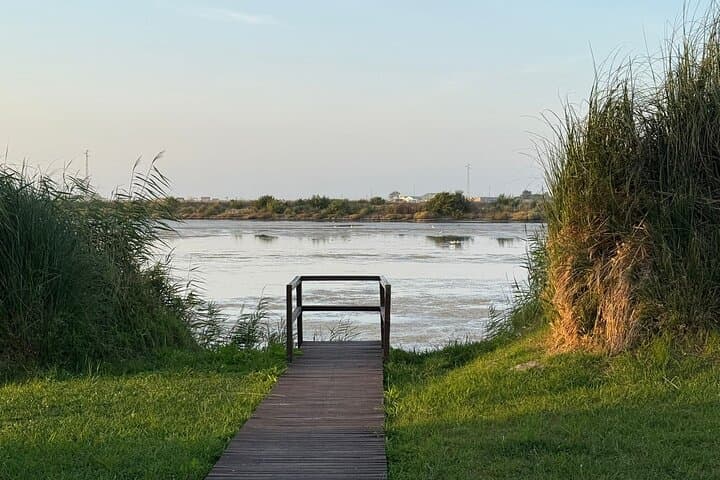
This is a practical, low-elevation walk: expect flat boardwalks, compacted service tracks, and occasional soft sand or mud patches at the water’s edge. The guide times stops for the best light and bird activity—early morning or late afternoon are prime. Bring a scope or close-focusing binoculars; telephoto lenses pick out distant plumage. Dress in layers, wear waterproof footwear, and use muted colors to avoid disturbing birds.
By the end of the three-hour loop you’ll understand why Aveiro’s lagoon is essential to Portugal’s coastal ecology—and how local salt-working and fishing traditions still thread through daily life. Plan for tides, sun, and mosquitos in warmer months; the tour is private and suitable for most walkers who can handle a few kilometers of flat terrain.
easy.
2–3 hours.
Suitable for most fitness levels; walkers should be comfortable with up to 4 km on flat but uneven surfaces
Flamingos are most commonly seen from July through October when they visit the shallow lagoons—sightings vary with water levels and food availability.
The tour is relatively short and flat; some sections are stroller-friendly but soft sand or boardwalk gaps may require carrying a stroller briefly.
Tours typically meet in central Aveiro near the estuary promenade; the city is well-served by regional buses and a train station with easy transfers.
Service animals are allowed; pets may be permitted but check with the guide in advance to avoid disturbing wildlife.
Aveiro’s lagoon supported traditional salt extraction and moliceiro seaweed harvesting for centuries; those activities shaped channels and local place names.
The Ria de Aveiro is protected as part of regional conservation efforts; visitors are asked to stay on paths, avoid disturbing nesting or feeding birds, and follow guide instructions to minimize impact.
Go Joel Portugal operates guided outdoor trips and adventures with an emphasis on safety, stewardship, and memorable experiences.
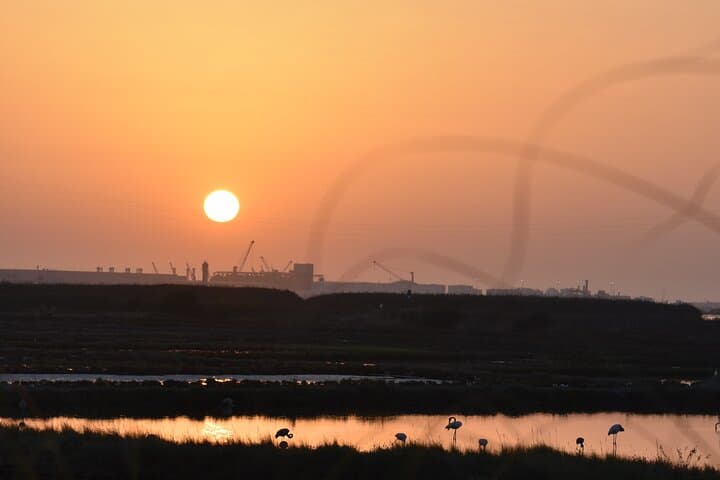
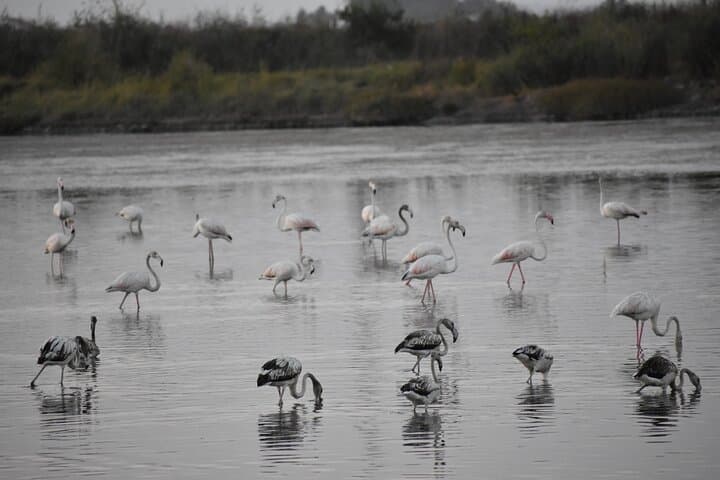
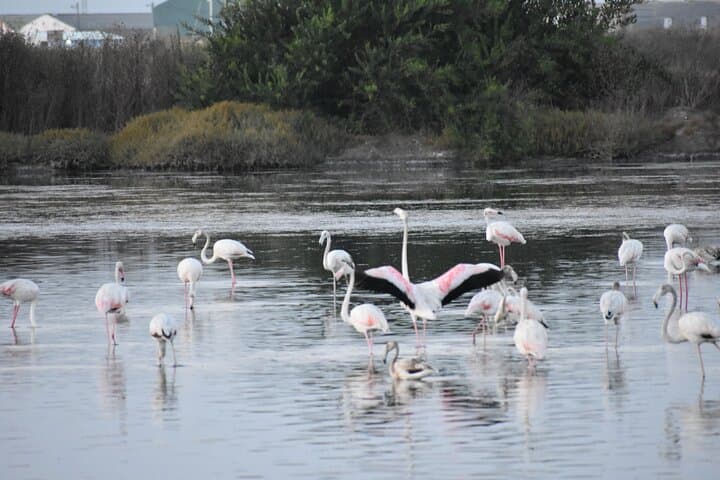
Salt-scented wind and a horizon of shallow lagoons open as you step onto the Ria de Aveiro salt pans. The guide leads a compact group along flat, looped paths no longer than 4 km, binoculars scanning the mudflats where avocets and sandpipers feed and, seasonally, flamboyant greater flamingos preen in the shallows.
Salt-scented wind and a horizon of shallow lagoons open as you step onto the Ria de Aveiro salt pans. The guide leads a compact group along flat, looped paths no longer than 4 km, binoculars scanning the mudflats where avocets and sandpipers feed and, seasonally, flamboyant greater flamingos preen in the shallows.
Aveiro’s estuary is a young coastal lagoon carved by post-glacial sea-level shifts; its salt pans and channels reflect a history of salt extraction and fishing that shaped local livelihoods. You'll hear about moliceiro boats, the region’s distinctive wooden skiffs once used to harvest seaweed, and how tidal channels create feeding grounds for wading birds. Shoreline dune geology and freshwater inflows produce a patchwork of salinity that attracts different species through the year, giving the guide natural focal points for sightings.
This is a practical, low-elevation walk: expect flat boardwalks, compacted service tracks, and occasional soft sand or mud patches at the water’s edge. The guide times stops for the best light and bird activity—early morning or late afternoon are prime. Bring a scope or close-focusing binoculars; telephoto lenses pick out distant plumage. Dress in layers, wear waterproof footwear, and use muted colors to avoid disturbing birds.
By the end of the three-hour loop you’ll understand why Aveiro’s lagoon is essential to Portugal’s coastal ecology—and how local salt-working and fishing traditions still thread through daily life. Plan for tides, sun, and mosquitos in warmer months; the tour is private and suitable for most walkers who can handle a few kilometers of flat terrain.