THE ADVENTURE COLLECTIVE® · Independent discovery and booking for outdoor travel

Rise before dawn and follow forested trails up Doi Inthanon, where mixed flocks and rare hill-endemics concentrate below Thailand’s summit. This one-day birding outing pairs short hikes with expert spotting at multiple elevations—ideal for nature lovers with minimal experience.
Rise before dawn and follow forested trails up Doi Inthanon, where mixed flocks and rare hill-endemics concentrate below Thailand’s summit. This one-day birding outing pairs short hikes with expert spotting at multiple elevations—ideal for nature lovers with minimal experience.
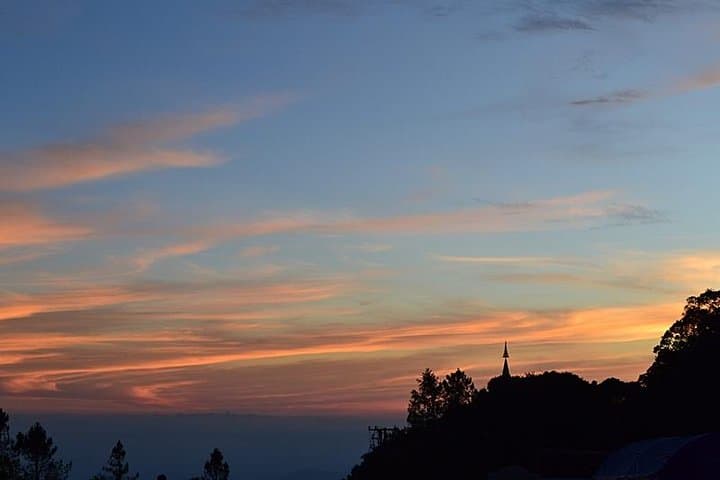
05:30. The van pulls away from Chiang Mai while the sky is still blue-gray; by the time you reach the park entrance the air is thinner and cooler, and the mountain seems to be calling birds into the light. Trails climb through moss-draped forests and bamboo stands, opening periodically onto ridgelines where flocks flit across the canopy and calls—sharp, lyrical, and foreign—fill the air.
Verified experiences and guided adventures in the surrounding area.
Operated by GoWithJoe · Chiang Mai, Chiang Mai Province
05:30. The van pulls away from Chiang Mai while the sky is still blue-gray; by the time you reach the park entrance the air is thinner and cooler, and the mountain seems to be calling birds into the light. Trails climb through moss-draped forests and bamboo stands, opening periodically onto ridgelines where flocks flit across the canopy and calls—sharp, lyrical, and foreign—fill the air.
Doi Inthanon is the roof of Thailand, formed by uplifted granite that supports distinct elevational belts from evergreen broadleaf to montane cloud forest. The region’s elevation and varied microclimates concentrate bird species; residents and migratory visitors gather here in greater densities than most lowland sites. Local Karen and Lahu village cultures have long used the highlands for upland agriculture and forest stewardship, and the national park was established to protect both biodiversity and watershed values.
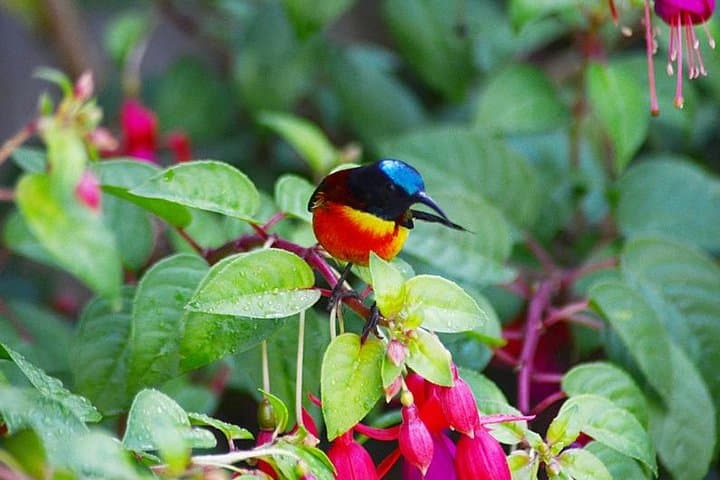
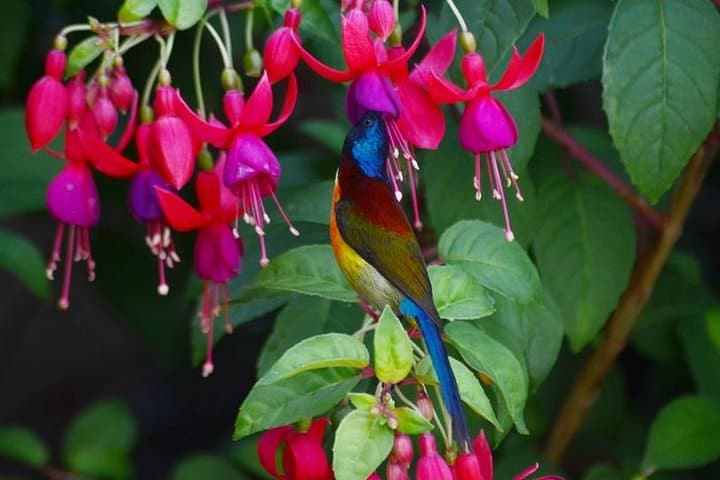
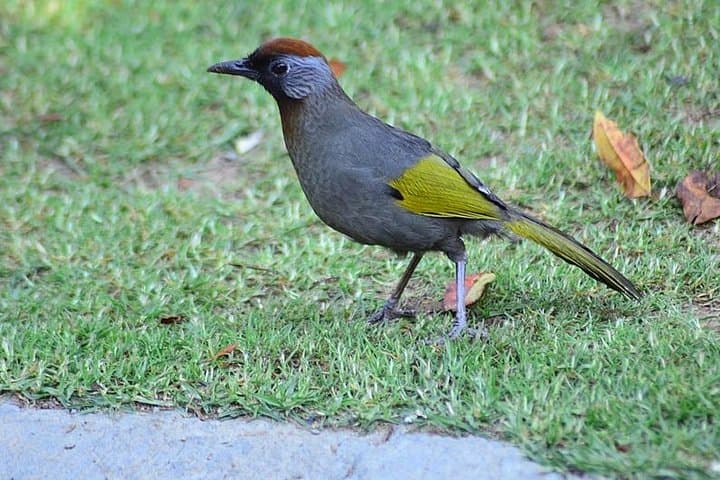
Expect a mix of forest edge and short nature trails at multiple viewing stops between mid-mountain and the summit. Typical sightings include silver-eared laughingthrush, Green-tailed Sunbird, small niltava and various fulvettas and minivets; a good guide will point calls and subtle field marks.
Practically: start very early for the best activity, dress in layers (it can be cold at the summit), bring a good pair of binoculars and a field guide or app, and plan on a full-day outing with breakfast and lunch provided. Small-group tours limit disturbance and improve sightings; cameras with telephoto lenses and steady tripods or monopods help turn fleeting views into keepsakes.
easy.
8–9 hours.
Suitable for most fitness levels—short walks on forest trails with limited elevation change per stop; comfortable walking for up to a few hours interspersed with vehicle transfers.
No—guides accommodate beginners and point out vocalizations and key field marks; curiosity and patience are enough.
Pick-up is typically before dawn (around 05:30) with a full-day schedule returning mid-afternoon—plan for roughly 8–9 hours.
According to the itinerary, park fees and lunch are included along with breakfast and private transport; confirm on booking.
Short nature trails are accessible for many, but the tour is not recommended for those with serious spinal or cardiovascular issues—check specific inclusion notes before booking.
Doi Inthanon’s park was established to protect upland forests and critical watersheds; indigenous Karen and Lahu communities have long inhabited the surrounding landscapes.
Visitor pressure is managed by designated trails and small-group limits; follow leave-no-trace practices and avoid feeding wildlife to reduce human impact.
GoWithJoe operates guided outdoor trips and adventures with an emphasis on safety, stewardship, and memorable experiences.
05:30. The van pulls away from Chiang Mai while the sky is still blue-gray; by the time you reach the park entrance the air is thinner and cooler, and the mountain seems to be calling birds into the light. Trails climb through moss-draped forests and bamboo stands, opening periodically onto ridgelines where flocks flit across the canopy and calls—sharp, lyrical, and foreign—fill the air.
05:30. The van pulls away from Chiang Mai while the sky is still blue-gray; by the time you reach the park entrance the air is thinner and cooler, and the mountain seems to be calling birds into the light. Trails climb through moss-draped forests and bamboo stands, opening periodically onto ridgelines where flocks flit across the canopy and calls—sharp, lyrical, and foreign—fill the air.
Doi Inthanon is the roof of Thailand, formed by uplifted granite that supports distinct elevational belts from evergreen broadleaf to montane cloud forest. The region’s elevation and varied microclimates concentrate bird species; residents and migratory visitors gather here in greater densities than most lowland sites. Local Karen and Lahu village cultures have long used the highlands for upland agriculture and forest stewardship, and the national park was established to protect both biodiversity and watershed values.
Expect a mix of forest edge and short nature trails at multiple viewing stops between mid-mountain and the summit. Typical sightings include silver-eared laughingthrush, Green-tailed Sunbird, small niltava and various fulvettas and minivets; a good guide will point calls and subtle field marks.
Practically: start very early for the best activity, dress in layers (it can be cold at the summit), bring a good pair of binoculars and a field guide or app, and plan on a full-day outing with breakfast and lunch provided. Small-group tours limit disturbance and improve sightings; cameras with telephoto lenses and steady tripods or monopods help turn fleeting views into keepsakes.