THE ADVENTURE COLLECTIVE® · Independent discovery and booking for outdoor travel

Walk boardwalks beneath macaws and toucans at Bird Park, a conservation-focused reserve at the entrance to Iguaçu Falls. This three-hour tour combines close wildlife encounters with accessible paths and on-site conservation programs.
Walk boardwalks beneath macaws and toucans at Bird Park, a conservation-focused reserve at the entrance to Iguaçu Falls. This three-hour tour combines close wildlife encounters with accessible paths and on-site conservation programs.
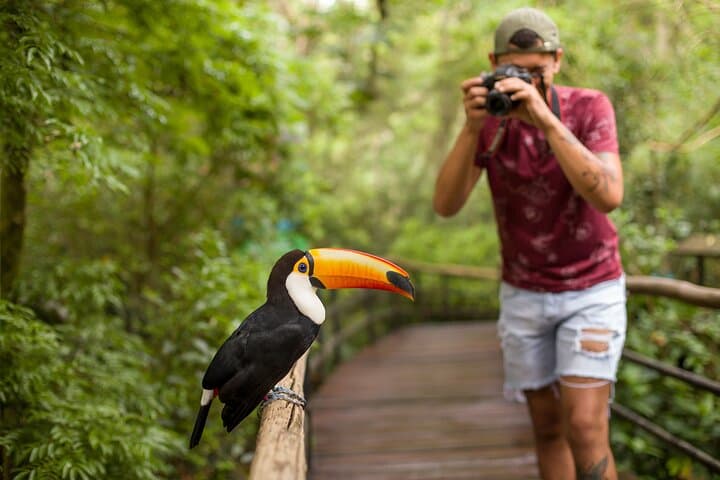
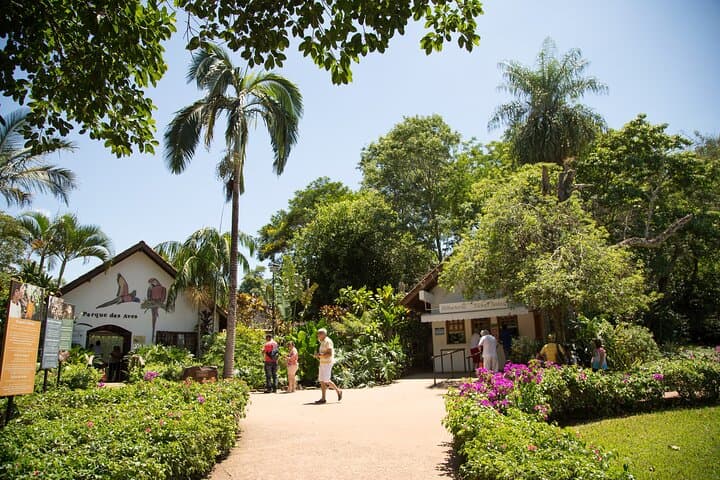
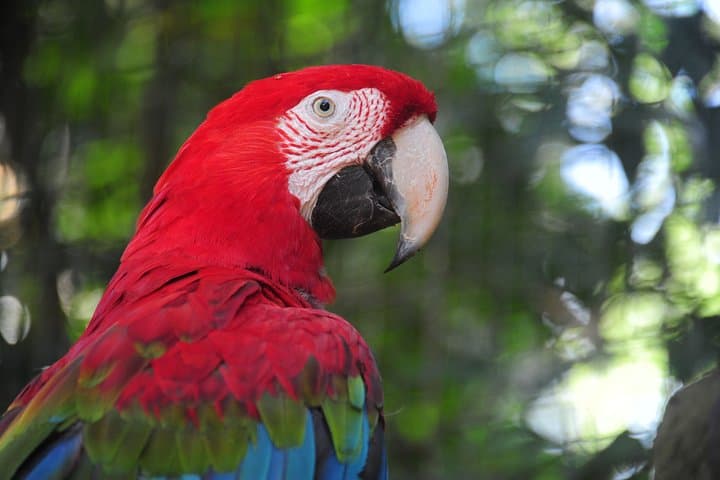
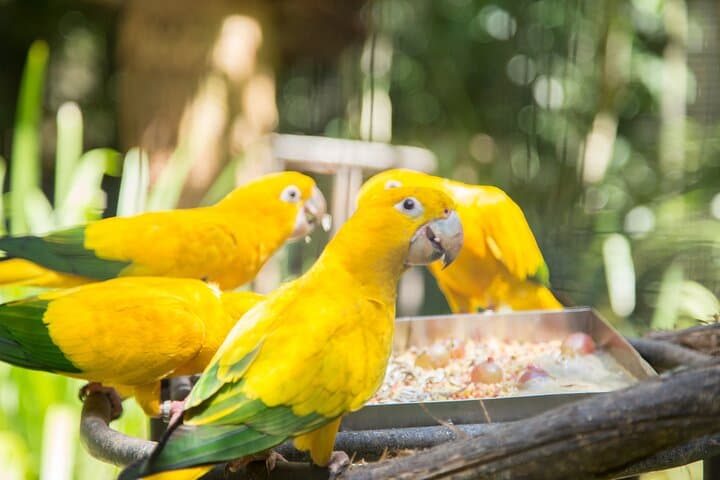
Damp air lifts the scent of wet earth as wings brush past—flashes of macaw red, the brief silhouette of a toucan against dense green. Bird Park sits at the entrance to Iguaçu Falls, a compact conservation reserve where boardwalks thread through aviaries and riverine vegetation, bringing you into immediate contact with species of the Atlantic Forest.
Verified experiences and guided adventures in the surrounding area.
Operated by Tangol · Foz do Iguaçu, Paraná
Damp air lifts the scent of wet earth as wings brush past—flashes of macaw red, the brief silhouette of a toucan against dense green. Bird Park sits at the entrance to Iguaçu Falls, a compact conservation reserve where boardwalks thread through aviaries and riverine vegetation, bringing you into immediate contact with species of the Atlantic Forest.
The park was created as part of a regional effort to protect and rehabilitate birds displaced by habitat loss. Geologically, the site sits on the basalt plateaus sculpted by the Iguaçu River; the humid microclimate supports mangrove and riverside species that differ from the nearby waterfalls’ spray zone. Culturally, the park ties local ecotourism to conservation: ticket revenue funds breeding programs for macaws and rescue work for raptors like the harpy eagle.
Expect about three hours on mostly flat, well-maintained paths and boardwalks—gentle slopes rather than steep trails—so the visit is accessible for most fitness levels. Highlights include the Tree of Life exhibit, the Flamingo corner, the butterfly house and the harpy eagle enclosure; look for caimans and boas from secure viewpoints.
Practical guidance: go early to avoid mid-day heat and afternoon rains, bring a lightweight rain layer and insect repellent, and carry binoculars for better viewing. Photography is allowed but respect signage around enclosures and the feeding windows. Transfers from Foz do Iguaçu are commonly offered; the 3-hour format makes the park an ideal half-day outing paired with Iguazu Falls visits.
easy.
2–3 hours.
Light walking on paved paths and boardwalks; suitable for most fitness levels and families
The standard tour lasts about three hours—enough time to see the main exhibits, bird shows and the butterfly house.
Yes—paths, transport options and most viewing areas are wheelchair accessible, and the tour is suitable for all fitness levels.
Transfers are often included depending on the option you select; check your booking confirmation for pickup details.
No—feeding and touching are prohibited to protect animal health and the park’s rehabilitation programs.
Parque das Aves was established to protect and rehabilitate species of the Atlantic Forest and to connect visitors to regional conservation efforts tied to Iguaçu Falls tourism.
The park runs breeding, rescue and rehabilitation programs funded by admissions; visitors are encouraged to follow rules that minimize stress on animals and support long-term habitat protection.
Tangol operates guided outdoor trips and adventures with an emphasis on safety, stewardship, and memorable experiences.
Damp air lifts the scent of wet earth as wings brush past—flashes of macaw red, the brief silhouette of a toucan against dense green. Bird Park sits at the entrance to Iguaçu Falls, a compact conservation reserve where boardwalks thread through aviaries and riverine vegetation, bringing you into immediate contact with species of the Atlantic Forest.
Damp air lifts the scent of wet earth as wings brush past—flashes of macaw red, the brief silhouette of a toucan against dense green. Bird Park sits at the entrance to Iguaçu Falls, a compact conservation reserve where boardwalks thread through aviaries and riverine vegetation, bringing you into immediate contact with species of the Atlantic Forest.
The park was created as part of a regional effort to protect and rehabilitate birds displaced by habitat loss. Geologically, the site sits on the basalt plateaus sculpted by the Iguaçu River; the humid microclimate supports mangrove and riverside species that differ from the nearby waterfalls’ spray zone. Culturally, the park ties local ecotourism to conservation: ticket revenue funds breeding programs for macaws and rescue work for raptors like the harpy eagle.
Expect about three hours on mostly flat, well-maintained paths and boardwalks—gentle slopes rather than steep trails—so the visit is accessible for most fitness levels. Highlights include the Tree of Life exhibit, the Flamingo corner, the butterfly house and the harpy eagle enclosure; look for caimans and boas from secure viewpoints.
Practical guidance: go early to avoid mid-day heat and afternoon rains, bring a lightweight rain layer and insect repellent, and carry binoculars for better viewing. Photography is allowed but respect signage around enclosures and the feeding windows. Transfers from Foz do Iguaçu are commonly offered; the 3-hour format makes the park an ideal half-day outing paired with Iguazu Falls visits.