THE ADVENTURE COLLECTIVE® · Independent discovery and booking for outdoor travel

Paddle Griffin Bay at sunset, watch harbor seals and roosting birds, then sit in the dark as bioluminescent plankton light up around your kayak. This guided three-hour night tour emphasizes safety and low light for the best viewing experience.
Paddle Griffin Bay at sunset, watch harbor seals and roosting birds, then sit in the dark as bioluminescent plankton light up around your kayak. This guided three-hour night tour emphasizes safety and low light for the best viewing experience.
The first strokes cut the surface as the sun drops behind San Juan Island, and Griffin Bay begins to darken around you. Paddle tips whisper through glassy water while gulls settle on nearby rocks and harbor seals inspect the passing shapes. As night deepens, the bay itself starts to move — every paddle stroke and fish flash wakes tiny lights in the water, like a second constellation beneath your hull.
Verified experiences and guided adventures in the surrounding area.
Operated by Outdoor Odysseys · Friday Harbor, Washington
The first strokes cut the surface as the sun drops behind San Juan Island, and Griffin Bay begins to darken around you. Paddle tips whisper through glassy water while gulls settle on nearby rocks and harbor seals inspect the passing shapes. As night deepens, the bay itself starts to move — every paddle stroke and fish flash wakes tiny lights in the water, like a second constellation beneath your hull.
Geology here is coastal glacial sculpting: rounded bedrock, shallow coves and tidal flats that feed productive waters of the Salish Sea. Culturally the islands are within Coast Salish territory; Friday Harbor grew as a maritime hub in the 19th century and still centers small-boat life. Bioluminescence in these waters comes from microscopic plankton and occasional comb jellies; conditions are best around new moons and calm nights with little artificial light.
Practically, expect a sunset launch, calm sheltered paddling in kayaks with provided gear, and a three-hour window to watch the light show. Guides place safety first — flotation, dry bags and headlamps are standard — and point out seals, roosting birds and the slow pulse of bioluminescent cells when disturbed.
Plan for cool, layered clothing, waterproof footwear, and a small dry bag for essentials. Avoid bright lights and sudden movements to maximize visibility of the organisms. If you’re hoping for the brightest displays, schedule around new-moon dates and check weather; wind and boat traffic reduce visibility. This is a low-impact, sensory night paddle that feels both intimate and elemental: the sea offering its own flicker of life under a widening sky.
easy.
2–3 hours.
Light aerobic fitness; you should be able to paddle a recreational kayak for short intervals and sit/brace for up to three hours.
Visibility depends on moon phase, wind and water conditions; new moons and calm nights provide the best chance, and guides schedule trips around favorable dates when possible.
No — tours are suitable for beginners; guides provide basic paddling instruction and use stable recreational kayaks.
Trips may be canceled for high winds, heavy rain or unsafe conditions with full refunds available if canceled 24+ hours before departure per the operator's policy.
Tours are family-friendly but not recommended for people with serious heart conditions; guests supply age and health details during booking and guides carry safety gear and flotation devices.
San Juan Island sits within Coast Salish homeland and later developed as a maritime and fishing center in the 19th century; the islands' small ports retain that nautical character.
Tours emphasize low-light practices and minimal disturbance; avoid flash photography and follow guides' instructions to reduce impact on wildlife and fragile plankton displays.
Outdoor Odysseys operates guided outdoor trips and adventures with an emphasis on safety, stewardship, and memorable experiences.
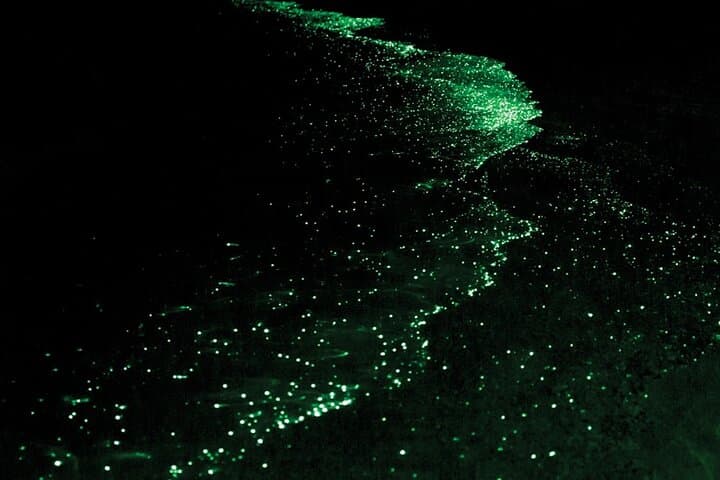
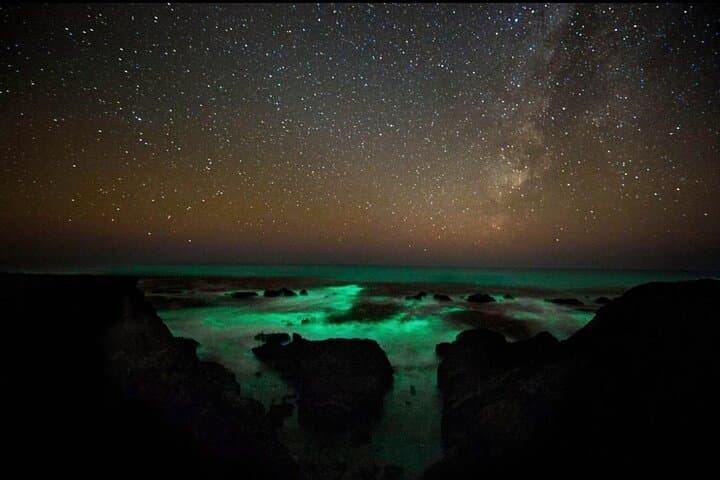
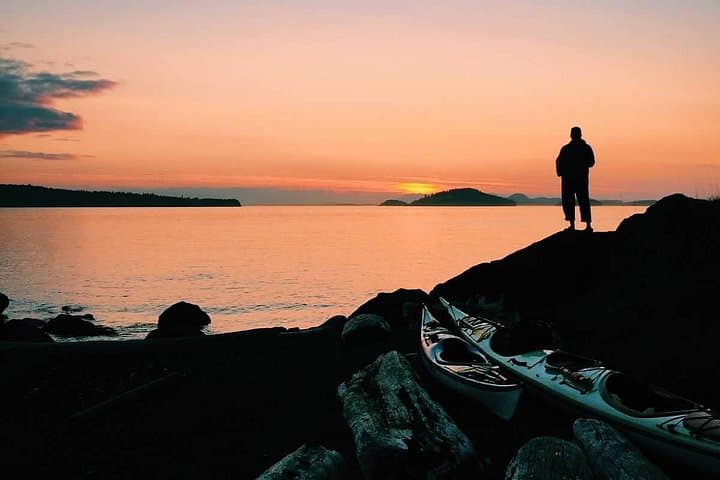
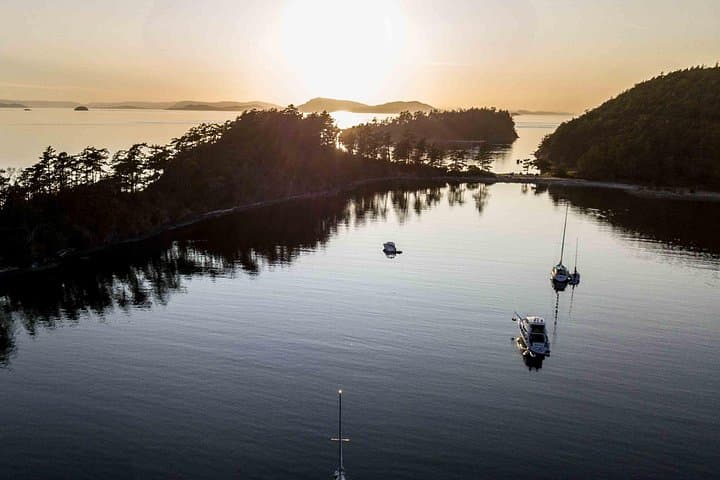
The first strokes cut the surface as the sun drops behind San Juan Island, and Griffin Bay begins to darken around you. Paddle tips whisper through glassy water while gulls settle on nearby rocks and harbor seals inspect the passing shapes. As night deepens, the bay itself starts to move — every paddle stroke and fish flash wakes tiny lights in the water, like a second constellation beneath your hull.
The first strokes cut the surface as the sun drops behind San Juan Island, and Griffin Bay begins to darken around you. Paddle tips whisper through glassy water while gulls settle on nearby rocks and harbor seals inspect the passing shapes. As night deepens, the bay itself starts to move — every paddle stroke and fish flash wakes tiny lights in the water, like a second constellation beneath your hull.
Geology here is coastal glacial sculpting: rounded bedrock, shallow coves and tidal flats that feed productive waters of the Salish Sea. Culturally the islands are within Coast Salish territory; Friday Harbor grew as a maritime hub in the 19th century and still centers small-boat life. Bioluminescence in these waters comes from microscopic plankton and occasional comb jellies; conditions are best around new moons and calm nights with little artificial light.
Practically, expect a sunset launch, calm sheltered paddling in kayaks with provided gear, and a three-hour window to watch the light show. Guides place safety first — flotation, dry bags and headlamps are standard — and point out seals, roosting birds and the slow pulse of bioluminescent cells when disturbed.
Plan for cool, layered clothing, waterproof footwear, and a small dry bag for essentials. Avoid bright lights and sudden movements to maximize visibility of the organisms. If you’re hoping for the brightest displays, schedule around new-moon dates and check weather; wind and boat traffic reduce visibility. This is a low-impact, sensory night paddle that feels both intimate and elemental: the sea offering its own flicker of life under a widening sky.