THE ADVENTURE COLLECTIVE® · Independent discovery and booking for outdoor travel

Cycle from Hoi An’s old town into working craft villages where you’ll mold pottery, press rice paper and weave reed mats. This five-hour tour combines easy cycling with hands-on workshops and a boat return across the river.
Cycle from Hoi An’s old town into working craft villages where you’ll mold pottery, press rice paper and weave reed mats. This five-hour tour combines easy cycling with hands-on workshops and a boat return across the river.
You push off from the old town at 8:00, the river at your right nudging the panorama forward as lantern-strewn roofs recede. The air smells of wet clay and frying rice; cyclists wheel past chili gardens and rice paddies while water buffalo lift slow heads from the mud. By the time the pottery kiln appears, hands are already dusted with orange earth.
Verified experiences and guided adventures in the surrounding area.
Operated by Sun Hoi An Tours · Hoi An, Quang Nam
You push off from the old town at 8:00, the river at your right nudging the panorama forward as lantern-strewn roofs recede. The air smells of wet clay and frying rice; cyclists wheel past chili gardens and rice paddies while water buffalo lift slow heads from the mud. By the time the pottery kiln appears, hands are already dusted with orange earth.
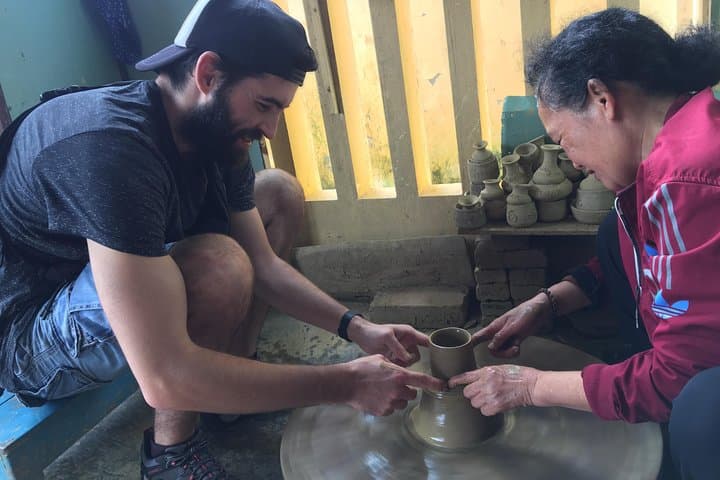
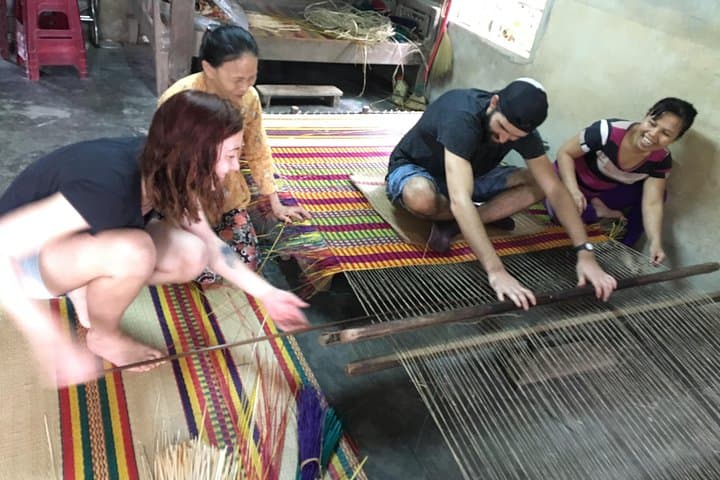
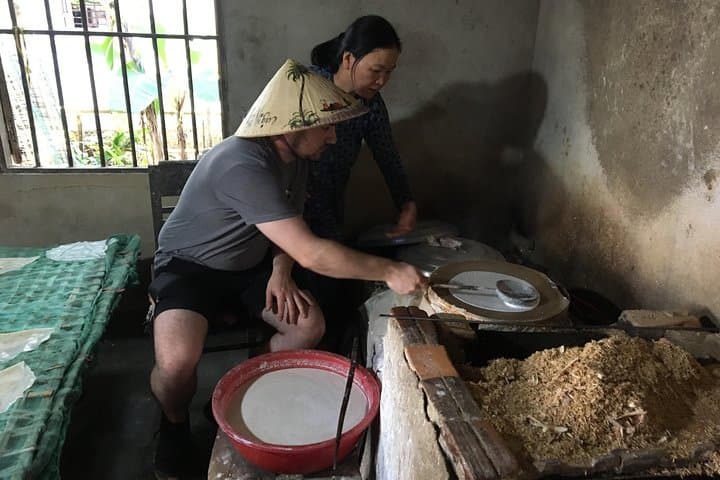
This route threads through Thanh Ha pottery village, reed mat workshops and small family-run noodle yards—each stop a lesson in craft continuity stretching back centuries. Hoi An’s lowland geology of alluvial plains feeds the rice fields and supplies the fine clays used in local ceramics. The cultural rhythm is hands-on: you’ll throw clay, press rice paper and test reed-weaving under the same sun that once guided Cham and Vietnamese traders through these waters.
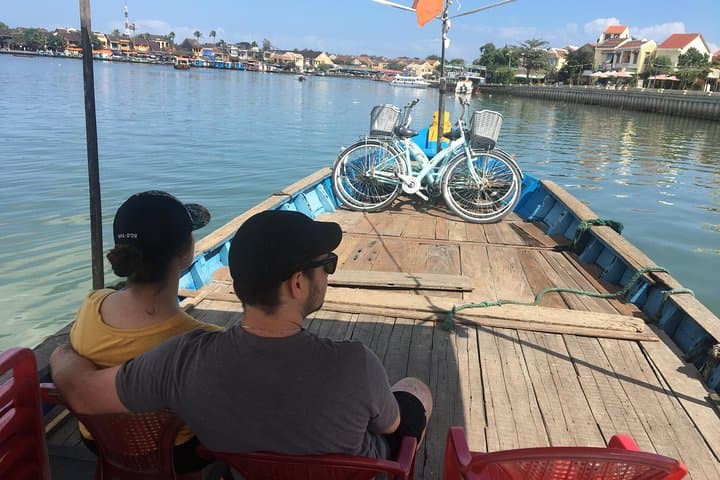
Expect short, flat sections of paved village roads and a couple of dirt lanes; the final return by boat across a calm tributary is a practical, scenic shortcut that speaks to the town’s riverborne history. Guides share context on wartime sites, traditional carpentry and daily life—useful for interpreting what you see.
Practical guidance: bring a lightweight jacket for river breezes, closed-toe shoes for workshop stops, and a small, lockable pouch for valuables while you try crafts. Hydrate before and during the 5-hour outing; helmet use is standard. Plan for morning starts to avoid peak heat and to catch the villages at their busiest—and most instructive—moments.
easy.
5 hours.
Suitable for most fitness levels—regular walkers or casual cyclists will be comfortable.
No—this tour is geared to casual cyclists; the route is mostly flat with short, manageable dirt stretches.
Stops are hands-on: you'll try pottery throwing, rice paper pressing and reed mat weaving with instructor guidance.
Yes for school-age children; infants must sit on laps as noted and the operator limits group size for safety.
Tours can be canceled for bad weather; light rain usually means carrying on with waterproofs and shortened outdoor stops.
Hoi An was a major trading port from the 15th–19th centuries; craft villages grew to supply local and maritime markets with ceramics, carpentry and foodstuffs.
Villages rely on river health and sustainable clay extraction—stick to established paths, avoid littering, and support families by buying authentic crafts.
Sun Hoi An Tours operates guided outdoor trips and adventures with an emphasis on safety, stewardship, and memorable experiences.
You push off from the old town at 8:00, the river at your right nudging the panorama forward as lantern-strewn roofs recede. The air smells of wet clay and frying rice; cyclists wheel past chili gardens and rice paddies while water buffalo lift slow heads from the mud. By the time the pottery kiln appears, hands are already dusted with orange earth.
You push off from the old town at 8:00, the river at your right nudging the panorama forward as lantern-strewn roofs recede. The air smells of wet clay and frying rice; cyclists wheel past chili gardens and rice paddies while water buffalo lift slow heads from the mud. By the time the pottery kiln appears, hands are already dusted with orange earth.
This route threads through Thanh Ha pottery village, reed mat workshops and small family-run noodle yards—each stop a lesson in craft continuity stretching back centuries. Hoi An’s lowland geology of alluvial plains feeds the rice fields and supplies the fine clays used in local ceramics. The cultural rhythm is hands-on: you’ll throw clay, press rice paper and test reed-weaving under the same sun that once guided Cham and Vietnamese traders through these waters.
Expect short, flat sections of paved village roads and a couple of dirt lanes; the final return by boat across a calm tributary is a practical, scenic shortcut that speaks to the town’s riverborne history. Guides share context on wartime sites, traditional carpentry and daily life—useful for interpreting what you see.
Practical guidance: bring a lightweight jacket for river breezes, closed-toe shoes for workshop stops, and a small, lockable pouch for valuables while you try crafts. Hydrate before and during the 5-hour outing; helmet use is standard. Plan for morning starts to avoid peak heat and to catch the villages at their busiest—and most instructive—moments.