THE ADVENTURE COLLECTIVE® · Independent discovery and booking for outdoor travel

Pedal from the hilltop drama of Chapultepec Castle through shaded park roads to the Cárcamo de Dolores, where Diego Rivera’s mural and waterworks reward a short, urban forest ride. A 3–4 hour mix of history, art, and city cycling.
Pedal from the hilltop drama of Chapultepec Castle through shaded park roads to the Cárcamo de Dolores, where Diego Rivera’s mural and waterworks reward a short, urban forest ride. A 3–4 hour mix of history, art, and city cycling.
From the stone terrace at Chapultepec Castle you can feel the city spread out below: traffic hums like distant tide, and the forested slopes push you back toward the park. This tour opens on foot with castle views and history — imperial rooms, Republic-era additions, and the story of the Niños Héroes — then swaps soles for pedals to thread quieter paths through Bosque de Chapultepec.
Verified experiences and guided adventures in the surrounding area.
From the stone terrace at Chapultepec Castle you can feel the city spread out below: traffic hums like distant tide, and the forested slopes push you back toward the park. This tour opens on foot with castle views and history — imperial rooms, Republic-era additions, and the story of the Niños Héroes — then swaps soles for pedals to thread quieter paths through Bosque de Chapultepec.
The route follows paved park roads and bike lanes carved into an ancient volcanic basin. Chapultepec Hill is a green promontory in Mexico City's basin, where 19th-century neoclassical architecture meets modern public spaces. The ride ends at the Cárcamo de Dolores, an industrial-turned-cultural space where Diego Rivera’s mural and a water-engine installation make science and art collide.
Expect roughly 6–10 km of mostly flat to rolling terrain with a short, steeper climb to the castle (≈70–120 m elevation gain). Surfaces are paved but can be busy with walkers and other cyclists — the city’s trees give shade and birds a loud presence as you pass. The Cárcamo rewards the ride: low-slung concrete, murals, and a quiet canal that seems to dare you to linger.
Practical: allow 3–4 hours, bring a helmet and refillable water, and plan for midday crowds. Morning departures are cooler and quieter; afternoons can coincide with local traffic and weekend park visitors. This ride pairs civic history, public art, and urban nature in one compact loop ideal for riders comfortable with urban cycling.
moderate.
3–4 hours.
Moderate fitness: able to ride 6–10 km on mixed urban park terrain with a short steep climb and occasional stop-and-start traffic.
The loop typically covers 6–10 km with a short climb to the castle; plan 3–4 hours including stops. It’s moderate — mostly easy riding with one steeper section.
Tours usually supply bicycles and helmets, but check the vendor details if you prefer your own bike or specific fit.
The Cárcamo de Dolores operates as a cultural space and most tours include timed entry or an external visit; verify access if the interior exhibit is a priority.
Older children and beginners comfortable with short urban bike segments can join, but busy weekends and the castle climb may be challenging for young riders.
Chapultepec has layered history: an Aztec ceremonial hill, later a Spanish colonial retreat, and the site of 19th-century military and presidential use; the castle became a national museum after the Revolution.
Bosque de Chapultepec faces urban pressures — stay on designated paths, pack out trash, and respect signage to protect mature trees and bird habitat.
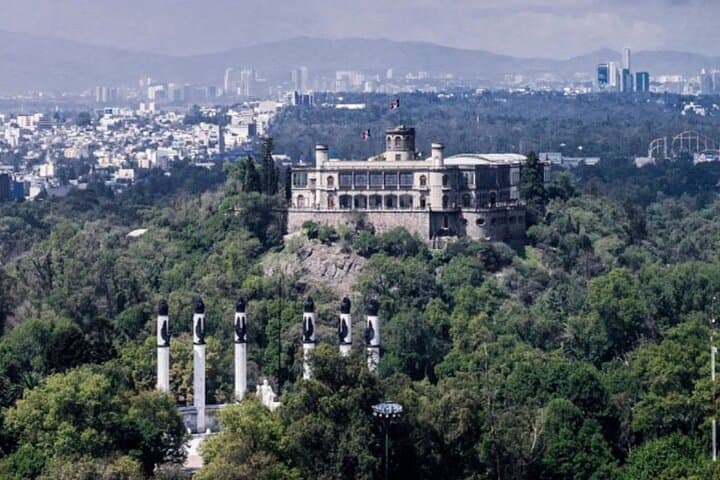
From the stone terrace at Chapultepec Castle you can feel the city spread out below: traffic hums like distant tide, and the forested slopes push you back toward the park. This tour opens on foot with castle views and history — imperial rooms, Republic-era additions, and the story of the Niños Héroes — then swaps soles for pedals to thread quieter paths through Bosque de Chapultepec.
From the stone terrace at Chapultepec Castle you can feel the city spread out below: traffic hums like distant tide, and the forested slopes push you back toward the park. This tour opens on foot with castle views and history — imperial rooms, Republic-era additions, and the story of the Niños Héroes — then swaps soles for pedals to thread quieter paths through Bosque de Chapultepec.
The route follows paved park roads and bike lanes carved into an ancient volcanic basin. Chapultepec Hill is a green promontory in Mexico City's basin, where 19th-century neoclassical architecture meets modern public spaces. The ride ends at the Cárcamo de Dolores, an industrial-turned-cultural space where Diego Rivera’s mural and a water-engine installation make science and art collide.
Expect roughly 6–10 km of mostly flat to rolling terrain with a short, steeper climb to the castle (≈70–120 m elevation gain). Surfaces are paved but can be busy with walkers and other cyclists — the city’s trees give shade and birds a loud presence as you pass. The Cárcamo rewards the ride: low-slung concrete, murals, and a quiet canal that seems to dare you to linger.
Practical: allow 3–4 hours, bring a helmet and refillable water, and plan for midday crowds. Morning departures are cooler and quieter; afternoons can coincide with local traffic and weekend park visitors. This ride pairs civic history, public art, and urban nature in one compact loop ideal for riders comfortable with urban cycling.