THE ADVENTURE COLLECTIVE® · Independent discovery and booking for outdoor travel

Spend four easy hours framing St. John’s — from a 17th‑century plantation and an 18th‑century fort to a wind‑carved sea arch and a calm Caribbean beach. This guided selfie tour balances quick history and local color with photographer‑friendly stops and practical service like selfie sticks and onboard Wi‑Fi.
Spend four easy hours framing St. John’s — from a 17th‑century plantation and an 18th‑century fort to a wind‑carved sea arch and a calm Caribbean beach. This guided selfie tour balances quick history and local color with photographer‑friendly stops and practical service like selfie sticks and onboard Wi‑Fi.
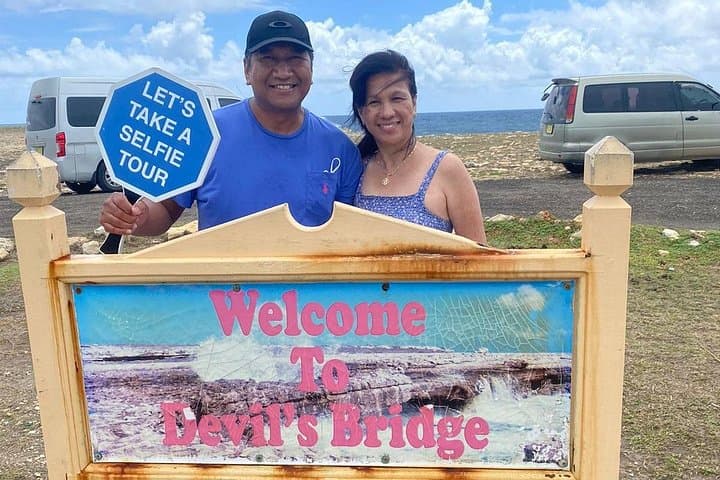
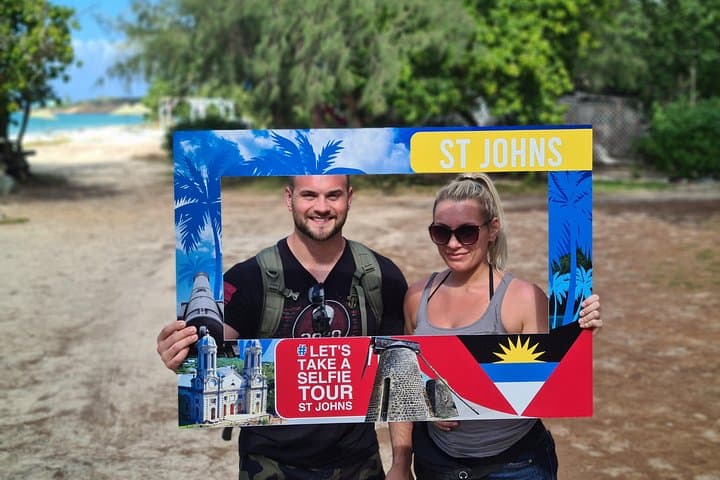
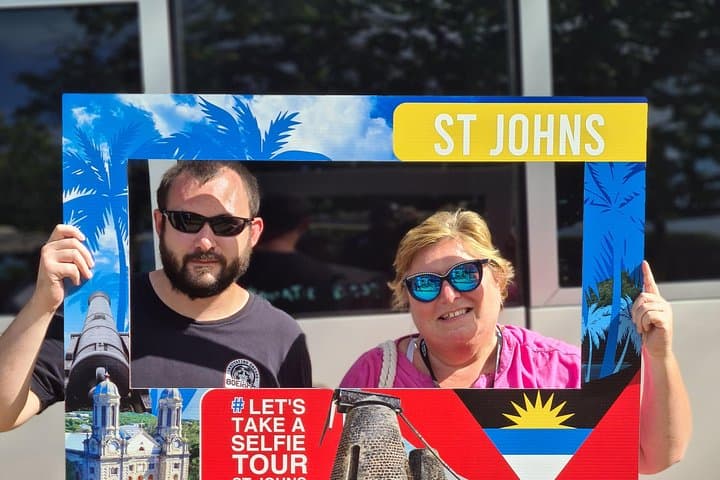
The tour begins where the harbor breathes — salt and diesel drifting together as a small air‑conditioned van pulls up to the dock and a guide raises a sign that says Biggvee. For the next four hours you move like a camera’s eye through St. John's: colonial stone stacked against blue water, a guard fort that still leans into the wind, a natural arch where Atlantic surf keeps score, and a calm crescent of sand where people swim as if invited.
Verified experiences and guided adventures in the surrounding area.
Operated by Biggvee Transportation Services · St. John's, Antigua and Barbuda
The tour begins where the harbor breathes — salt and diesel drifting together as a small air‑conditioned van pulls up to the dock and a guide raises a sign that says Biggvee. For the next four hours you move like a camera’s eye through St. John's: colonial stone stacked against blue water, a guard fort that still leans into the wind, a natural arch where Atlantic surf keeps score, and a calm crescent of sand where people swim as if invited.
Antigua’s capital has a blunt, honest history. Sugar plantations spread inland after the English established control in the 17th century; the itinerary stops at one such estate first, a remnant of the sugar economy that shaped the island’s land use and demographics. The 18th‑century fort overlooks St. John’s harbour and explains why this tiny island mattered to naval powers — geography put Antigua on the map as a coaling and resupply point for ships threading the Caribbean.
Geology is visible in the shoreline: uplifted limestone cliffs and jagged reef edges shaped by centuries of wave hammering. The arch on the east coast is a place where the ocean insists on making art; salt spray and wind continue to carve the rock into new forms. Culturally, St. John's is a pragmatic capital — market stalls, government buildings, and rum shops sit cheek by jowl — and the tour moves through both the postcard and the everyday.
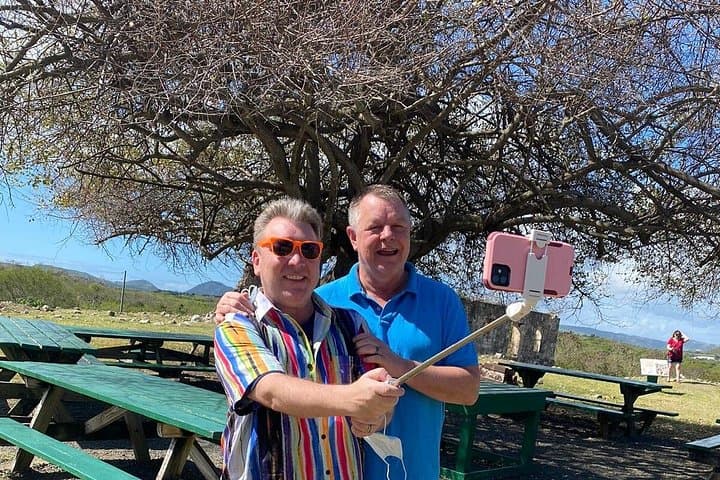
Practically, this is a low‑effort, high‑frame‑count experience. The operator provides selfie sticks, onboard Wi‑Fi, and an air‑conditioned vehicle for transfers between stops, and the pace is set for easy strolling and posed shots, not strenuous hiking. Expect a few hundred meters of walking at each stop across cobbles, sand, and short, stepped viewpoints; total walking distance is roughly 3–5 km with minimal elevation gain.
Plan for sun and reflection: sunscreen, a hat, and sunglasses make long exposure to the equatorial sun tolerable. Carry a fully charged phone with plenty of storage — battery drain is real when you shoot video and use GPS. The tour is family‑friendly and accessible to most fitness levels; infant seats are available on request and pickup is offered from many hotels and the port (be ready 15 minutes before departure).
Timing matters for light and crowds. Early morning softens the harbor’s contrasts and keeps cruise crowds thin; late afternoon offers warm tones on the fort and arch. The guide will help frame shots and suggest angles but bring your own style — this is equal parts local history and personal album. Cancel up to 24 hours in advance for a full refund if plans change.
easy.
4 hours.
Suitable for all fitness levels; minimal walking and low elevation change
The tour lasts approximately four hours with guided stops at a historic estate, natural arch, fort and a beach.
Yes — hotel and port pickup are offered from many locations; be ready 15 minutes before the scheduled departure.
Yes — use of selfie sticks is included in the tour inclusions.
Yes — the tour is family‑friendly; infant seats are available on request and the walking is gentle.
For a full refund cancel at least 24 hours before departure; cancellations within 24 hours are non‑refundable.
Wear comfortable shoes, sun protection, and bring a charged phone or camera plus a power bank and water.
St. John's grew around sugar plantations and an 18th‑century naval fort; remnants of estate houses and fortifications remain part of the port landscape.
Visitors are encouraged to use reef‑safe sunscreen and minimize single‑use plastics; local guides support beach cleanups and respect for fragile coastal geology.
Biggvee Transportation Services operates guided outdoor trips and adventures with an emphasis on safety, stewardship, and memorable experiences.
The tour begins where the harbor breathes — salt and diesel drifting together as a small air‑conditioned van pulls up to the dock and a guide raises a sign that says Biggvee. For the next four hours you move like a camera’s eye through St. John's: colonial stone stacked against blue water, a guard fort that still leans into the wind, a natural arch where Atlantic surf keeps score, and a calm crescent of sand where people swim as if invited.
The tour begins where the harbor breathes — salt and diesel drifting together as a small air‑conditioned van pulls up to the dock and a guide raises a sign that says Biggvee. For the next four hours you move like a camera’s eye through St. John's: colonial stone stacked against blue water, a guard fort that still leans into the wind, a natural arch where Atlantic surf keeps score, and a calm crescent of sand where people swim as if invited.
Antigua’s capital has a blunt, honest history. Sugar plantations spread inland after the English established control in the 17th century; the itinerary stops at one such estate first, a remnant of the sugar economy that shaped the island’s land use and demographics. The 18th‑century fort overlooks St. John’s harbour and explains why this tiny island mattered to naval powers — geography put Antigua on the map as a coaling and resupply point for ships threading the Caribbean.
Geology is visible in the shoreline: uplifted limestone cliffs and jagged reef edges shaped by centuries of wave hammering. The arch on the east coast is a place where the ocean insists on making art; salt spray and wind continue to carve the rock into new forms. Culturally, St. John's is a pragmatic capital — market stalls, government buildings, and rum shops sit cheek by jowl — and the tour moves through both the postcard and the everyday.
Practically, this is a low‑effort, high‑frame‑count experience. The operator provides selfie sticks, onboard Wi‑Fi, and an air‑conditioned vehicle for transfers between stops, and the pace is set for easy strolling and posed shots, not strenuous hiking. Expect a few hundred meters of walking at each stop across cobbles, sand, and short, stepped viewpoints; total walking distance is roughly 3–5 km with minimal elevation gain.
Plan for sun and reflection: sunscreen, a hat, and sunglasses make long exposure to the equatorial sun tolerable. Carry a fully charged phone with plenty of storage — battery drain is real when you shoot video and use GPS. The tour is family‑friendly and accessible to most fitness levels; infant seats are available on request and pickup is offered from many hotels and the port (be ready 15 minutes before departure).
Timing matters for light and crowds. Early morning softens the harbor’s contrasts and keeps cruise crowds thin; late afternoon offers warm tones on the fort and arch. The guide will help frame shots and suggest angles but bring your own style — this is equal parts local history and personal album. Cancel up to 24 hours in advance for a full refund if plans change.