THE ADVENTURE COLLECTIVE® · Independent discovery and booking for outdoor travel

A brisk RIB ride from Húsavík into Skjálfandi Bay offers close whale encounters and, in season, up-close views of puffin colonies on Lundey. Small groups, expert guides, and mandatory protective overalls make this a fast, accessible way to meet Iceland’s marine giants.
A brisk RIB ride from Húsavík into Skjálfandi Bay offers close whale encounters and, in season, up-close views of puffin colonies on Lundey. Small groups, expert guides, and mandatory protective overalls make this a fast, accessible way to meet Iceland’s marine giants.
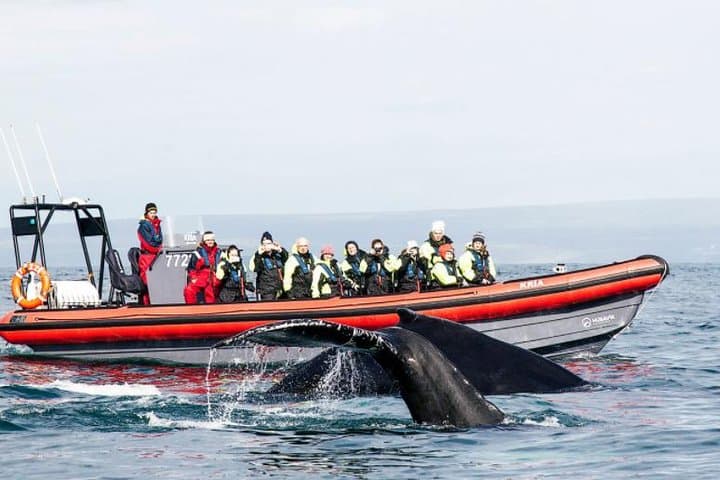
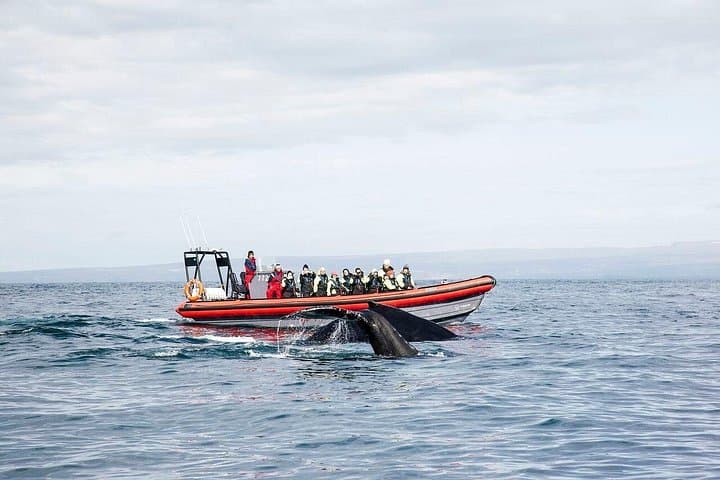
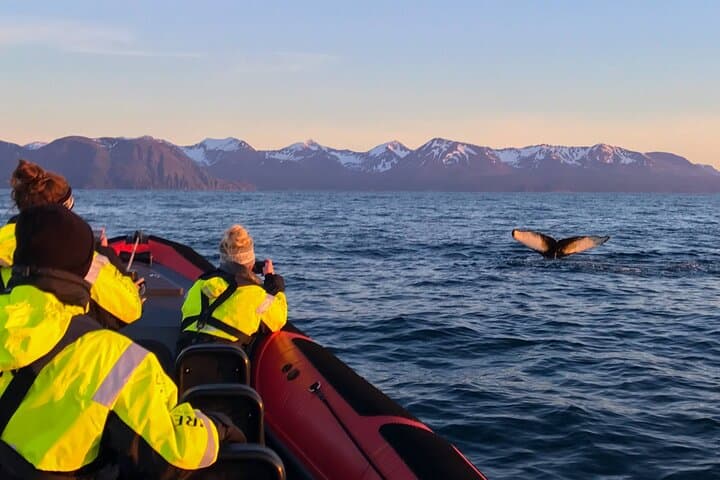
The boat slips from Húsavík’s harbor and the wind sharpens the air; engines hum and the coast falls away into Skjálfandi Bay. On a fast RIB with room for a dozen people, passengers feel the sea push them forward toward spouts and cliffs where puffins cluster like bright notes on black rock.
Verified experiences and guided adventures in the surrounding area.
Operated by Husavik Adventures · Húsavík, Northeast Region
The boat slips from Húsavík’s harbor and the wind sharpens the air; engines hum and the coast falls away into Skjálfandi Bay. On a fast RIB with room for a dozen people, passengers feel the sea push them forward toward spouts and cliffs where puffins cluster like bright notes on black rock.
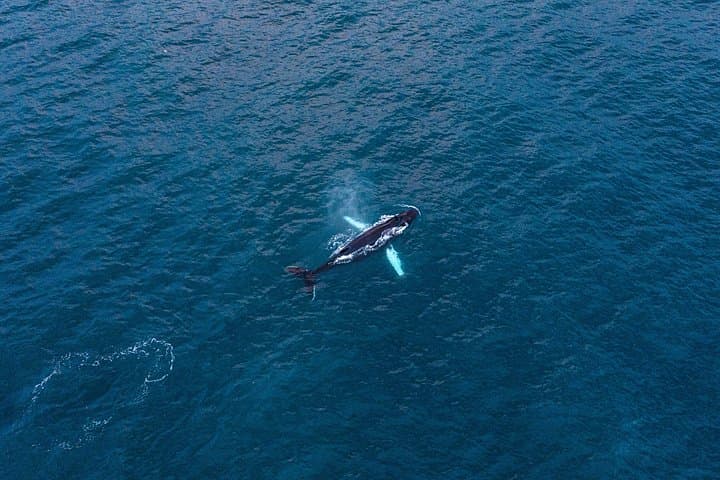
Skjálfandi’s geology is visible at a glance: Tjörnes peninsula’s layered cliffs hold fossil beds dating back two million years, while the bay’s deep channels funnel krill and fish that draw humpbacks and minkes each season. Húsavík grew from a fishing village into Iceland’s whale-watching hub; local guides combine practical seamanship with a long coastal tradition of reading the sea.
Expect short, sharp bursts of adrenaline when whales surface nearby, and quieter stretches where white-beaked dolphins arc beside the bow. Puffin Island (Lundey) hosts dense nesting through mid-April to August; outside that window voyages focus on whales alone. The tour balances speed for sightings with small-group viewing so everyone can see, photograph, and listen to live commentary from an expert guide.
Practically: wear warm layers, a windproof outer shell, hat and gloves; overalls and life vests are provided and mandatory. Bring a camera with a fast shutter and binoculars, secure loose items, and be ready for wet spray. Tours last about two hours and are suitable for most fitness levels, though stability on deck matters. Respect wildlife distancing, follow crew instructions, and time your trip in spring–summer for puffins or summer–early autumn for peak whale activity.
easy.
2 hours.
Suitable for most people who can step aboard a small boat and stand or sit for short periods; basic mobility required.
Puffin season runs roughly April 15–August 20; tours in that window typically include Lundey (Puffin Island) visits.
No—wildlife is unpredictable. The RIB’s speed and small group size improve chances, but operators cannot guarantee a specific species sighting.
Yes; the operator requires a minimum age of 8 years or 130 cm and children must be accompanied by an adult.
The fast RIB ride can aggravate seasickness; bring preventive medication, choose a forward-facing seat, and watch the horizon to reduce symptoms.
Húsavík transitioned from small fishing port to international whale-watching center; the region’s fossil-rich Tjörnes cliffs record two million years of marine history.
Operators follow Icelandic marine-wildlife guidelines — keep respectful distances, avoid noise near colonies, and follow crew directions to minimize disturbance to whales and seabirds.
Husavik Adventures operates guided outdoor trips and adventures with an emphasis on safety, stewardship, and memorable experiences.
The boat slips from Húsavík’s harbor and the wind sharpens the air; engines hum and the coast falls away into Skjálfandi Bay. On a fast RIB with room for a dozen people, passengers feel the sea push them forward toward spouts and cliffs where puffins cluster like bright notes on black rock.
The boat slips from Húsavík’s harbor and the wind sharpens the air; engines hum and the coast falls away into Skjálfandi Bay. On a fast RIB with room for a dozen people, passengers feel the sea push them forward toward spouts and cliffs where puffins cluster like bright notes on black rock.
Skjálfandi’s geology is visible at a glance: Tjörnes peninsula’s layered cliffs hold fossil beds dating back two million years, while the bay’s deep channels funnel krill and fish that draw humpbacks and minkes each season. Húsavík grew from a fishing village into Iceland’s whale-watching hub; local guides combine practical seamanship with a long coastal tradition of reading the sea.
Expect short, sharp bursts of adrenaline when whales surface nearby, and quieter stretches where white-beaked dolphins arc beside the bow. Puffin Island (Lundey) hosts dense nesting through mid-April to August; outside that window voyages focus on whales alone. The tour balances speed for sightings with small-group viewing so everyone can see, photograph, and listen to live commentary from an expert guide.
Practically: wear warm layers, a windproof outer shell, hat and gloves; overalls and life vests are provided and mandatory. Bring a camera with a fast shutter and binoculars, secure loose items, and be ready for wet spray. Tours last about two hours and are suitable for most fitness levels, though stability on deck matters. Respect wildlife distancing, follow crew instructions, and time your trip in spring–summer for puffins or summer–early autumn for peak whale activity.