THE ADVENTURE COLLECTIVE® · Independent discovery and booking for outdoor travel

Get hands-on at the Big Island’s abalone farm: touch live ezo abalone, learn how premium shellfish are raised, and sample freshly prepared abalone and seaweed. A compact, accessible hour of marine science and food culture.
Get hands-on at the Big Island’s abalone farm: touch live ezo abalone, learn how premium shellfish are raised, and sample freshly prepared abalone and seaweed. A compact, accessible hour of marine science and food culture.
Stepping onto the farm's concrete walkway, the first thing you notice is the low, marine hum of aerators and the crystalline glare of tank water. Rows of shallow pools hold the glossy, olive shells of ezo abalone—each one moving at its slow, deliberate pace—while staff in rubber boots guide visitors through touch tanks and plating stations. The sea breeze threads salt and seaweed through the air, daring you to reach into a tank and feel the muscle of a living abalone.
Verified experiences and guided adventures in the surrounding area.
Operated by Big Island Abalone · Kailua-Kona, Hawaii
Stepping onto the farm's concrete walkway, the first thing you notice is the low, marine hum of aerators and the crystalline glare of tank water. Rows of shallow pools hold the glossy, olive shells of ezo abalone—each one moving at its slow, deliberate pace—while staff in rubber boots guide visitors through touch tanks and plating stations. The sea breeze threads salt and seaweed through the air, daring you to reach into a tank and feel the muscle of a living abalone.
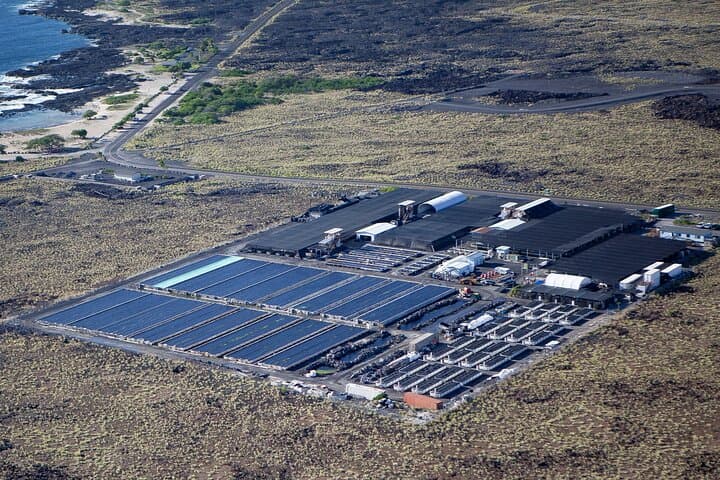
Abalone aquaculture on Hawaii's Big Island is a modern response to declining wild stocks and high demand for premium shellfish. The ezo variety is a Japanese strain grown here under warm, controlled conditions; the farm sits where volcanic substrate and offshore reefs historically supported diverse marine life, and local fishing culture has long valued shellfish as both food and craft.
The tour mixes short interpretation with hands-on moments: learn how broodstock are raised, see juvenile abalone in a nursery, and finish with a small abalone and seaweed tasting. It’s educational rather than strenuous—an hour of close-up marine biology and food culture.
Practical notes: tours run about 60 minutes and are wheelchair accessible; book in advance and arrive 10–15 minutes early. Wear closed-toe shoes that can get wet, plan for sun protection, and leave bulky backpacks in the car—space is limited. This is a tactile, low-impact way to see aquaculture practices in person and to understand how local producers work to keep wild reefs and seafood traditions healthy.
easy.
1 hour.
Suitable for all fitness levels; minimal walking and no climbing.
Yes—small samples of abalone and seaweed are included as part of the standard 60-minute tour.
The tour and facilities are wheelchair accessible; check with the operator in advance for any specific assistance needs.
Yes—this is family-friendly and suitable for all ages, though children should be supervised around tanks.
Most visitors drive from Kailua-Kona; the farm has on-site parking and clear check-in instructions—arrive 10–15 minutes early to park and check in.
Abalone aquaculture in Hawaii is a relatively recent industry driven by demand for premium shellfish and the need to reduce pressure on wild populations.
Farmed abalone provide a sustainable alternative to wild harvests; operators often follow biosecurity and water-quality practices to limit environmental impact.
Big Island Abalone operates guided outdoor trips and adventures with an emphasis on safety, stewardship, and memorable experiences.
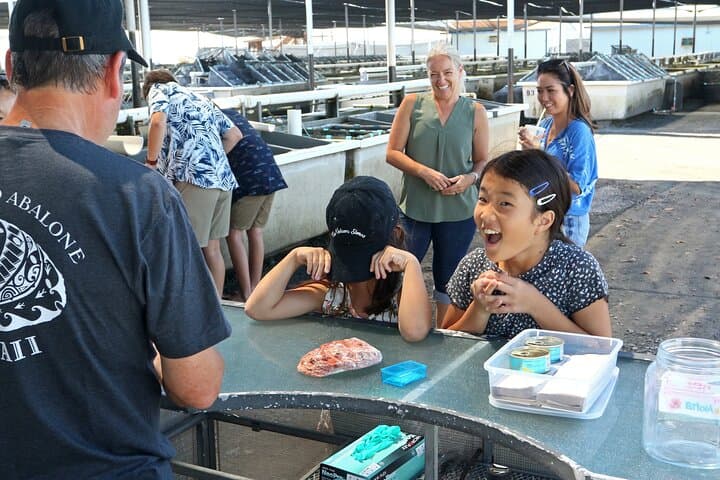
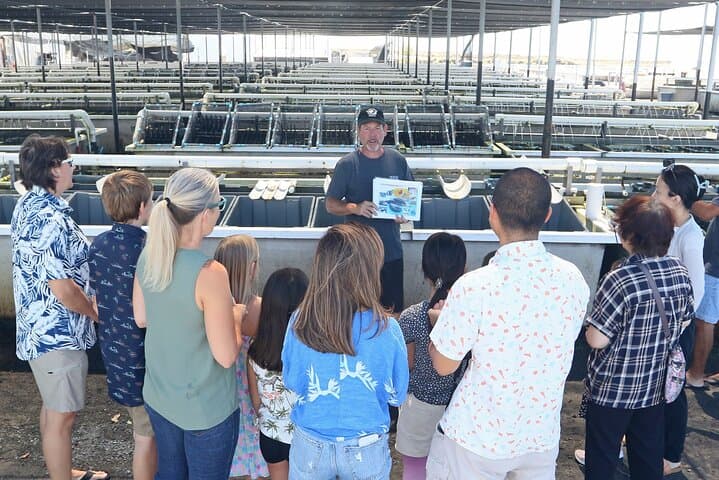
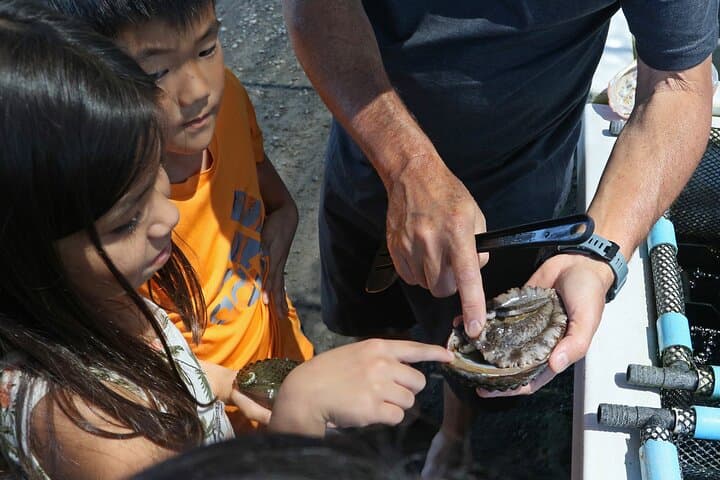
Stepping onto the farm's concrete walkway, the first thing you notice is the low, marine hum of aerators and the crystalline glare of tank water. Rows of shallow pools hold the glossy, olive shells of ezo abalone—each one moving at its slow, deliberate pace—while staff in rubber boots guide visitors through touch tanks and plating stations. The sea breeze threads salt and seaweed through the air, daring you to reach into a tank and feel the muscle of a living abalone.
Stepping onto the farm's concrete walkway, the first thing you notice is the low, marine hum of aerators and the crystalline glare of tank water. Rows of shallow pools hold the glossy, olive shells of ezo abalone—each one moving at its slow, deliberate pace—while staff in rubber boots guide visitors through touch tanks and plating stations. The sea breeze threads salt and seaweed through the air, daring you to reach into a tank and feel the muscle of a living abalone.
Abalone aquaculture on Hawaii's Big Island is a modern response to declining wild stocks and high demand for premium shellfish. The ezo variety is a Japanese strain grown here under warm, controlled conditions; the farm sits where volcanic substrate and offshore reefs historically supported diverse marine life, and local fishing culture has long valued shellfish as both food and craft.
The tour mixes short interpretation with hands-on moments: learn how broodstock are raised, see juvenile abalone in a nursery, and finish with a small abalone and seaweed tasting. It’s educational rather than strenuous—an hour of close-up marine biology and food culture.
Practical notes: tours run about 60 minutes and are wheelchair accessible; book in advance and arrive 10–15 minutes early. Wear closed-toe shoes that can get wet, plan for sun protection, and leave bulky backpacks in the car—space is limited. This is a tactile, low-impact way to see aquaculture practices in person and to understand how local producers work to keep wild reefs and seafood traditions healthy.