THE ADVENTURE COLLECTIVE® · Independent discovery and booking for outdoor travel

Walk under a canopy of gold and orange oaks on a locals-only autumn hike above Big Bear Lake. This two-hour guided tour combines peak fall color, lookout vistas, and insider stories about the valley’s natural and cultural history.
Walk under a canopy of gold and orange oaks on a locals-only autumn hike above Big Bear Lake. This two-hour guided tour combines peak fall color, lookout vistas, and insider stories about the valley’s natural and cultural history.
The first step onto the trail feels like turning a page: a corridor of oak branches arch overhead, leaves the color of copper coins falling to a carpet of sound. A grey Jeep idles at the corner of Elm and Switzerland, your guide climbs out with a grin and a thermos of coffee, and the valley exhales—cool, sharp, and bright. Over the next two hours you follow a locals-only route up toward a ridge, slipping through pockets of golden oak and scrub pines with sudden, framed glimpses of Big Bear Lake far below.
Verified experiences and guided adventures in the surrounding area.
Operated by Amber Holloway · Big Bear Lake, California
The first step onto the trail feels like turning a page: a corridor of oak branches arch overhead, leaves the color of copper coins falling to a carpet of sound. A grey Jeep idles at the corner of Elm and Switzerland, your guide climbs out with a grin and a thermos of coffee, and the valley exhales—cool, sharp, and bright. Over the next two hours you follow a locals-only route up toward a ridge, slipping through pockets of golden oak and scrub pines with sudden, framed glimpses of Big Bear Lake far below.
This is high-country leaf-peeping with a human history glued to the slopes. The San Bernardino Mountains rose as the plate boundary shifted; Serrano people lived these elevations long before 19th-century miners and loggers widened roads and built the early resorts that turned Big Bear into a recreation hub. The modern lake you glimpse from the ridgeline was enlarged in the 1880s; on this walk your guide will point out old logging scars, tell local anecdotes, and pause to identify berry patches that seasonally sweeten the trail.
Geology and climate are honest partners here. At roughly 6,750 feet elevation, the air is thinner and cooler—sunny afternoons can still bite with wind, while mornings hang in clear, blue clarity. The trail itself is a mix of packed dirt, leaf litter, and short steeper pitches; most groups cover 1–3 miles in the two-hour window, gaining 200–600 feet depending on the route and how many photo stops you take.
Practical details are straightforward. Meet at Elm Street and Switzerland where street parking is available; the guide will shuttle the group a short distance to trailhead parking. Dogs and families are welcome—routes can be adjusted for kids or a slower pace. Wear sturdy shoes with traction (trail boots or sneakers with good tread), layer for variable mountain weather, and carry at least one liter of water per person. Ask before tasting any wild berries; the guide can point out edible varieties but foraging should be cautious.
Photographers get special consideration: late morning soft light and golden-hour approaches make the oak canopy glow, while the higher ridges give sweeping lake panoramas. Leave no trace—stick to the path and pack out trash; these oak groves regenerate slowly and are vulnerable to trampling.
In two hours you leave with a handful of polished photos, a clearer sense of local history, and the smell of crushed leaves on your hands—a short, precise wilderness prescription for autumn in Southern California that rewards attention as much as appetite.
moderate.
2 hours.
Comfortable walking fitness with the ability to climb short steep sections and handle uneven terrain; kids can join with a slower pace.
The tour is two hours; expect to cover 1–3 miles with roughly 200–600 feet of cumulative gain depending on the route and pace.
Yes—this guide welcomes dogs. Keep pets on leash and bring water and waste bags.
The hike is family-friendly and can be paced for kids; some lower sections can accommodate a stroller but steeper parts are not stroller-friendly—discuss options with the guide when booking.
Peak color typically occurs from mid-October to early November, but specific timing shifts with elevation and yearly weather patterns.
Meet at the corner of Elm Street and Switzerland in Big Bear Lake; the guide will be in a grey Jeep SUV and will drive the group to the trailhead.
Full refunds are available if you cancel at least 24 hours before departure; the tour may be canceled in bad weather per the operator’s policy.
The Serrano people lived in these mountains for generations; 19th-century logging and a dam built in the 1880s shaped the valley that visitors enjoy today.
Oak understories are fragile—stay on trail, pack out all waste, and avoid trampling berry patches to protect regeneration and reduce fire risk.
Amber Holloway operates guided outdoor trips and adventures with an emphasis on safety, stewardship, and memorable experiences.
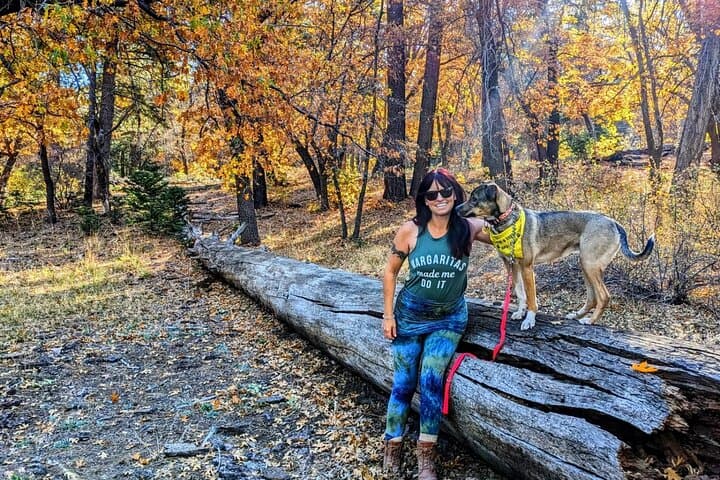
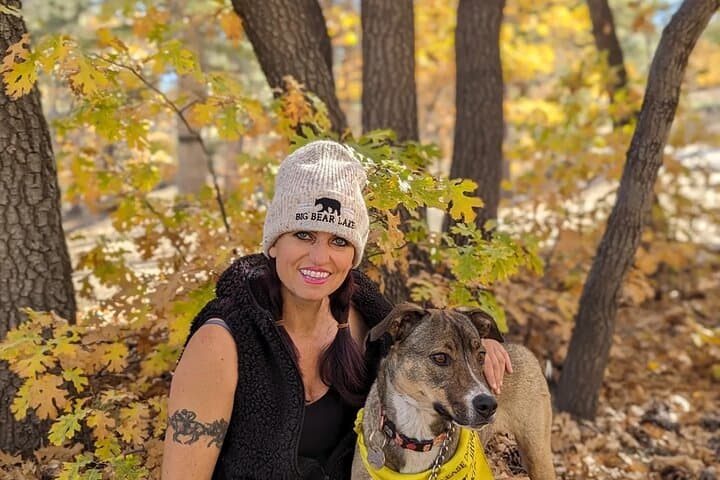
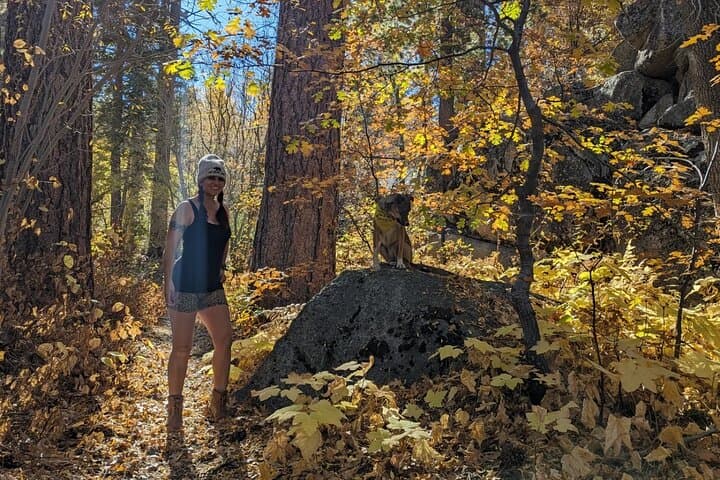
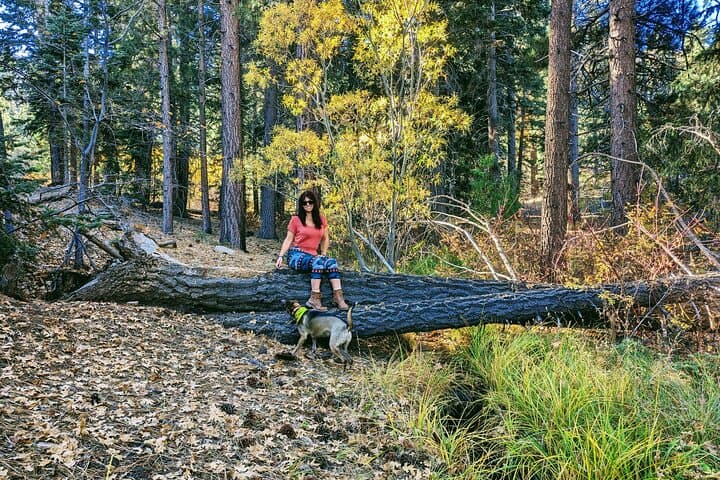
The first step onto the trail feels like turning a page: a corridor of oak branches arch overhead, leaves the color of copper coins falling to a carpet of sound. A grey Jeep idles at the corner of Elm and Switzerland, your guide climbs out with a grin and a thermos of coffee, and the valley exhales—cool, sharp, and bright. Over the next two hours you follow a locals-only route up toward a ridge, slipping through pockets of golden oak and scrub pines with sudden, framed glimpses of Big Bear Lake far below.
The first step onto the trail feels like turning a page: a corridor of oak branches arch overhead, leaves the color of copper coins falling to a carpet of sound. A grey Jeep idles at the corner of Elm and Switzerland, your guide climbs out with a grin and a thermos of coffee, and the valley exhales—cool, sharp, and bright. Over the next two hours you follow a locals-only route up toward a ridge, slipping through pockets of golden oak and scrub pines with sudden, framed glimpses of Big Bear Lake far below.
This is high-country leaf-peeping with a human history glued to the slopes. The San Bernardino Mountains rose as the plate boundary shifted; Serrano people lived these elevations long before 19th-century miners and loggers widened roads and built the early resorts that turned Big Bear into a recreation hub. The modern lake you glimpse from the ridgeline was enlarged in the 1880s; on this walk your guide will point out old logging scars, tell local anecdotes, and pause to identify berry patches that seasonally sweeten the trail.
Geology and climate are honest partners here. At roughly 6,750 feet elevation, the air is thinner and cooler—sunny afternoons can still bite with wind, while mornings hang in clear, blue clarity. The trail itself is a mix of packed dirt, leaf litter, and short steeper pitches; most groups cover 1–3 miles in the two-hour window, gaining 200–600 feet depending on the route and how many photo stops you take.
Practical details are straightforward. Meet at Elm Street and Switzerland where street parking is available; the guide will shuttle the group a short distance to trailhead parking. Dogs and families are welcome—routes can be adjusted for kids or a slower pace. Wear sturdy shoes with traction (trail boots or sneakers with good tread), layer for variable mountain weather, and carry at least one liter of water per person. Ask before tasting any wild berries; the guide can point out edible varieties but foraging should be cautious.
Photographers get special consideration: late morning soft light and golden-hour approaches make the oak canopy glow, while the higher ridges give sweeping lake panoramas. Leave no trace—stick to the path and pack out trash; these oak groves regenerate slowly and are vulnerable to trampling.
In two hours you leave with a handful of polished photos, a clearer sense of local history, and the smell of crushed leaves on your hands—a short, precise wilderness prescription for autumn in Southern California that rewards attention as much as appetite.