THE ADVENTURE COLLECTIVE® · Independent discovery and booking for outdoor travel

Traverse ancient Po Mu forests, open Phuoc Binh grasslands and a Raglai village on a guided 2-day, 22 km trek from Da Lat. Expect mossy highland trails, an overnight grassland campsite and river-side lunch stops.
Traverse ancient Po Mu forests, open Phuoc Binh grasslands and a Raglai village on a guided 2-day, 22 km trek from Da Lat. Expect mossy highland trails, an overnight grassland campsite and river-side lunch stops.
A low dawn hangs over the pass as the shuttle eases out of Da Lat and the road narrows into ridgelines. By midmorning the trees take on a cathedral hush—moss draping trunks, orchids tucked into forked branches—and the trail climbs through Bidoup-Nui Ba’s high forest, where Po Mu pines stand like living relics.
Verified experiences and guided adventures in the surrounding area.
Operated by Authentic SAPA · Da Lat, Lam Dong
A low dawn hangs over the pass as the shuttle eases out of Da Lat and the road narrows into ridgelines. By midmorning the trees take on a cathedral hush—moss draping trunks, orchids tucked into forked branches—and the trail climbs through Bidoup-Nui Ba’s high forest, where Po Mu pines stand like living relics.
This two-day, ~22 km route threads provincial borders—Lam Dong into Ninh Thuan and down to Khanh Hoa—moving from closed-canopy montane forest to broad, wind-swept Phuoc Binh meadows and the cooling Khe River valley before finishing at the Raglai village of Ta Giang. Geologically the highlands are granite and metamorphic ridges carved by monsoon runoff; soils are thin on the grass hills and richer in sheltered hollows where biodiversity concentrates.
Culturally, the trek ends in a small Raglai community where traditional stilt houses and local crafts punctuate a pastoral rhythm; guides often share insights about ancestral land use and seasonal crops. Expect guided camping on grassy benches, simple meals cooked communally, and clear mountain streams that seem to urge you onward.
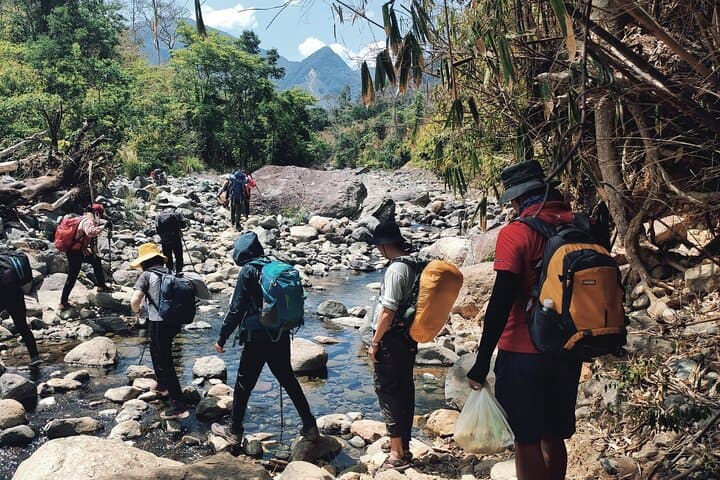
Practical essentials: the route covers rough, sometimes wet trails and gravel descents—trekking poles and good soles matter. Temperatures drop at night; pack a warm layer and waterproofs. Start early to avoid afternoon heat and bring at least 2 liters of water plus filtration or spare bottles. The trek is guided, so navigation is handled, but basic trail fitness and steady footing are required for sustained climbs and river crossings.
moderate.
2 days.
Suitable for hikers with regular cardio activity who can handle 10–15 km and several hours of uphill/downhill in a day; not technical but requires stamina.
The itinerary is rated moderate: daily distances and elevation change are manageable for regular hikers, but expect sustained climbs, uneven terrain, and a long day between trailheads.
Yes — tents and basic camping gear are listed as included; you should still bring a warm sleeping liner and personal items.
Vegetarian meals can be arranged if requested in advance; notify the operator during booking for other dietary needs.
Much of the trek passes through protected forest and grasslands with limited mobile coverage; the guide carries standard medical kit and emergency plans are in place.
Bidoup-Nui Ba National Park protects highland ecosystems and rare Po Mu pines; the trail also crosses traditional lands used by Raglai communities.
The park focuses on protecting endemic flora and fauna; visitors are asked to stick to trails, pack out waste, and minimize campfire impacts to preserve fragile grassland soils.
Authentic SAPA operates guided outdoor trips and adventures with an emphasis on safety, stewardship, and memorable experiences.
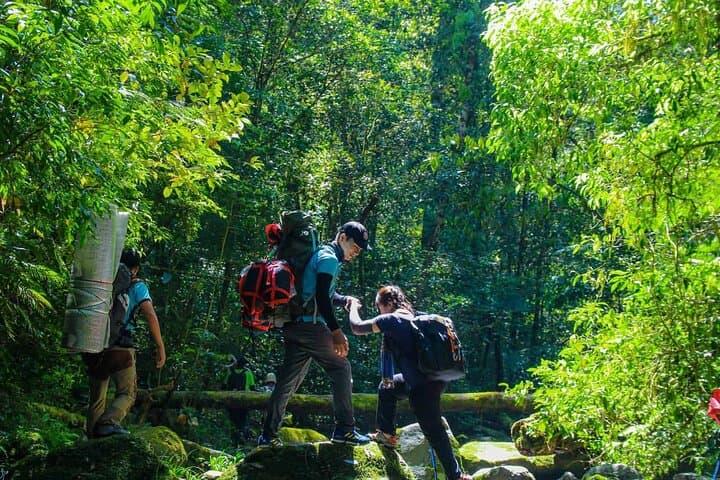


A low dawn hangs over the pass as the shuttle eases out of Da Lat and the road narrows into ridgelines. By midmorning the trees take on a cathedral hush—moss draping trunks, orchids tucked into forked branches—and the trail climbs through Bidoup-Nui Ba’s high forest, where Po Mu pines stand like living relics.
A low dawn hangs over the pass as the shuttle eases out of Da Lat and the road narrows into ridgelines. By midmorning the trees take on a cathedral hush—moss draping trunks, orchids tucked into forked branches—and the trail climbs through Bidoup-Nui Ba’s high forest, where Po Mu pines stand like living relics.
This two-day, ~22 km route threads provincial borders—Lam Dong into Ninh Thuan and down to Khanh Hoa—moving from closed-canopy montane forest to broad, wind-swept Phuoc Binh meadows and the cooling Khe River valley before finishing at the Raglai village of Ta Giang. Geologically the highlands are granite and metamorphic ridges carved by monsoon runoff; soils are thin on the grass hills and richer in sheltered hollows where biodiversity concentrates.
Culturally, the trek ends in a small Raglai community where traditional stilt houses and local crafts punctuate a pastoral rhythm; guides often share insights about ancestral land use and seasonal crops. Expect guided camping on grassy benches, simple meals cooked communally, and clear mountain streams that seem to urge you onward.
Practical essentials: the route covers rough, sometimes wet trails and gravel descents—trekking poles and good soles matter. Temperatures drop at night; pack a warm layer and waterproofs. Start early to avoid afternoon heat and bring at least 2 liters of water plus filtration or spare bottles. The trek is guided, so navigation is handled, but basic trail fitness and steady footing are required for sustained climbs and river crossings.