THE ADVENTURE COLLECTIVE® · Independent discovery and booking for outdoor travel

Cycle between three walled towns—Asolo, Bassano del Grappa and Marostica—following the Brenta river, stopping for historic piazzas, Palladian villas and Bassano’s wooden bridge. Expect mostly flat terrain, 3–4 hours of riding, and plenty of cultural pit stops.
Cycle between three walled towns—Asolo, Bassano del Grappa and Marostica—following the Brenta river, stopping for historic piazzas, Palladian villas and Bassano’s wooden bridge. Expect mostly flat terrain, 3–4 hours of riding, and plenty of cultural pit stops.
You push off from a small piazza, tires humming on stone, and the Brenta opens up ahead—flat, silver, and impatient—guiding you between walled towns and low wooded hills. Pedaling toward Bassano del Grappa, the wooden Ponte degli Alpini appears, its covered timbers framing the river like a stage. The route threads riverbanks, villa-lined avenues and short climbs that give quick views back across valley farmland.
Verified experiences and guided adventures in the surrounding area.
Operated by ITALY CYCLING TOUR · Bassano del Grappa, Veneto
You push off from a small piazza, tires humming on stone, and the Brenta opens up ahead—flat, silver, and impatient—guiding you between walled towns and low wooded hills. Pedaling toward Bassano del Grappa, the wooden Ponte degli Alpini appears, its covered timbers framing the river like a stage. The route threads riverbanks, villa-lined avenues and short climbs that give quick views back across valley farmland.
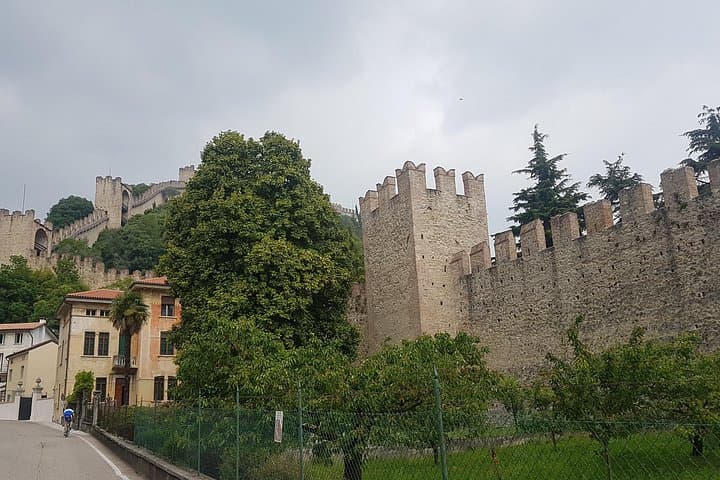
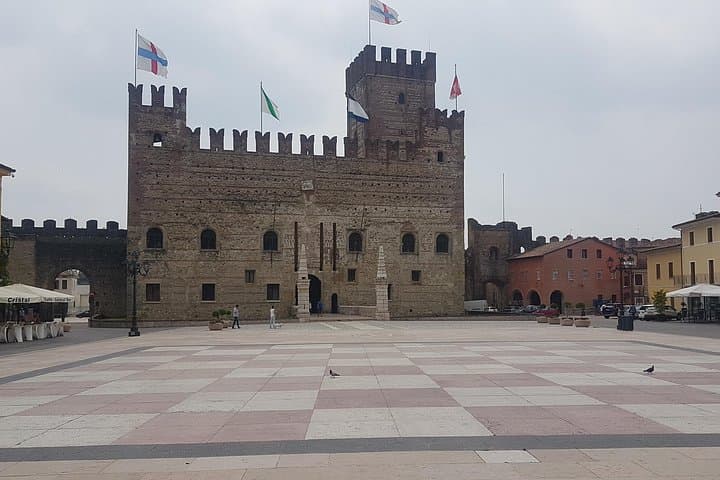
This corridor of the Veneto carries layers of history: medieval ramparts in Marostica where the famous living chess match is staged every two years, the compact Renaissance center of Asolo high on its ridge, and Bassano’s bridge associated with designs by Andrea Palladio. Geologically the area is alluvial plains at the foothills of the Prealps—gentle grades, farms, and pockets of chestnut and oak changing color through the year.
Culturally the ride is as much about stops as distance: piazzas with 16th-century fountains, small bakeries, and grappa tastings in Bassano (tasting often extra). Expect a mix of paved cycle paths and quiet secondary roads with light traffic, suitable for hybrid or touring bikes.
Practical guidance: allow 3–4 hours, carry water and a basic repair kit, and plan breaks in Piazza Garibaldi (Asolo) and the chess square in Marostica. Helmets and visible clothing are recommended; public transport connections from Bassano make it easy to shorten the loop. This is an approachable cultural ride—low climbs, high rewards.
easy.
3–4 hours.
Suitable for riders with basic aerobic fitness who can pedal continuously for several hours and handle short, gentle climbs.
The itinerary is typically ridden in 3–4 hours with mostly flat terrain and a few short, gentle climbs—suitable for recreational cyclists.
Yes; Bassano del Grappa and nearby towns have rental shops and public transport links to shorten or return from the route.
Yes, Bassano is known for grappa; tastings are commonly available but usually cost extra and depend on opening hours.
The ride is labeled easy and appropriate for riders of various fitness levels, but children should be comfortable with road riding and supervised on mixed-traffic sections.
The corridor reflects Venetian-era wealth: 16th-century villas by Palladio and medieval fortifications in Marostica and Asolo shaped the towns you pass.
Stick to established cycle paths and town streets, use refillable bottles, and respect private villa grounds to minimize impact on local heritage and habitats.
ITALY CYCLING TOUR operates guided outdoor trips and adventures with an emphasis on safety, stewardship, and memorable experiences.
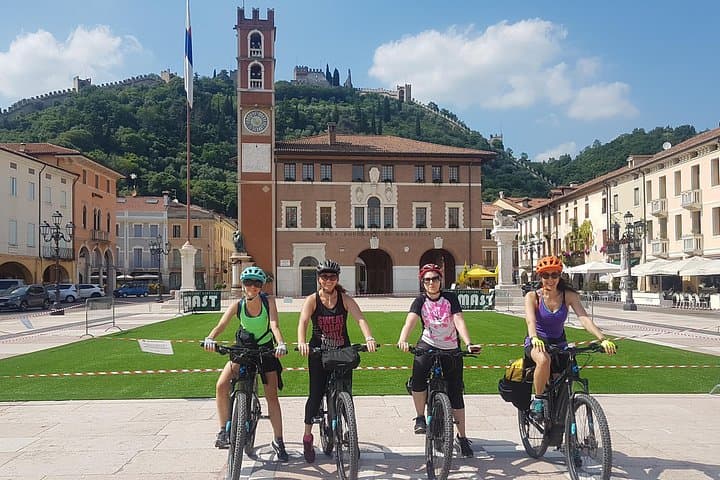
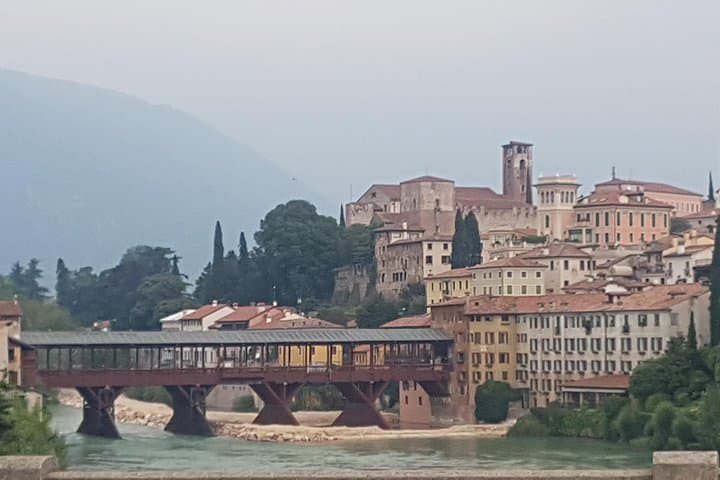
You push off from a small piazza, tires humming on stone, and the Brenta opens up ahead—flat, silver, and impatient—guiding you between walled towns and low wooded hills. Pedaling toward Bassano del Grappa, the wooden Ponte degli Alpini appears, its covered timbers framing the river like a stage. The route threads riverbanks, villa-lined avenues and short climbs that give quick views back across valley farmland.
You push off from a small piazza, tires humming on stone, and the Brenta opens up ahead—flat, silver, and impatient—guiding you between walled towns and low wooded hills. Pedaling toward Bassano del Grappa, the wooden Ponte degli Alpini appears, its covered timbers framing the river like a stage. The route threads riverbanks, villa-lined avenues and short climbs that give quick views back across valley farmland.
This corridor of the Veneto carries layers of history: medieval ramparts in Marostica where the famous living chess match is staged every two years, the compact Renaissance center of Asolo high on its ridge, and Bassano’s bridge associated with designs by Andrea Palladio. Geologically the area is alluvial plains at the foothills of the Prealps—gentle grades, farms, and pockets of chestnut and oak changing color through the year.
Culturally the ride is as much about stops as distance: piazzas with 16th-century fountains, small bakeries, and grappa tastings in Bassano (tasting often extra). Expect a mix of paved cycle paths and quiet secondary roads with light traffic, suitable for hybrid or touring bikes.
Practical guidance: allow 3–4 hours, carry water and a basic repair kit, and plan breaks in Piazza Garibaldi (Asolo) and the chess square in Marostica. Helmets and visible clothing are recommended; public transport connections from Bassano make it easy to shorten the loop. This is an approachable cultural ride—low climbs, high rewards.