THE ADVENTURE COLLECTIVE® · Independent discovery and booking for outdoor travel

A semi-private, Socratic Bible-study tour through the British Museum that links artifacts—Rosetta Stone, Assyrian lamassu, Parthenon sculptures—to specific biblical passages. Expect 3–4 hours of guided reading in front of objects, accessible routes and practical context that anchors scripture in material culture.
A semi-private, Socratic Bible-study tour through the British Museum that links artifacts—Rosetta Stone, Assyrian lamassu, Parthenon sculptures—to specific biblical passages. Expect 3–4 hours of guided reading in front of objects, accessible routes and practical context that anchors scripture in material culture.
Step into a cool stone hall where sunlight from the Great Court windows outlines the Rosetta Stone and the low hum of visitors frames your first verse.
Verified experiences and guided adventures in the surrounding area.
Operated by London Bible Tours · London, England
Step into a cool stone hall where sunlight from the Great Court windows outlines the Rosetta Stone and the low hum of visitors frames your first verse.
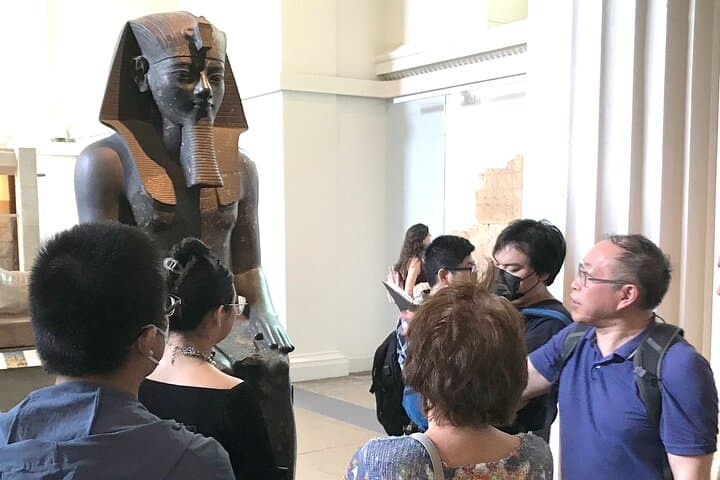
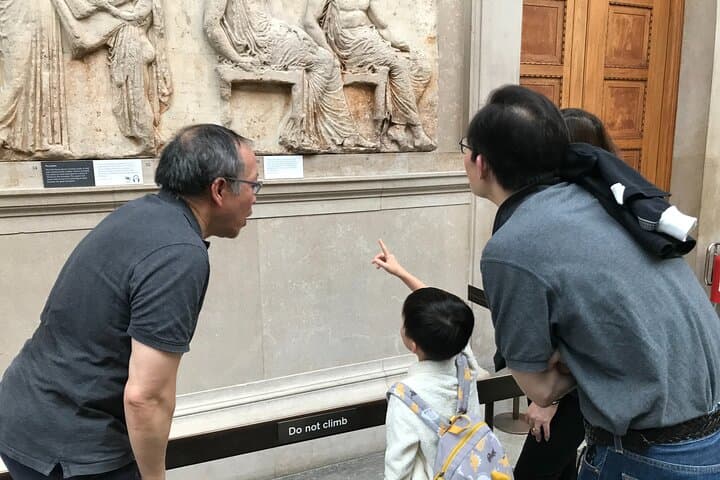
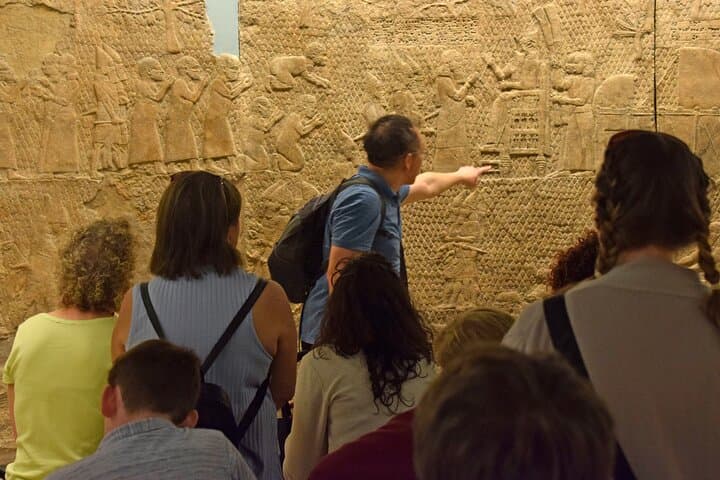
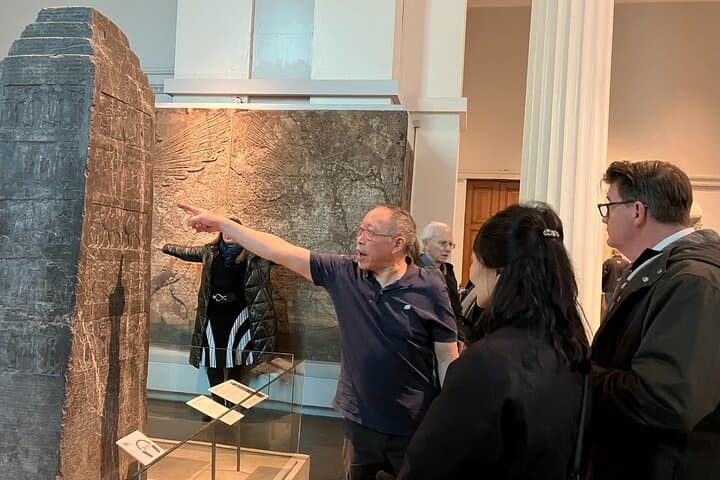
This semi-private, Socratic Bible-study tour moves through the British Museum’s Egyptian, Mesopotamian, Greek and Roman galleries, connecting objects—lamassu, Parthenon marbles, mummies—to the stories and people in Scripture. Guides prompt you to read short passages aloud in front of artifacts, turning text into tangible context and helping place events on a timeline.
Founded in 1753, the museum houses objects spanning millennia; many items on this route date to the same empires that appear in biblical narratives. Geology shows up in the durable stones and metals carved and cast across those cultures; cultural traces appear in pottery, tableware and inscriptions that echo daily life in Esther’s Persia or Daniel’s Babylon.
Practical side: the tour lasts roughly 3–4 hours, is wheelchair accessible and limits groups to about ten people. Arrive with a preferred Bible translation (a phone app works offline), comfortable shoes and a small notebook—the route includes standing-room moments at high-traffic pieces like the Rosetta Stone. Weekday mornings are quieter; lunch options are available nearby in Bloomsbury.
You’ll leave with clearer chronological anchors for familiar passages and memory hooks built around objects. For visitors who prefer active discovery over lectures, this focused walk through a major museum turns museum glass into a classroom and scripture into a mapped, lived landscape.
easy.
3–4 hours.
Suitable for most fitness levels—requires standing and walking on flat indoor surfaces for extended periods.
General admission to the British Museum is free; the tour fee covers the guide and study materials—special exhibition tickets, if desired, are separate.
Yes. The British Museum and this tour route are wheelchair accessible; confirm any specific assistance needs at booking.
The tour is semi-private and typically limits shared groups to about ten participants to keep discussions manageable.
Yes—strollers are allowed and the content is suitable for older children and teens, though younger kids may find some sections long.
The British Museum, established in 1753, built its collection from private donations and acquisitions and houses extensive ancient Near Eastern, Egyptian and classical collections relevant to biblical history.
The museum follows strict conservation practices to protect artifacts; visitors are encouraged to use public transport and follow museum rules to minimize wear and environmental impact.
London Bible Tours operates guided outdoor trips and adventures with an emphasis on safety, stewardship, and memorable experiences.
Step into a cool stone hall where sunlight from the Great Court windows outlines the Rosetta Stone and the low hum of visitors frames your first verse.
Step into a cool stone hall where sunlight from the Great Court windows outlines the Rosetta Stone and the low hum of visitors frames your first verse.
This semi-private, Socratic Bible-study tour moves through the British Museum’s Egyptian, Mesopotamian, Greek and Roman galleries, connecting objects—lamassu, Parthenon marbles, mummies—to the stories and people in Scripture. Guides prompt you to read short passages aloud in front of artifacts, turning text into tangible context and helping place events on a timeline.
Founded in 1753, the museum houses objects spanning millennia; many items on this route date to the same empires that appear in biblical narratives. Geology shows up in the durable stones and metals carved and cast across those cultures; cultural traces appear in pottery, tableware and inscriptions that echo daily life in Esther’s Persia or Daniel’s Babylon.
Practical side: the tour lasts roughly 3–4 hours, is wheelchair accessible and limits groups to about ten people. Arrive with a preferred Bible translation (a phone app works offline), comfortable shoes and a small notebook—the route includes standing-room moments at high-traffic pieces like the Rosetta Stone. Weekday mornings are quieter; lunch options are available nearby in Bloomsbury.
You’ll leave with clearer chronological anchors for familiar passages and memory hooks built around objects. For visitors who prefer active discovery over lectures, this focused walk through a major museum turns museum glass into a classroom and scripture into a mapped, lived landscape.