THE ADVENTURE COLLECTIVE® · Independent discovery and booking for outdoor travel

Two hours with a local unpacks Biarritz’s coastal cliffs, Basque market flavors and imperial-era streets. Expect a short Gâteau Basque tasting, practical local tips and easy walking through the town’s highlights.
Two hours with a local unpacks Biarritz’s coastal cliffs, Basque market flavors and imperial-era streets. Expect a short Gâteau Basque tasting, practical local tips and easy walking through the town’s highlights.
You meet at a shadowed fountain in the Pierre Forsans garden and the city opens like a map under your feet: the salt wind from the Atlantic pushes past the cliff edges, gulls argue overhead, and cobbled lanes lead into neighborhoods that the guide—born and raised here—still calls by their old names.
Verified experiences and guided adventures in the surrounding area.
Operated by LocalBini - The go-to platform for Experiences by Locals in Europe · Biarritz, Nouvelle-Aquitaine
You meet at a shadowed fountain in the Pierre Forsans garden and the city opens like a map under your feet: the salt wind from the Atlantic pushes past the cliff edges, gulls argue overhead, and cobbled lanes lead into neighborhoods that the guide—born and raised here—still calls by their old names.
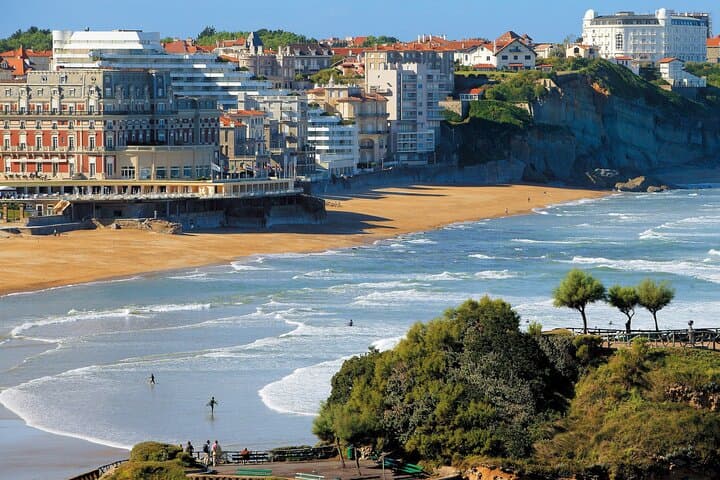
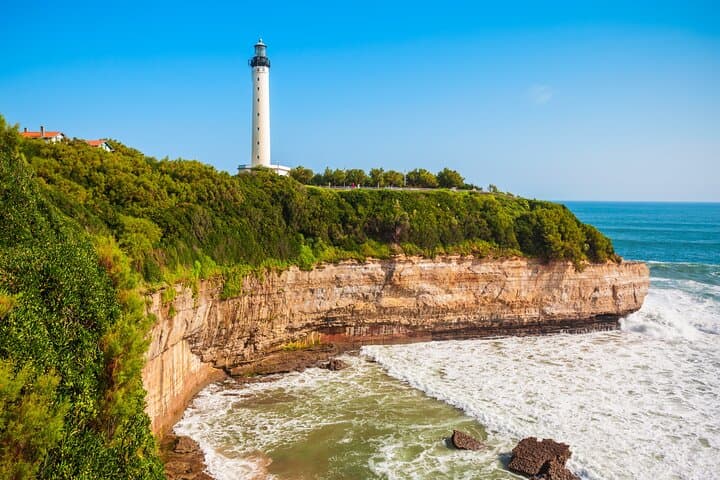
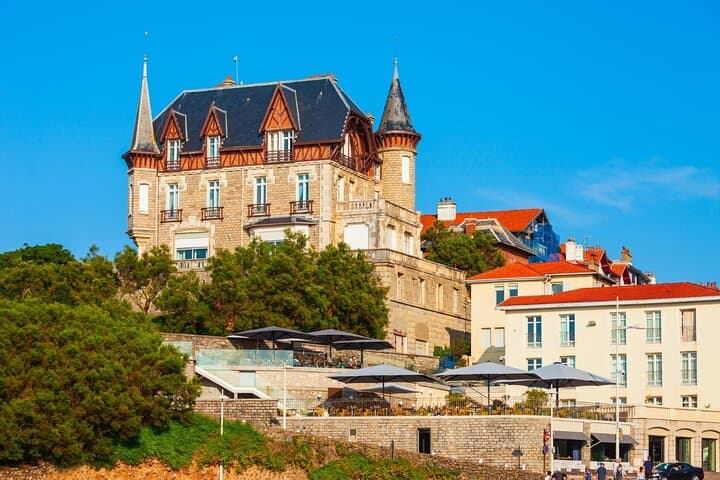
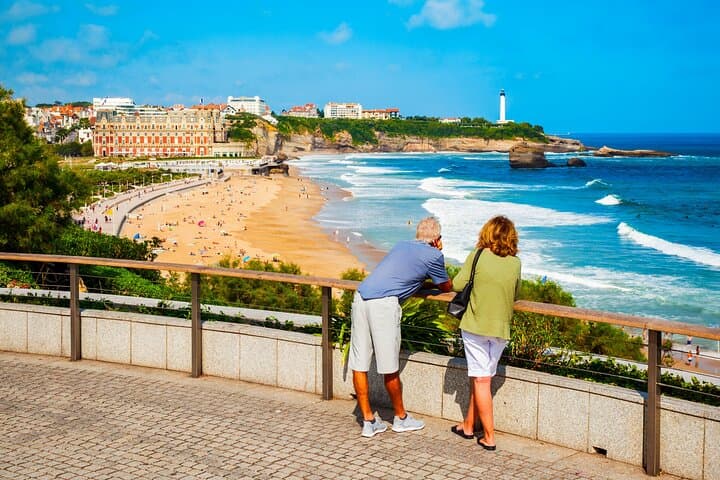
This two-hour walk threads the key chapters of Biarritz’s story. Once a modest whaling port, it became an imperial seaside resort in the 19th century when Napoleon III and Empress Eugénie drew the European elite to its rococo villas and promenades. Geologically, the coastline is a slice of hardened sedimentary rock and sandstone cliffs that the Atlantic grinds into dramatic overlooks like Rocher de la Vierge. Culturally, the town is Basque in language and flavor: expect market stalls of Bayonne ham, Basque cheeses and, on this walk, a tasting of Gâteau Basque—a simple cake that tells a regional history of butter, cherries and local cafes.
The itinerary covers Église Saint-Joseph, the Halles de Biarritz market, cliffside viewpoints and a sheltered beach used historically by fishermen. The guide shares practical tips—best times for photos, where to catch public transit back to the train station, and where to sit for an espresso after the tour.
Practical guidance: wear comfortable shoes for mixed cobbles and pavement, bring a light wind jacket year-round, and arrive 15 minutes early. The small-group format keeps the pace steady and adaptable, making this an efficient, sensory primer on Biarritz before wider exploration.
easy.
2 hours.
Suitable for most fitness levels; requires standing and walking on uneven urban surfaces for up to two hours.
Groups are kept small—up to 8 travellers—to allow for personalized commentary and easy movement through narrow streets.
No—entry tickets and transport fares are not included; hosts will advise on nearby transit options for onward travel.
Yes—strollers accessible and the pace is family-friendly, though the tour is not recommended for guests with impaired mobility.
Tours are led by a local host; check booking details for language availability and request needs at time of booking.
Biarritz shifted from a Basque fishing and whaling hub to an imperial seaside resort in the 19th century, attracting aristocrats and shaping its grand villas and promenades.
Coastal erosion and dune protection are local concerns—stick to marked paths, avoid disturbing nesting areas and reduce plastic waste when visiting markets and beaches.
LocalBini - The go-to platform for Experiences by Locals in Europe operates guided outdoor trips and adventures with an emphasis on safety, stewardship, and memorable experiences.
You meet at a shadowed fountain in the Pierre Forsans garden and the city opens like a map under your feet: the salt wind from the Atlantic pushes past the cliff edges, gulls argue overhead, and cobbled lanes lead into neighborhoods that the guide—born and raised here—still calls by their old names.
You meet at a shadowed fountain in the Pierre Forsans garden and the city opens like a map under your feet: the salt wind from the Atlantic pushes past the cliff edges, gulls argue overhead, and cobbled lanes lead into neighborhoods that the guide—born and raised here—still calls by their old names.
This two-hour walk threads the key chapters of Biarritz’s story. Once a modest whaling port, it became an imperial seaside resort in the 19th century when Napoleon III and Empress Eugénie drew the European elite to its rococo villas and promenades. Geologically, the coastline is a slice of hardened sedimentary rock and sandstone cliffs that the Atlantic grinds into dramatic overlooks like Rocher de la Vierge. Culturally, the town is Basque in language and flavor: expect market stalls of Bayonne ham, Basque cheeses and, on this walk, a tasting of Gâteau Basque—a simple cake that tells a regional history of butter, cherries and local cafes.
The itinerary covers Église Saint-Joseph, the Halles de Biarritz market, cliffside viewpoints and a sheltered beach used historically by fishermen. The guide shares practical tips—best times for photos, where to catch public transit back to the train station, and where to sit for an espresso after the tour.
Practical guidance: wear comfortable shoes for mixed cobbles and pavement, bring a light wind jacket year-round, and arrive 15 minutes early. The small-group format keeps the pace steady and adaptable, making this an efficient, sensory primer on Biarritz before wider exploration.