THE ADVENTURE COLLECTIVE® · Independent discovery and booking for outdoor travel

A private 4-night circuit that links Paro, Thimphu and Punakha with a visit to the iconic Taktsang (Tiger’s Nest). Expect mountain roads, fortress-dzongs, and guided cultural walks with all internal transport and most meals included.
A private 4-night circuit that links Paro, Thimphu and Punakha with a visit to the iconic Taktsang (Tiger’s Nest). Expect mountain roads, fortress-dzongs, and guided cultural walks with all internal transport and most meals included.
You step off the flight into Paro valley and the air feels thinner and clearer—prayer flags snap across a cobalt sky and terraced fields step down toward a slow river. The first drive toward Thimphu threads mountain roads, each bend revealing fortress-like dzongs and chortens that mark Buddhist life in this high kingdom.
Verified experiences and guided adventures in the surrounding area.
Operated by Happiness Drukyul Holiday · Paro, Paro District
You step off the flight into Paro valley and the air feels thinner and clearer—prayer flags snap across a cobalt sky and terraced fields step down toward a slow river. The first drive toward Thimphu threads mountain roads, each bend revealing fortress-like dzongs and chortens that mark Buddhist life in this high kingdom.
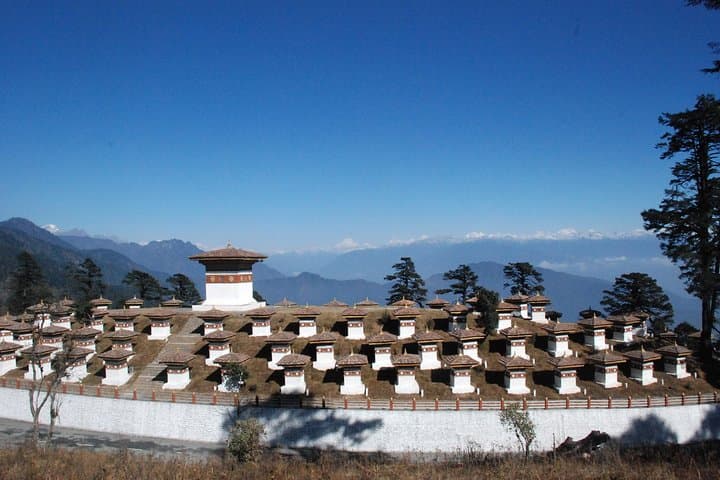
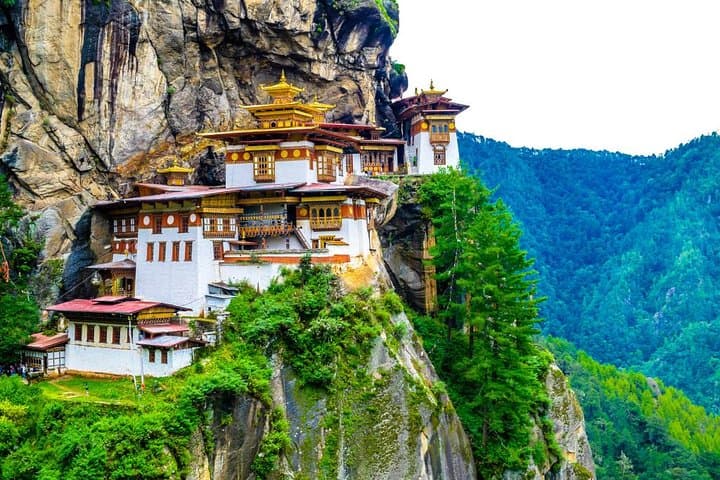
This private, 4-night loop links Paro (≈2,250 m), Thimphu (≈2,350 m) and Punakha (≈1,310 m), with a climb over Dochula La (3,140 m) and the optional ascent to Taktsang (Tiger’s Nest) perched around 3,120 m. The route maps Bhutan’s living culture: medieval dzongs, 17th-century watchtowers, fertility temples and the ritual of farmers’ markets. Geologically the valleys are river-cut basins framed by folded Himalaya ridges, where rice paddies sit below pine forests and rhododendron slopes.
Practically, the trip is guided and private with all internal transport, three meals per day and 3-star accommodation included; a US$200 per-person nightly Sustainable Development Fee is part of Bhutan’s regulated tourism model. Expect short cultural walks most days and a demanding hike to Taktsang—roughly 800–900 m of elevation change from Paro valley if you choose to hike (pony rides available at extra cost). Allow time for mild altitude effects and bring layered clothing: days can be warm in Punakha and sharply cold at Dochula.
Plan visa paperwork at least 10 days ahead, respect formal dress codes at monasteries, and budget for small cash purchases in villages. This itinerary balances immersive cultural access with pragmatic logistics—ideal for travelers who want Bhutan’s mountain temples, hilltop views and village life without large-group constraints.
moderate.
4–5 days.
Should be able to walk 2–3 hours over uneven, uphill terrain at altitude and tolerate several hours by vehicle.
A typical round-trip hike from the trailhead takes about 4–6 hours depending on fitness, with roughly 2 hours to the viewpoint; pony rides can be arranged at extra cost.
The itinerary lists the US$200 per-person per-night Sustainable Development Fee as part of the tour inclusions—confirm final breakdown with the operator.
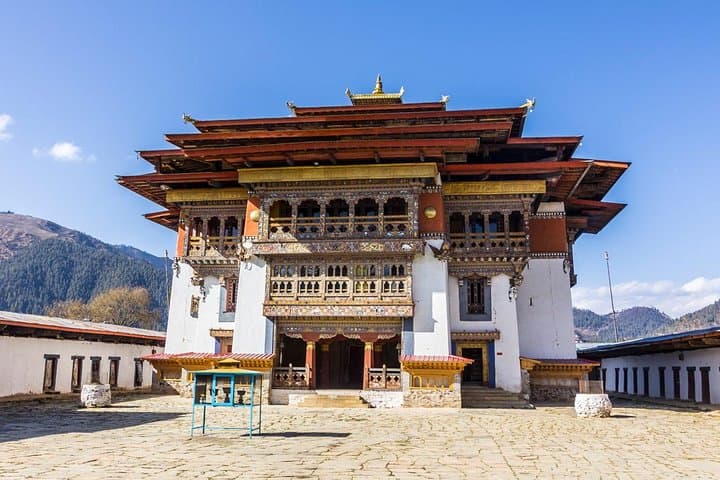
Yes—dress conservatively: shoulders and knees covered, remove hats inside, and avoid loud or revealing attire when visiting dzongs and lhakhangs.
Paro and Thimphu have some ATM and card facilities, but rural villages often require cash—carry local currency for small purchases and tips.
Bhutan’s dzongs and monasteries date back centuries and reflect the country’s consolidation under Buddhist theocratic rule; Taktsang is linked to Guru Padmasambhava’s 8th-century visit.
Bhutan tightly regulates tourism via daily fees and permit systems to limit environmental impact; travelers are expected to respect local customs and low-impact principles.
Happiness Drukyul Holiday operates guided outdoor trips and adventures with an emphasis on safety, stewardship, and memorable experiences.
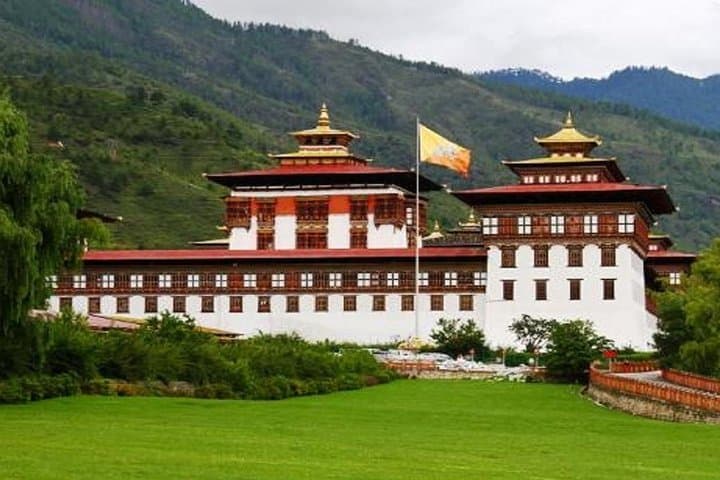
You step off the flight into Paro valley and the air feels thinner and clearer—prayer flags snap across a cobalt sky and terraced fields step down toward a slow river. The first drive toward Thimphu threads mountain roads, each bend revealing fortress-like dzongs and chortens that mark Buddhist life in this high kingdom.
You step off the flight into Paro valley and the air feels thinner and clearer—prayer flags snap across a cobalt sky and terraced fields step down toward a slow river. The first drive toward Thimphu threads mountain roads, each bend revealing fortress-like dzongs and chortens that mark Buddhist life in this high kingdom.
This private, 4-night loop links Paro (≈2,250 m), Thimphu (≈2,350 m) and Punakha (≈1,310 m), with a climb over Dochula La (3,140 m) and the optional ascent to Taktsang (Tiger’s Nest) perched around 3,120 m. The route maps Bhutan’s living culture: medieval dzongs, 17th-century watchtowers, fertility temples and the ritual of farmers’ markets. Geologically the valleys are river-cut basins framed by folded Himalaya ridges, where rice paddies sit below pine forests and rhododendron slopes.
Practically, the trip is guided and private with all internal transport, three meals per day and 3-star accommodation included; a US$200 per-person nightly Sustainable Development Fee is part of Bhutan’s regulated tourism model. Expect short cultural walks most days and a demanding hike to Taktsang—roughly 800–900 m of elevation change from Paro valley if you choose to hike (pony rides available at extra cost). Allow time for mild altitude effects and bring layered clothing: days can be warm in Punakha and sharply cold at Dochula.
Plan visa paperwork at least 10 days ahead, respect formal dress codes at monasteries, and budget for small cash purchases in villages. This itinerary balances immersive cultural access with pragmatic logistics—ideal for travelers who want Bhutan’s mountain temples, hilltop views and village life without large-group constraints.