THE ADVENTURE COLLECTIVE® · Independent discovery and booking for outdoor travel

A ten-day circuit through Bhutan’s valleys and high passes, this tour pairs short hikes and cultural immersion with visits to iconic dzongs, remote monasteries and crane wintering grounds. Expect changing elevations, traditional homestays, and deeply local encounters.
A ten-day circuit through Bhutan’s valleys and high passes, this tour pairs short hikes and cultural immersion with visits to iconic dzongs, remote monasteries and crane wintering grounds. Expect changing elevations, traditional homestays, and deeply local encounters.
You arrive at Paro with the valley air thin and bright, prayer flags fluttering like a loose language across the ridgelines. Mountain slopes lean down into terraced fields and the first dzong appears—a fortress of timber and whitewashed stone guarding centuries of ritual and daily life.
Verified experiences and guided adventures in the surrounding area.
Operated by Bhutan Acorn Tours and Travel · Paro, Paro District
You arrive at Paro with the valley air thin and bright, prayer flags fluttering like a loose language across the ridgelines. Mountain slopes lean down into terraced fields and the first dzong appears—a fortress of timber and whitewashed stone guarding centuries of ritual and daily life.
Over ten days this itinerary moves between altitudes: Paro (≈2,200 m), Thimphu (≈2,334 m), Punakha (≈1,200 m), Phobjikha (≈3,000 m) and Bumthang via Yotongla (3,425 m) and Chelela Pass (≈3,900 m). You’ll walk short hikes—Khamsum Yuelley Namgyel takes about 2.5–3 hours round-trip—and take the iconic 4–5 hour round-trip hike to Taktsang (Tiger’s Nest) clinging 800 m above a sheer gorge. Geology here is Himalayan: folded schists and high ridges shaped by relentless uplift, with glacial-fed rivers carving the valleys.
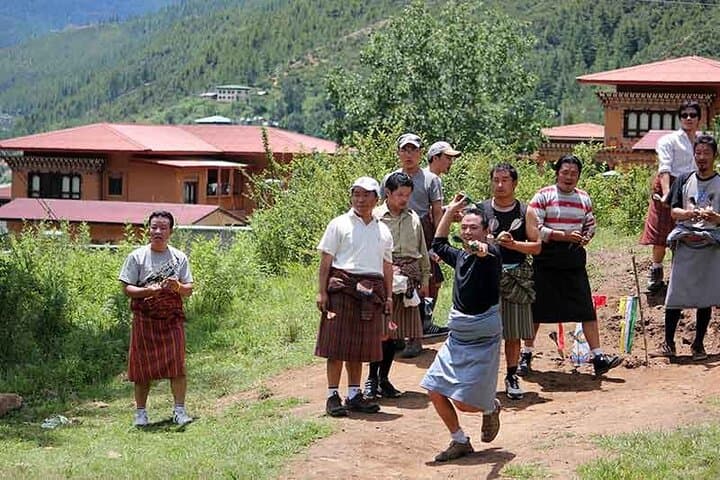
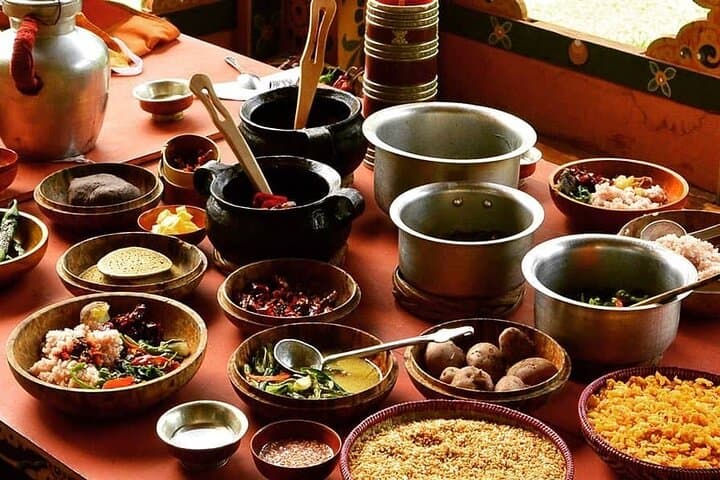
Cultural threads run through every stop: handloom weaving in Thimphu and Bumthang, the rhythmic singing at archery matches, and centuries-old monasteries where butter lamps flicker against painted walls. Wildlife notes include the endangered Black-necked Crane in Phobjikha (winter visitors) and the endemic takin at the Royal Preserve.
Practical edge: allow time to acclimatize, start hikes early for cooler air and clearer views, and expect basic three-star accommodations plus homestay evenings. Domestic flights (Bumthang–Paro) can be weather-dependent—book them months ahead. Pack layered clothing for 1,200–3,900 m swings, bring a sturdy pair of hiking shoes, and carry cash for small village purchases. This is travel that rewards patience: slow roads, attentive guides, and landscapes that push you to look up more often than down.
moderate.
10 days.
Suitable for travelers with basic fitness; expect several 2–5 hour hikes and daily transfers at altitude.
Yes—visa processing is handled as part of the tour; provide passport copies after booking and you’ll receive an e‑Visa within about 4–5 business days.
Expect a 4–5 hour round trip with steep sections and roughly 700–800 m of elevation change from the base; horses can cover part of the ascent for a fee.
Domestic flights (e.g., Bumthang to Paro) operate subject to weather and limited seats; book international connections and internal seats well in advance.
Yes—this shared tour accepts solo travelers, with group sizes capped (max ~12) and private options available on request.
Many dzongs and temples date to the 7th–17th centuries; Trongsa Dzong once centralized power for the Wangchuk dynasty that now rules Bhutan.
Bhutan maintains strict tourism controls and sustainable hotel policies to limit environmental impact; visitors are encouraged to minimize plastic use and respect sacred sites.
Bhutan Acorn Tours and Travel operates guided outdoor trips and adventures with an emphasis on safety, stewardship, and memorable experiences.
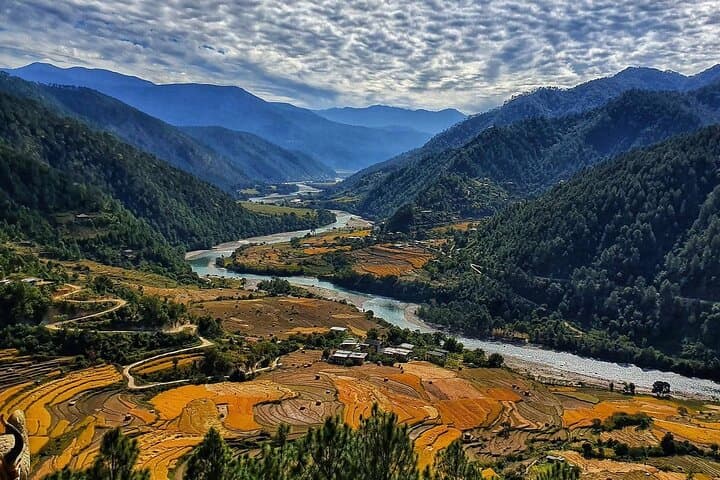
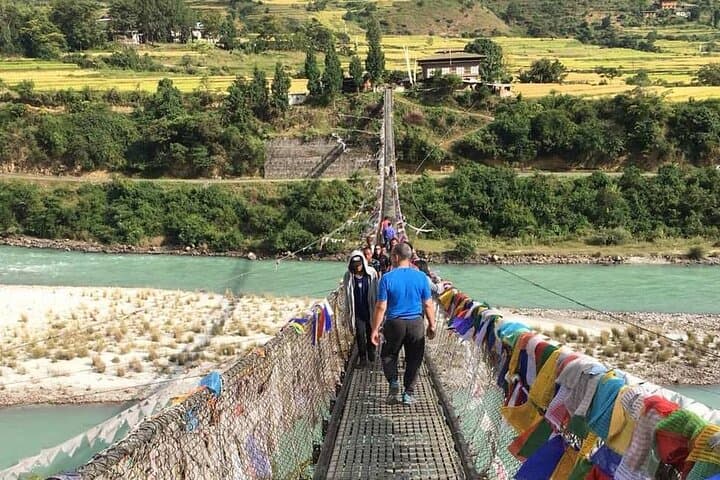
You arrive at Paro with the valley air thin and bright, prayer flags fluttering like a loose language across the ridgelines. Mountain slopes lean down into terraced fields and the first dzong appears—a fortress of timber and whitewashed stone guarding centuries of ritual and daily life.
You arrive at Paro with the valley air thin and bright, prayer flags fluttering like a loose language across the ridgelines. Mountain slopes lean down into terraced fields and the first dzong appears—a fortress of timber and whitewashed stone guarding centuries of ritual and daily life.
Over ten days this itinerary moves between altitudes: Paro (≈2,200 m), Thimphu (≈2,334 m), Punakha (≈1,200 m), Phobjikha (≈3,000 m) and Bumthang via Yotongla (3,425 m) and Chelela Pass (≈3,900 m). You’ll walk short hikes—Khamsum Yuelley Namgyel takes about 2.5–3 hours round-trip—and take the iconic 4–5 hour round-trip hike to Taktsang (Tiger’s Nest) clinging 800 m above a sheer gorge. Geology here is Himalayan: folded schists and high ridges shaped by relentless uplift, with glacial-fed rivers carving the valleys.
Cultural threads run through every stop: handloom weaving in Thimphu and Bumthang, the rhythmic singing at archery matches, and centuries-old monasteries where butter lamps flicker against painted walls. Wildlife notes include the endangered Black-necked Crane in Phobjikha (winter visitors) and the endemic takin at the Royal Preserve.
Practical edge: allow time to acclimatize, start hikes early for cooler air and clearer views, and expect basic three-star accommodations plus homestay evenings. Domestic flights (Bumthang–Paro) can be weather-dependent—book them months ahead. Pack layered clothing for 1,200–3,900 m swings, bring a sturdy pair of hiking shoes, and carry cash for small village purchases. This is travel that rewards patience: slow roads, attentive guides, and landscapes that push you to look up more often than down.