THE ADVENTURE COLLECTIVE® · Independent discovery and booking for outdoor travel

Step off a 160 m suspension bridge above the Bhote Kosi gorge for one of the world’s longest free-falls. This full-day trip from Kathmandu pairs a 3-hour drive with a tightly run jump operation and dramatic river canyon scenery.
Step off a 160 m suspension bridge above the Bhote Kosi gorge for one of the world’s longest free-falls. This full-day trip from Kathmandu pairs a 3-hour drive with a tightly run jump operation and dramatic river canyon scenery.
The morning bus peels out of Kathmandu before dawn, and the road narrows as terraced hills slide past the windows. By the time the steel suspension bridge comes into view, the Bhote Kosi River is a white thread far below — a raw, vertical cut through rock that dares the jumper to look down.
Verified experiences and guided adventures in the surrounding area.
Operated by Overland Trek Nepal · Kathmandu, Bagmati Province
The morning bus peels out of Kathmandu before dawn, and the road narrows as terraced hills slide past the windows. By the time the steel suspension bridge comes into view, the Bhote Kosi River is a white thread far below — a raw, vertical cut through rock that dares the jumper to look down.
The bridge itself is Swiss-designed and sits close to the Nepal–Tibet frontier; Nepal’s first commercial bungee site has anchored adrenaline seekers here for years. Geologically, the gorge is carved by the Bhote Kosi’s seasonal surges, exposing layered schist and greywacke and producing the tight, steep-sided ravine that makes a 160 m jump feel unmediated by anything but air.
Culturally the route passes Tamang and Newar settlements where tea houses and roadside stalls sell boiled eggs and sweet tea — small exchanges that ground a high-adrenaline day in everyday local life. The jump operation runs with clear safety protocols, harness checks, and a single leap that lasts only seconds but requires a day of logistics: a ~3-hour drive each way from Kathmandu and a careful medical screening.
Practical guidance: arrive well rested, carry government ID, and wear secure footwear for the bridge approach. Expect a full-day outing (early departure, return by evening) and variable weather; wind and rain can delay jumps. Hydrate before you leave, avoid alcohol, and follow staff instructions during rigging. For photographers, plan a simple camera tether — phones are best left with support crew. The experience is short, intense, and precisely managed: it’s an engineered relationship between human impulse and a river that keeps pushing onward below.
moderate.
8–10 hours (full-day, includes travel).
Good cardiovascular health and mobility are required; participants should be able to walk short uneven approaches and follow safety instructions.
The free-fall is approximately 160 metres (about 500 feet); the actual moment of free-fall lasts seconds, while the full experience including bounce and retrieval takes a few minutes.
Operators set specific age and weight restrictions and require medical screening; check with the provider but generally participants must be adults in good health within a safe weight range.
High winds or heavy rain can postpone or cancel jumps; operators prioritize safety and will reschedule or refund per their cancellation policy.
Most bookings include round-trip bus transfers (about 3 hours each way) and briefing; verify pickup/drop-off locations when booking.
The jump operates on a Swiss-designed suspension bridge near the Nepali-Tibetan border; it was Nepal’s first commercial bungee site and leveraged the dramatic Bhote Kosi gorge for the world-class free-fall.
Tourism impacts fragile river corridors; choose operators that follow waste-management practices, limit river access damage, and support local communities.
Overland Trek Nepal operates guided outdoor trips and adventures with an emphasis on safety, stewardship, and memorable experiences.

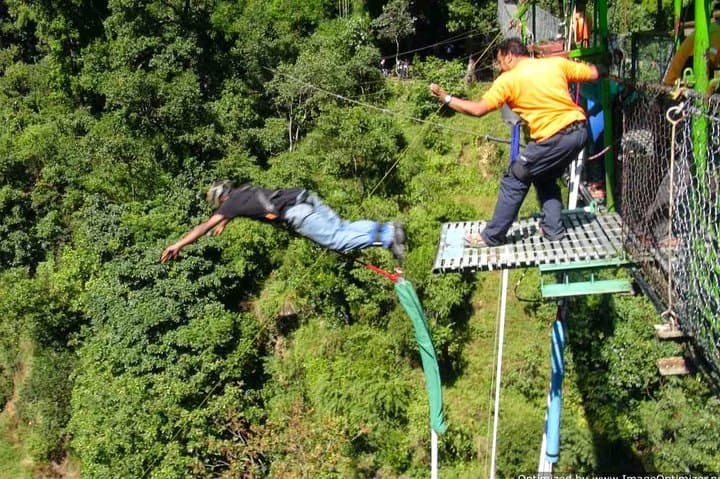


The morning bus peels out of Kathmandu before dawn, and the road narrows as terraced hills slide past the windows. By the time the steel suspension bridge comes into view, the Bhote Kosi River is a white thread far below — a raw, vertical cut through rock that dares the jumper to look down.
The morning bus peels out of Kathmandu before dawn, and the road narrows as terraced hills slide past the windows. By the time the steel suspension bridge comes into view, the Bhote Kosi River is a white thread far below — a raw, vertical cut through rock that dares the jumper to look down.
The bridge itself is Swiss-designed and sits close to the Nepal–Tibet frontier; Nepal’s first commercial bungee site has anchored adrenaline seekers here for years. Geologically, the gorge is carved by the Bhote Kosi’s seasonal surges, exposing layered schist and greywacke and producing the tight, steep-sided ravine that makes a 160 m jump feel unmediated by anything but air.
Culturally the route passes Tamang and Newar settlements where tea houses and roadside stalls sell boiled eggs and sweet tea — small exchanges that ground a high-adrenaline day in everyday local life. The jump operation runs with clear safety protocols, harness checks, and a single leap that lasts only seconds but requires a day of logistics: a ~3-hour drive each way from Kathmandu and a careful medical screening.
Practical guidance: arrive well rested, carry government ID, and wear secure footwear for the bridge approach. Expect a full-day outing (early departure, return by evening) and variable weather; wind and rain can delay jumps. Hydrate before you leave, avoid alcohol, and follow staff instructions during rigging. For photographers, plan a simple camera tether — phones are best left with support crew. The experience is short, intense, and precisely managed: it’s an engineered relationship between human impulse and a river that keeps pushing onward below.