THE ADVENTURE COLLECTIVE® · Independent discovery and booking for outdoor travel

A single-day loop from Jaipur that pairs the unsettling ruins of Bhangarh Fort with the architectural precision of Chand Baori and the lively springs of Galta Ji (Monkey Temple). Expect dusty drives, steep stone steps, and close-up encounters with local wildlife.
A single-day loop from Jaipur that pairs the unsettling ruins of Bhangarh Fort with the architectural precision of Chand Baori and the lively springs of Galta Ji (Monkey Temple). Expect dusty drives, steep stone steps, and close-up encounters with local wildlife.
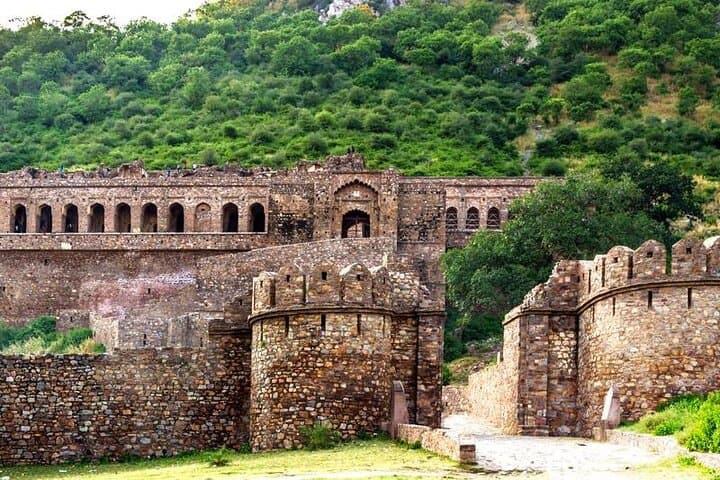
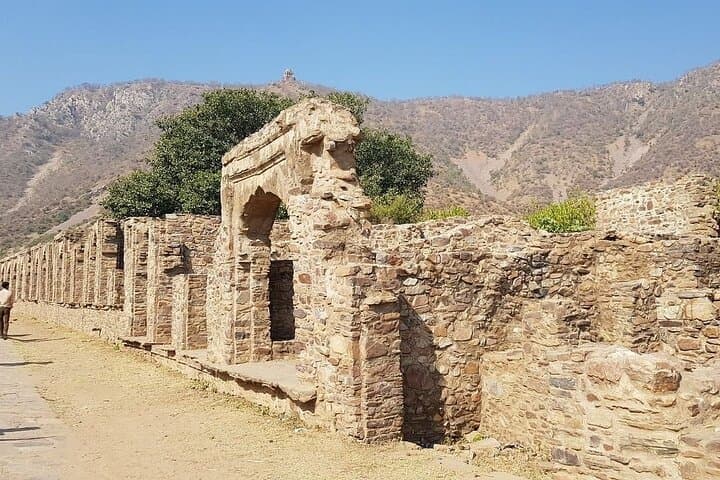
A morning drive from Jaipur peels back the Pink City’s bustle and drops you into the scrubbed slopes of the Aravalli. Dust rises off the highway as the ruined ramparts of Bhangarh Fort appear against the low hills—stone walls hollow with doorways and temples that seem to watch you approach. The wind moves through its corridors like a cautious guide, nudging you toward sun-baked courtyards and carved lintels.
Verified experiences and guided adventures in the surrounding area.
Operated by Namaste Jaipur Tours · Bhangarh (Alwar district), Rajasthan
A morning drive from Jaipur peels back the Pink City’s bustle and drops you into the scrubbed slopes of the Aravalli. Dust rises off the highway as the ruined ramparts of Bhangarh Fort appear against the low hills—stone walls hollow with doorways and temples that seem to watch you approach. The wind moves through its corridors like a cautious guide, nudging you toward sun-baked courtyards and carved lintels.
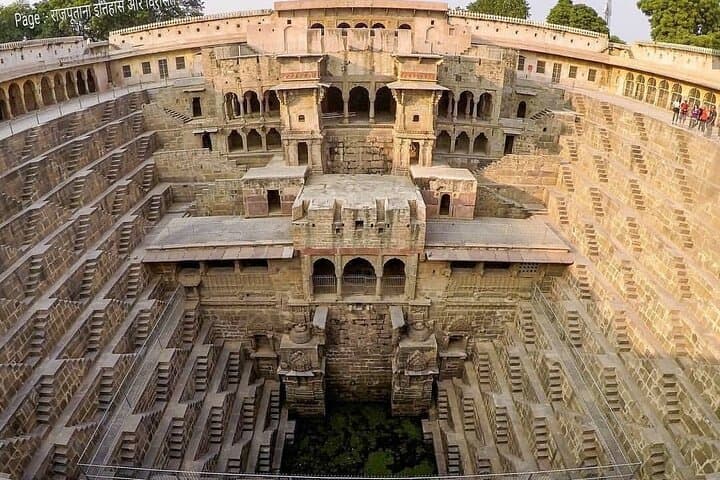
Bhangarh’s ruined citadel dates to the 17th century and sits in Alwar district; local lore and an Archaeological Survey of India (ASI) presence have amplified its eerie reputation. A short drive away, Abhaneri’s Chand Baori stepwell unfolds as an architectural problem solved—nearly 3,500 steps descending roughly 20 meters in a precise geometric grid built around the 8th–9th century. Opposite the well, the carved ruins of Harshat Mata Temple hint at a once-thriving ritual center.
The day finishes with Galta Ji—the so-called Monkey Temple—where natural springs pool in tiered kunds and rhesus macaques patrol stone ledges, bold and insistent. The landscape is hard, history-rich, and weathered; the springs and the stepwell are the region’s cooling breath.
Practical edge: this is a full-day loop of roughly 75–100 km each way from Jaipur and about 8 hours total. Expect uneven stone steps, exposed sun, and curious monkeys. Start early to avoid midday heat, wear closed shoes for steep steps, carry water and a small first-aid kit, and respect ASI rules (do not enter Bhangarh after sunset). Keep belongings secure around monkeys and allow time at Chand Baori to appreciate its engineering and shade pockets.
moderate.
8 hours (full day).
Suitable for travelers in average fitness who can handle repeated stair climbs and short walks on uneven terrain.
The drive to Bhangarh/Abhaneri is typically 1.5–2 hours each way depending on traffic; the full itinerary is about an 8-hour day.
Yes—Bhangarh is overseen by the ASI; visiting after sunset is prohibited and you should follow onsite rules posted by officials.
Chand Baori is safe for day visits but involves many narrow steps and steep drops—supervise children closely and use caution descending into the well area.
Keep a respectful distance, do not feed them, secure loose items, and avoid sudden movements—macaques can be bold and may try to grab food or bags.
Bhangarh Fort was developed in the 17th century under regional Rajput rulers; Chand Baori is an early medieval stepwell (8th–9th century) that reflects sophisticated water-management techniques.
Sites are managed by the ASI—minimize impact by staying on marked areas, avoiding litter, and not feeding wildlife; carry out any trash.
Namaste Jaipur Tours operates guided outdoor trips and adventures with an emphasis on safety, stewardship, and memorable experiences.
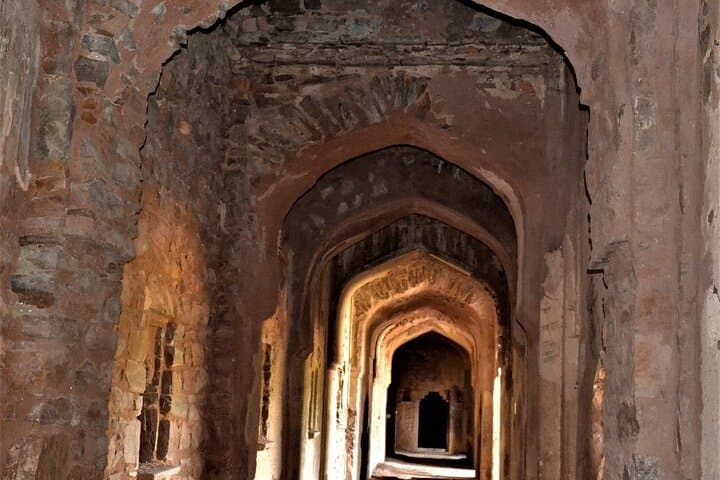
A morning drive from Jaipur peels back the Pink City’s bustle and drops you into the scrubbed slopes of the Aravalli. Dust rises off the highway as the ruined ramparts of Bhangarh Fort appear against the low hills—stone walls hollow with doorways and temples that seem to watch you approach. The wind moves through its corridors like a cautious guide, nudging you toward sun-baked courtyards and carved lintels.
A morning drive from Jaipur peels back the Pink City’s bustle and drops you into the scrubbed slopes of the Aravalli. Dust rises off the highway as the ruined ramparts of Bhangarh Fort appear against the low hills—stone walls hollow with doorways and temples that seem to watch you approach. The wind moves through its corridors like a cautious guide, nudging you toward sun-baked courtyards and carved lintels.
Bhangarh’s ruined citadel dates to the 17th century and sits in Alwar district; local lore and an Archaeological Survey of India (ASI) presence have amplified its eerie reputation. A short drive away, Abhaneri’s Chand Baori stepwell unfolds as an architectural problem solved—nearly 3,500 steps descending roughly 20 meters in a precise geometric grid built around the 8th–9th century. Opposite the well, the carved ruins of Harshat Mata Temple hint at a once-thriving ritual center.
The day finishes with Galta Ji—the so-called Monkey Temple—where natural springs pool in tiered kunds and rhesus macaques patrol stone ledges, bold and insistent. The landscape is hard, history-rich, and weathered; the springs and the stepwell are the region’s cooling breath.
Practical edge: this is a full-day loop of roughly 75–100 km each way from Jaipur and about 8 hours total. Expect uneven stone steps, exposed sun, and curious monkeys. Start early to avoid midday heat, wear closed shoes for steep steps, carry water and a small first-aid kit, and respect ASI rules (do not enter Bhangarh after sunset). Keep belongings secure around monkeys and allow time at Chand Baori to appreciate its engineering and shade pockets.