THE ADVENTURE COLLECTIVE® · Independent discovery and booking for outdoor travel

Walk cobbled lanes to sunlit plazas and centuries-old temples on a focused private tour of Bhaktapur. Learn Newar history, visit Nyatapola and Pottery Square, and get practical tips for timing, accessibility, and local etiquette.
Walk cobbled lanes to sunlit plazas and centuries-old temples on a focused private tour of Bhaktapur. Learn Newar history, visit Nyatapola and Pottery Square, and get practical tips for timing, accessibility, and local etiquette.
You step off the quiet road into a courtyard of red brick and carved wood where pigeons scatter like payers and the air tastes faintly of incense and clay. The narrow lanes of Bhaktapur open gradually—from shadowed alleys to the wide, sunlit sweep of Durbar Square—each plaza a room in a living museum.
Verified experiences and guided adventures in the surrounding area.
Operated by Peak to Peak Tours and Treks Pvt Ltd · Bhaktapur, Bagmati Province
You step off the quiet road into a courtyard of red brick and carved wood where pigeons scatter like payers and the air tastes faintly of incense and clay. The narrow lanes of Bhaktapur open gradually—from shadowed alleys to the wide, sunlit sweep of Durbar Square—each plaza a room in a living museum.
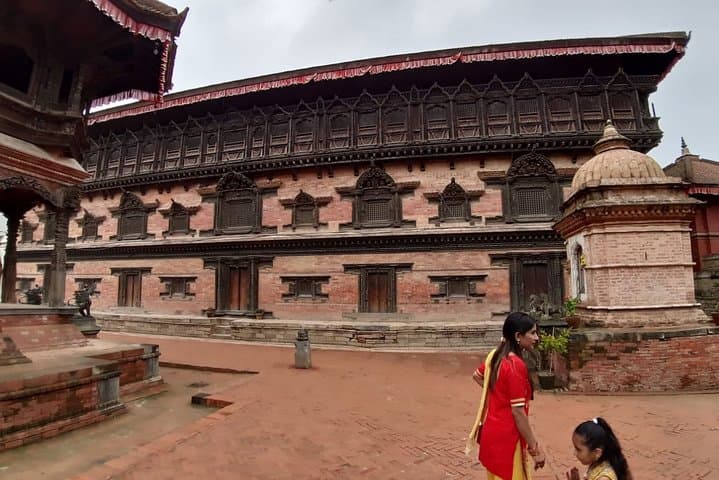
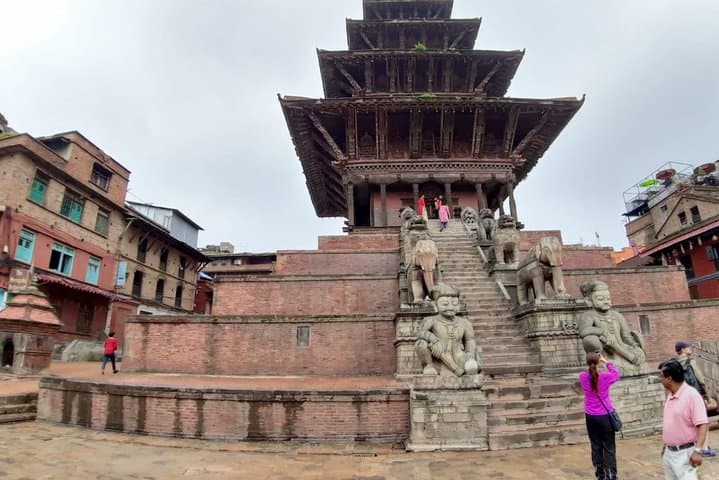
Bhaktapur was a capital of the Newar kingdoms during the Malla period; its compact medieval core keeps streets and guild traditions largely unchanged. The city's geology—baked brick and terracotta—reflects the alluvial plains of the Kathmandu Valley and centuries of seismic repair. Architecture is the local language here: the five-story Nyatapola Temple, the 55-Window Palace, and carved latticework that frames daily life. Craftspeople still wheel clay at Pottery Square, and local cafés serve chiya while elders recount family histories.
On a 100–130 minute private tour, expect focused storytelling from an English-speaking guide, hotel pickup and dropoff, and wheelchair-accessible transport. The pace is gentle but walking surfaces are uneven; allow time for photos, brief stops at artisan stalls, and a rooftop view if you choose. Best times are early morning or late afternoon light—midday can be hot and crowded. Bring comfortable shoes, sun protection, and small local currency for donations or purchases.
Respect temple rules (modest dress, no flash photography where posted), avoid touching delicate carvings, and support conservation-friendly vendors. This half-day visit balances cultural immersion with practical accessibility for most travelers.
easy.
1.5–2.2 hours.
Light walking on uneven cobbles; suitable for most travelers with basic mobility
The private tour lasts approximately 100–130 minutes, including stops at Durbar Square and key monuments.
Yes—transport and much of the route are wheelchair accessible, though some historical buildings have steps.
This tour description notes admission is not included; expect to pay separate fees at certain monuments if required.
An English-speaking guide is provided for this private tour; check with the operator for other language options.
Bhaktapur flourished under the Malla kings and retains a concentrated collection of Newar architecture and civic squares recognized by UNESCO.
Heavy visitor traffic strains fragile brickwork and wood carvings—follow posted guidelines, avoid touching artifacts, and support local conservation-minded artisans.
Peak to Peak Tours and Treks Pvt Ltd operates guided outdoor trips and adventures with an emphasis on safety, stewardship, and memorable experiences.
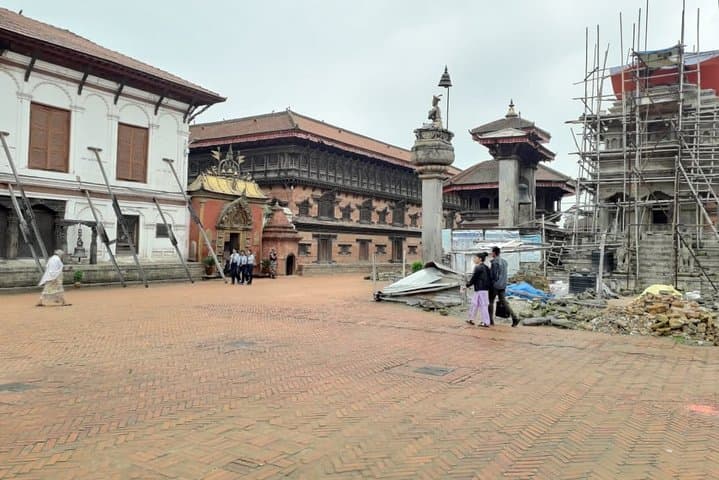
You step off the quiet road into a courtyard of red brick and carved wood where pigeons scatter like payers and the air tastes faintly of incense and clay. The narrow lanes of Bhaktapur open gradually—from shadowed alleys to the wide, sunlit sweep of Durbar Square—each plaza a room in a living museum.
You step off the quiet road into a courtyard of red brick and carved wood where pigeons scatter like payers and the air tastes faintly of incense and clay. The narrow lanes of Bhaktapur open gradually—from shadowed alleys to the wide, sunlit sweep of Durbar Square—each plaza a room in a living museum.
Bhaktapur was a capital of the Newar kingdoms during the Malla period; its compact medieval core keeps streets and guild traditions largely unchanged. The city's geology—baked brick and terracotta—reflects the alluvial plains of the Kathmandu Valley and centuries of seismic repair. Architecture is the local language here: the five-story Nyatapola Temple, the 55-Window Palace, and carved latticework that frames daily life. Craftspeople still wheel clay at Pottery Square, and local cafés serve chiya while elders recount family histories.
On a 100–130 minute private tour, expect focused storytelling from an English-speaking guide, hotel pickup and dropoff, and wheelchair-accessible transport. The pace is gentle but walking surfaces are uneven; allow time for photos, brief stops at artisan stalls, and a rooftop view if you choose. Best times are early morning or late afternoon light—midday can be hot and crowded. Bring comfortable shoes, sun protection, and small local currency for donations or purchases.
Respect temple rules (modest dress, no flash photography where posted), avoid touching delicate carvings, and support conservation-friendly vendors. This half-day visit balances cultural immersion with practical accessibility for most travelers.